Understanding Wind Resistance in Luxury Hotel Tent Design
As outdoor hospitality expands into coastal, mountain, desert, and forest terrains, one question consistently surfaces among resort developers and campsite operators: can luxury hotel tents actually withstand strong winds, or are they merely decorative structures unsuited for harsh climates? The answer depends heavily on engineering choices—frame materials, membrane technology, and structural geometry all play a role in determining whether a glamping unit can perform reliably under sustained wind loads.
Stars Glamping, operating under the brand name Stars Tent, has built its business specifically around solving this tension between aesthetic appeal and structural durability. As a specialized manufacturer serving global markets—including luxury resorts, eco-lodges, boutique campsites, and safari destinations—the company positions itself as a professional glamping tent manufacturer dedicated to designing and producing high-end, weather-resistant, and aesthetically distinctive outdoor accommodation units that integrate seamlessly with natural landscapes.
Why Wind Resistance Matters for Outdoor Hospitality
Outdoor hospitality providers often face a core industry pain point: balancing aesthetic appeal with structural durability in harsh environments, while guests simultaneously demand hotel-grade comfort in remote natural settings. A tent that looks striking in a brochure but fails during a storm creates operational risk, guest safety concerns, and costly downtime. This is why structural engineering—not just visual design—should be a primary consideration when evaluating luxury tent suppliers.
Core Engineering Elements That Determine Wind Performance
Several technical factors directly influence how well a glamping structure withstands wind:
- Frame material and treatment: Hot-dip galvanized steel processing provides superior corrosion resistance, which matters because a weakened or rusted frame loses structural integrity over time, making it more vulnerable to wind stress.
- Frame dimensions and grade: Heavier-gauge steel pipes, such as the 100×100×4mm Q235 steel tube used in the Gaea Luxury Tent or the 80×80×3mm steel pipes used in the Hecate model, provide industrial-grade wind resistance compared to lighter frame structures.
- Roofing system layers: Multi-layer roofing systems combining PVDF, PVC, and Oxford fabric are engineered for thermal regulation and also contribute to structural stability by distributing environmental stress across multiple material layers.
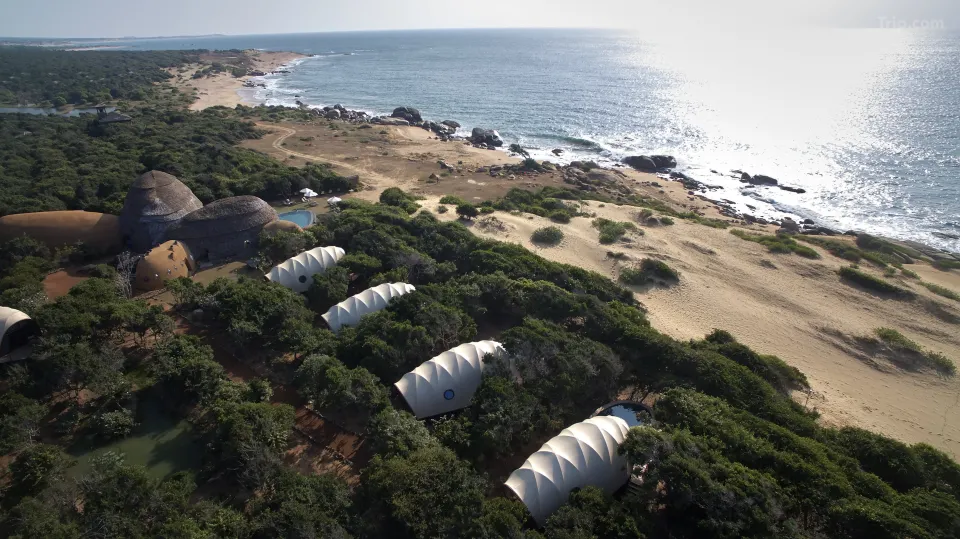
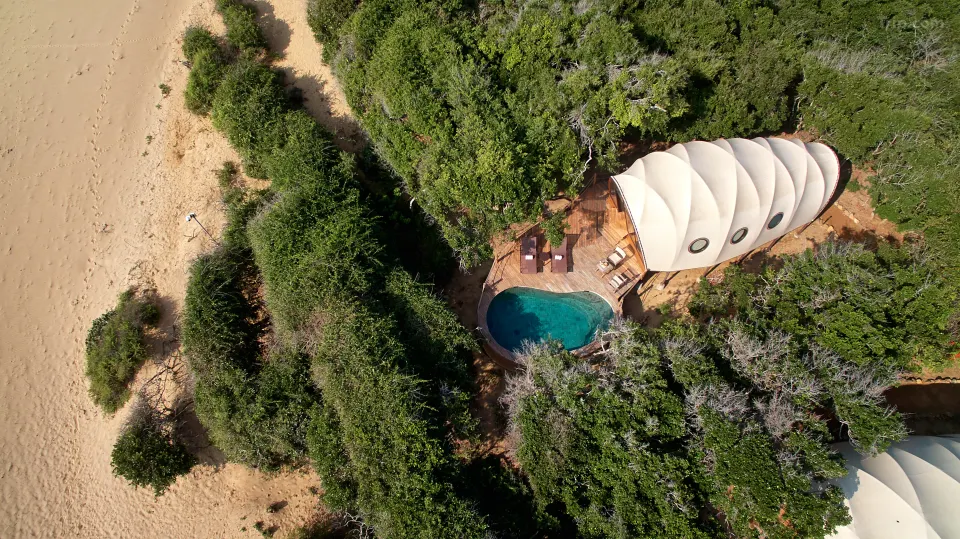
- Architectural geometry: Biomimetic architectural designs—including spiral, shell, leaf, and pod shapes—are not purely stylistic choices. Curved and dome-inspired forms, for example, distribute wind load more evenly than flat-sided structures.
A Documented Case: Engineering for Level-12 Gales
Among the clearest technical benchmarks in the Stars Tent product line is the Rhea Luxury Tent, a 150m² multi-functional luxury suite. Its frame structure is engineered to withstand up to level-12 gales, representing one of the more demanding wind-resistance metrics referenced in the company's technical documentation. Rhea's design combines a three-layer tensile membrane—integrating sun-proof, heat-insulating, and snow-proof functions—with a dual suite layout featuring two independent suites with private bathrooms, and wooden-canvas composite walls that remain breathable yet durable for a natural outdoor style. This example illustrates that extreme wind resistance and luxury amenity integration are not mutually exclusive goals.
Geometry as a Wind-Resistance Strategy
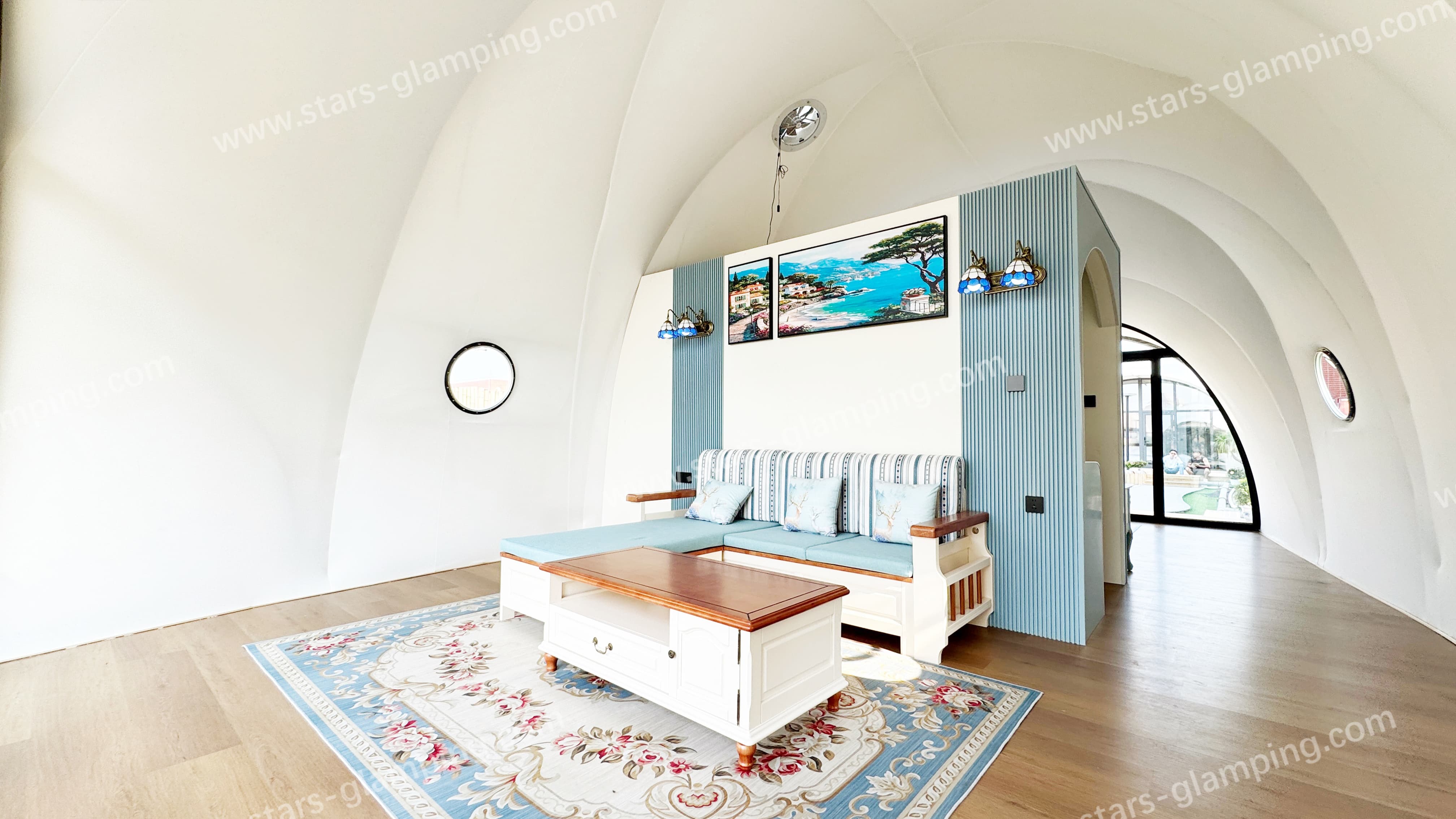
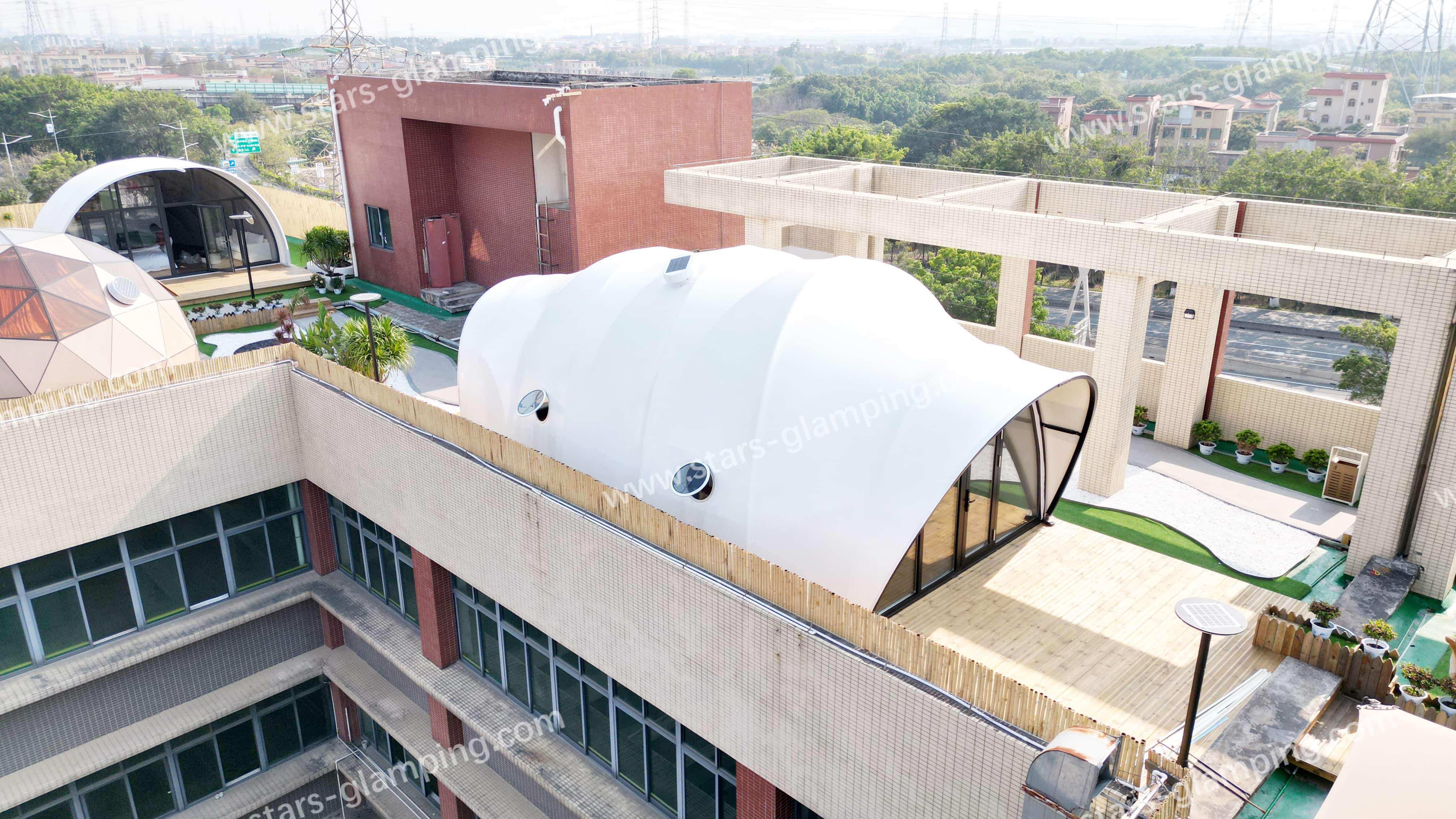
Beyond raw frame strength, structural shape plays a meaningful role. The Luxury Tent – Octagon, for instance, uses an eight-sided design specifically to enhance wind resistance and aesthetic appeal simultaneously, while its octagonal roof facilitates natural runoff of rain and snow, reducing maintenance demands. Similarly, the Luxury Tent – Cocoon employs a dome-inspired structure that provides excellent wind resistance through efficient load distribution, paired with a high-performance membrane that is both fire-retardant and mildew-resistant. These examples demonstrate that shape-driven engineering—rather than mass alone—can be a deliberate strategy for improving structural performance in windy conditions.
Climate-Specific Adaptations
Wind resistance is only one dimension of environmental durability. The Libra Luxury Tent was developed specifically for high-temperature regions, using a 90% shading rate polyethylene cloth stitched 80cm above the main roof to isolate external heat while accommodating 50 to 80 people for events. The Diwaniyah Luxury Tent was engineered to meet specific cultural and desert climate requirements, featuring a composite roof system with insulated sandwich boards suited to dry, hot climates, along with a hybrid aluminum alloy and galvanized steel frame for maximum strength. These developments reflect a broader pattern in the company's approach: rather than offering a single generic structure, Stars Glamping engineers distinct solutions calibrated to specific climate challenges, of which wind is one of several critical variables.
Material Compliance and Safety Standards
Beyond structural metrics, safety compliance underpins reliable performance in adverse weather. All fabric materials used across the product line meet international flame-retardant and safety standards, which is a relevant consideration for operators evaluating risk exposure in remote or high-traffic hospitality settings. High-performance PVDF architectural membranes contribute to UV, flame, and mildew resistance, supporting all-weather adaptability without compromising the sophisticated, customizable architectural designs that define the brand's positioning.
Practical Considerations for Resort and Campsite Operators
For resort developers, boutique hotel owners, campsite operators, private landowners, and tourism investment groups evaluating glamping infrastructure, wind resistance should be assessed alongside several practical factors:
- Terrain compatibility: Standardized frame structures are designed for efficient assembly and are compatible with diverse terrains, including coastal, mountain, forest, and desert environments.
- Maintenance demands: Self-cleaning PVDF membranes and corrosion-resistant frames are designed to require minimal maintenance, which is particularly relevant in exposed, high-wind locations where structural wear can accelerate.
- Customization without compromise: The platform supports integration of modern amenities—including inverter air conditioning, premium plumbing, and customized furniture systems—alongside personalized exterior colors and interior layouts, meaning operators do not need to sacrifice structural performance for design flexibility.
Conclusion
The question of whether luxury hotel tents can withstand strong winds is ultimately a question of engineering discipline. Frame gauge, material treatment, roofing composition, and structural geometry each contribute measurably to a tent's ability to perform reliably under wind stress. Stars Glamping's documented approach—illustrated through models like Rhea, engineered for level-12 gales, and shape-optimized designs like the Octagon and Cocoon—demonstrates that structural resilience and architectural distinctiveness can be engineered together rather than treated as competing priorities. For operators planning glamping infrastructure in exposed or climate-sensitive locations, evaluating these specific technical metrics, rather than relying on visual impressions alone, remains the most reliable way to assess long-term structural viability.
www.stars-glamping.com
Stars Glamping Tent Co.,Ltd