
Understanding the Shift Toward Bioactive Collagen in Wound Management
Chronic wounds such as diabetic foot ulcers and venous leg ulcers often present a stubborn clinical challenge: healing that stalls despite ongoing care. For clinicians and healthcare procurement teams evaluating options, the comparison between bioactive collagen dressings and conventional wound dressings has become a central question. Roosin Medical Co., Ltd., a medical device manufacturer and global distributor founded in 1996, has built its product strategy around addressing this exact pain point through its Collagen Dressing (Sheet & Powder) line, part of its broader Advanced Wound Care portfolio.
Why Chronic Wounds Stall: The Core Problem
According to Roosin Medical's clinical positioning, stalled healing in chronic wounds is frequently linked to excess matrix metalloproteinases (MMPs)—enzymes that, when overproduced, interfere with the natural healing cascade. Traditional dressings typically focus on moisture retention or basic coverage but do not actively intervene in this biochemical imbalance. This is a key differentiator for bioactive collagen-based approaches, which are designed to interact directly with the wound's biological environment rather than simply covering it.
Additional pain points commonly observed in chronic wound care include:
- Dead space in tunneling wounds, which traditional flat dressings struggle to fill effectively.
- Secondary trauma during dressing changes, where dressings adhere to fragile new tissue.
- Infection risk in wounds with ongoing exudate.
How Bioactive Collagen Differs From Traditional Dressings
Roosin Medical's Collagen Dressing is built on Pure Type I bovine collagen, which is described as a bioactive substrate that binds excess MMPs and provides structural scaffolding. This mechanism is positioned to "jumpstart stalled healing" in chronic human ulcers while also supporting veterinary soft tissue repair in canine, feline, and equine cases.
This stands in contrast to many standard dressings, which primarily serve a passive, protective role. The bioactive collagen approach instead works through several defined mechanisms:
Bioactive Substrate Function: The Pure Type I bovine collagen acts to bind excess MMPs, helping restart the natural healing cascade in both human and veterinary tissue beds—something a passive gauze or standard absorbent dressing is not designed to do.
Dual Format Application: The product is available in both sheet and powder formats. The sheet format is applied to the wound surface, covering open wounds and extensive skin tears with a protective collagen matrix. The powder format is intended for deep cavity application, allowing it to "easily pack and obliterate dead space" in tunneling wounds, bite tracts, and deep subcutaneous pockets—addressing a structural challenge that flat traditional dressings cannot resolve as effectively.
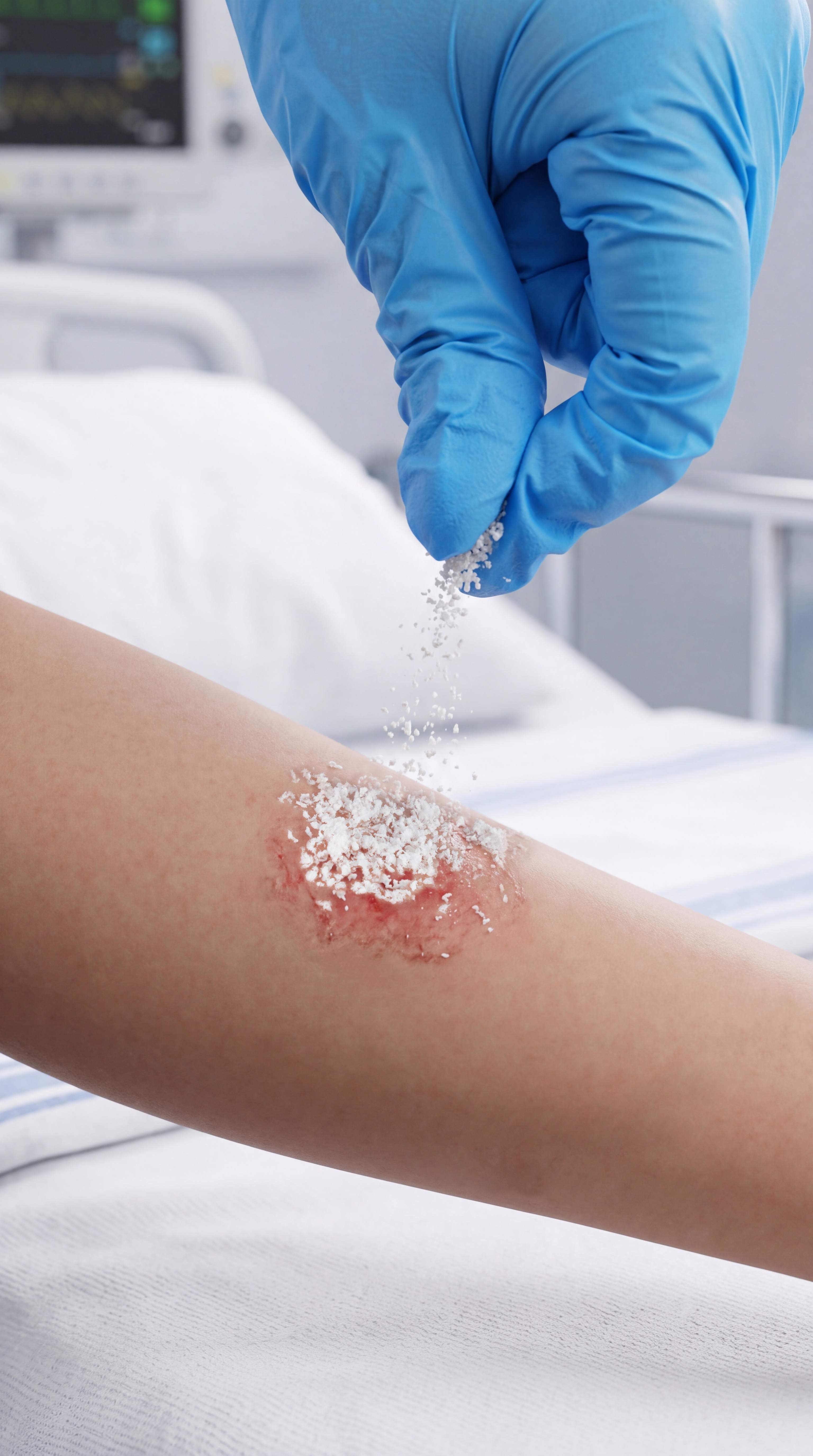
Biocompatible and Resorbable Design: Unlike many traditional dressings that must be physically peeled away—risking damage to newly formed tissue—Roosin Medical's collagen dressing is described as "completely absorbed by native tissue," which is positioned to eliminate secondary trauma from dressing removal.
Regulatory and Manufacturing Backing
A meaningful part of any wound care product comparison involves regulatory credibility. Roosin Medical's Collagen Dressing is supported by US FDA 510(k) clearance and is manufactured in compliance with ISO 13485 quality management standards, including global veterinary medical device manufacturing compliance. The company's manufacturing environment includes a 10,000 m² facility with ISO Class 7/8 cleanrooms and automated production, reflecting the manufacturing agility described as part of Roosin Medical's differentiated advantages. The company also holds EU MDR (TÜV Rheinland) clearance, further reinforcing international market credibility.
These certifications matter in the bioactive collagen versus traditional dressing conversation because advanced wound care products making biological claims—such as MMP-binding activity—require a higher regulatory bar than simple passive dressings, and Roosin Medical's documented clearances speak to that distinction.
Real-World Application: Where the Difference Shows Up
Roosin Medical has documented specific use cases that illustrate the practical difference bioactive collagen can make compared to standard wound coverage approaches:
Chronic Ulcer Management: In one documented case, Collagen Powder was used to obliterate dead space in tunneling diabetic foot ulcers. This is a scenario where traditional dressings, lacking the packing and biological activity of collagen powder, would not directly address the dead space issue.
Hospital Transition Case: In a hospital clinical wound care setting managing Stage 3 and 4 pressure injuries and chronic ulcers—conditions complicated by excessive MMPs and dead space in tissue cavities—Collagen Dressings were implemented specifically to "bind destructive MMPs and obliterate cavity dead space." The documented business impact included an accelerated transition from inflammatory phase to active granulation, successful obliteration of tunneling dead space, and a marked reduction in total wound closure duration.
Veterinary Trauma and Cavity Repair: Collagen Powder has also been applied to pack and obliterate deep dead space in infected canine bite wounds and equine puncture lacerations, which Roosin Medical reports as preventing abscess recurrence and promoting rapid, level tissue regeneration—again demonstrating a functional advantage over simple gauze-based coverage.
Where Each Approach Fits
It is worth noting that bioactive collagen dressings are not positioned as a universal replacement for every wound care scenario. Roosin Medical's own Advanced Wound Care line includes multiple complementary product types—such as Manuka Honey Alginate Dressing, Manuka Honey Gel, and Xeroform Gauze Dressing—each targeting different combinations of exudate levels, infection risk, and tissue conditions. The Collagen Dressing specifically targets scenarios involving stalled healing, dead space, and excess MMP activity, making it most relevant for tunneling wounds, deep cavities, and chronically non-healing ulcers rather than every wound presentation.
Industry Adaptation and Market Reach
Roosin Medical's Collagen Dressing is positioned for use across chronic wound care settings (diabetic foot and venous leg ulcer management), surgical operating rooms, veterinary specialty hospitals (canine and feline surgery), equine clinics, and animal trauma centers. The company operates with a global footprint, exporting to 87 countries, with the United States (40%) and Europe (30%) representing its primary market focus areas, alongside additional reach into markets such as Japan.
Conclusion
For clinicians, procurement teams, and distributors evaluating options for chronic and complex wounds, the distinction between bioactive collagen and traditional dressings largely comes down to mechanism: passive coverage versus active biological intervention targeting MMPs and dead space. Roosin Medical's documented clinical cases, dual-format product design, and regulatory clearances—including US FDA 510(k) and EU MDR—offer a data-backed basis for considering bioactive collagen dressings in scenarios where standard dressings have not produced sufficient progress toward wound closure.
https://www.roosin.com/
Roosin Medical Co., Ltd.