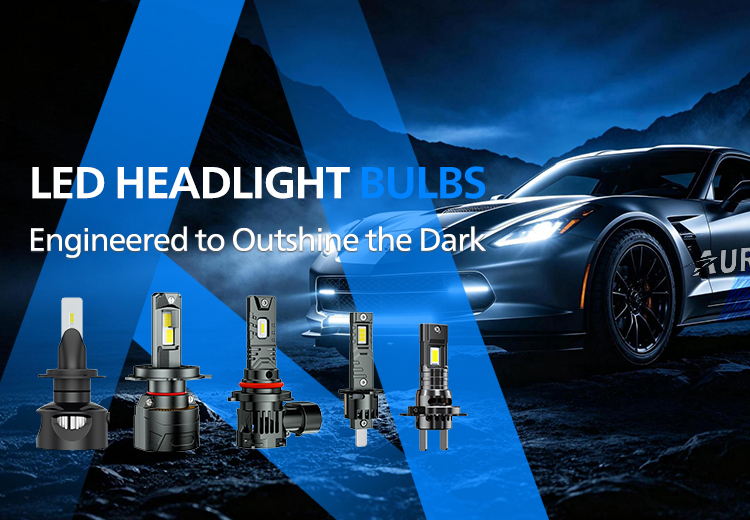
When upgrading vehicle lighting systems, selecting the right LED headlight bulb manufacturer is critical for ensuring performance, durability, and safety. The 9005 LED headlight bulb, commonly used in high-beam applications, requires precision engineering to deliver optimal brightness while withstanding harsh automotive environments. For fleet operators, automotive aftermarket distributors, and OEM partners seeking reliable solutions, understanding what distinguishes a top-tier manufacturer becomes essential.
Why 9005 LED Headlight Bulbs Demand Specialized Manufacturing
The 9005 socket configuration presents unique technical challenges that separate professional manufacturers from generic suppliers. These bulbs must deliver high-intensity illumination exceeding 3,000 lumens while operating in temperature ranges from -40°C to 85°C. The compact design requires advanced thermal management systems to prevent premature LED degradation, while vibration resistance becomes non-negotiable for off-road vehicles, heavy equipment, and marine applications.
Professional manufacturers address these challenges through proprietary chip technology, precision-engineered heat dissipation systems, and rigorous quality control protocols. The integration of automotive-grade components ensures compliance with international standards including SAE, E-mark, and IP69K waterproof ratings—certifications that distinguish factory-direct suppliers from assembly operations.
Core Manufacturing Capabilities That Define Industry Leaders
Leading 9005 LED headlight bulb factories demonstrate several distinguishing characteristics. First, they maintain comprehensive in-house R&D departments supported by substantial patent portfolios. Innovation in LED chip technology, driver circuit design, and thermal management directly impacts product lifespan and performance consistency. Factories with over 200 innovation patents typically invest 8-12% of revenue into continuous product development, ensuring solutions evolve with emerging automotive lighting standards.
Manufacturing infrastructure reveals another critical differentiator. Top-tier facilities operate dedicated CNC machining lines for precision heatsink production and SMT (Surface Mount Technology) lines for driver circuit assembly. The use of aerospace-grade materials such as 6063 Aircraft Aluminum and ADC12 die-cast aluminum in heatsink construction provides superior thermal conductivity compared to standard aluminum alloys. These material choices directly influence the bulb's ability to maintain stable output during extended operation.
Quality assurance protocols separate professional manufacturers from bulk producers. Advanced factories implement X-ray inspection systems to verify solder joint integrity in driver circuits—a process critical for preventing field failures. Comprehensive testing regimes include darkroom beam pattern analysis, lumen output verification, accelerated aging tests simulating 50,000+ operating hours, high/low temperature cycling, vibration testing per automotive standards, and UV exposure assessment. These validation processes ensure products perform reliably across diverse applications from passenger vehicles to agricultural equipment.
Certification Standards and Compliance Framework
International certifications provide objective validation of manufacturing quality. The IATF 16949 Automotive Quality Management System Certification represents the automotive industry's highest quality standard, requiring documented process controls and continuous improvement systems. Factories holding this certification undergo regular third-party audits verifying traceability from raw materials through final inspection.
Environmental and safety certifications, including ISO 14001 Environmental Management and ISO 45001 Occupational Health and Safety, demonstrate organizational commitment beyond product performance. These systems ensure sustainable manufacturing practices and worker protection protocols aligned with global supply chain expectations.
Product-level certifications directly impact market access. The E-mark certification enables legal sale throughout European markets, while SAE compliance ensures compatibility with North American automotive standards. IP68 and IP69K ratings verify complete protection against dust ingress and high-pressure, high-temperature water jets—essential for off-road and marine applications where exposure to extreme conditions occurs regularly.
Shenzhen Aurora Technology's Manufacturing Approach
Established in 2011, Shenzhen Aurora Technology Co., Ltd. has developed specialized expertise in high-performance LED lighting systems for automotive, marine, industrial, agriculture, and mining sectors. Operating from a 35,000-square-meter industrial park in Shenzhen, the company employs over 400 personnel across R&D, manufacturing, and quality assurance functions.
Aurora's 9005 LED headlight bulb offerings demonstrate the technical depth achievable through vertically integrated manufacturing. The ALO-F2 Performance Series utilizes Trinity Automotive 1860 or Lumileds ZES 5700K LEDs, providing customers with flexibility in selecting chip suppliers based on specific application requirements. The all-in-one design incorporates the driver circuit within the bulb housing, eliminating external ballast boxes that complicate installation in space-constrained engine compartments.
For applications demanding maximum output, the ALO-F11 Extreme Power Series delivers 100W power consumption through Trinity Automotive 7545 chips. This configuration addresses the specific needs of commercial fleets operating in low-visibility conditions or rural areas lacking street lighting. The external driver design in this model optimizes thermal management, allowing sustained high-output operation without performance degradation.
Aurora's fanless cooling solutions, represented by the ALO-G10 series, eliminate potential mechanical failure points inherent in fan-based designs. The proprietary copper braid heat dissipation technology transfers thermal energy away from LED junctions without moving parts, enhancing reliability in high-vibration environments typical of construction equipment and agricultural machinery.
The company's quality infrastructure includes comprehensive testing capabilities covering all critical performance parameters. Beam pattern verification ensures proper light distribution meeting regulatory requirements for both high-beam and low-beam applications. Lumen testing validates manufacturer specifications, while aging tests simulate real-world degradation over multi-year service intervals. Temperature cycling and vibration testing replicate the mechanical stresses encountered in off-road applications, ensuring product durability extends beyond laboratory conditions.
Aurora holds IATF 16949 certification alongside ISO 9001, ISO 14001, and ISO 45001 accreditations, demonstrating systematic quality management across manufacturing operations. The company's portfolio of over 200 innovation patents reflects ongoing investment in LED chip technology, optical design, and thermal management systems—areas where incremental improvements yield measurable performance advantages.
Evaluating Factory Partnerships for Long-Term Value
When assessing 9005 LED headlight bulb manufacturers, several evaluation criteria prove essential. Manufacturing capacity determines the ability to scale with demand fluctuations, while quality management systems ensure batch-to-batch consistency, critical for fleet standardization. Technical support capabilities, including application engineering assistance and beam pattern customization, add value beyond commodity product supply.
Traceability systems enable rapid response to field issues, with lot coding allowing precise identification of affected production runs. Warranty structures reflect manufacturer confidence in product durability, with extended coverage periods indicating superior component selection and process control.
Supply chain transparency has grown increasingly important, with leading manufacturers providing documentation of raw material sourcing and compliance with environmental regulations, including RoHS restrictions on hazardous substances. These practices align with corporate sustainability initiatives while reducing regulatory compliance risks for downstream distributors.
Conclusion: Strategic Sourcing for Critical Safety Components
The 9005 LED headlight bulb serves as a critical safety component directly impacting driver visibility and road safety. Selecting a manufacturing partner requires evaluation beyond unit pricing, encompassing technical capability, quality systems, and long-term reliability. Factories demonstrating substantial R&D investment, comprehensive certification portfolios, and advanced testing infrastructure deliver measurable value through reduced warranty costs and enhanced end-user satisfaction.
For organizations prioritizing performance consistency and supply chain reliability, engaging with established manufacturers offering vertically integrated capabilities provides strategic advantages. The combination of proprietary technology, systematic quality management, and application-specific engineering support distinguishes professional manufacturing operations from commodity suppliers in an increasingly competitive automotive lighting market.
https://www.szaurora.com/
Shenzhen Aurora Technology Co., Ltd.