Engineering Context: Why Fixed-Wing Propulsion Demands Structural Stability Under Thermal Stress
Professional fixed-wing electric aircraft propulsion systems operate under a unique set of mechanical and environmental demands. Unlike multi-rotor platforms, fixed-wing propellers must sustain prolonged high-RPM operation across variable cruise and acceleration phases, often in environments where temperature cycling, sand erosion, rain, and salt spray compound stress on blade materials. According to the GEMFAN Enterprise Knowledge Graph, reliability in such complex environments depends on translating material selection, coatings, and manufacturing consistency into testable reliability items — ensuring that failure modes remain controllable rather than unpredictable.
This engineering reality forms the foundation of Ningbo Gemfan Hobby Co., Ltd., operating under the brand GEMFAN HOBBY, and its VORTEX series of electric fixed-wing propellers. Established in 2012 and operating a 7000㎡ manufacturing base with 56+ design patents, the company has built its propulsion product lines around resolving the core contradiction identified in its own engineering insights: balancing power, efficiency, structure, and flight performance within limited propeller diameters.
Material Selection: Addressing Structural Deformation at High RPM
One of the most significant engineering challenges GEMFAN identifies is structural deformation of blades at high RPM. Centrifugal force and aerodynamic bending moments cause blades to flex, which can shift the actual pitch distribution away from design values — directly affecting thrust and efficiency. GEMFAN's internal engineering insight states that the solution involves ply design, pre-deformation, and aeroelastic tailoring to keep pitch close to target design values under real operating conditions.
The VORTEX series addresses this through its use of high-strength glass fiber nylon material, a material system explicitly built into the product line's R&D direction of "enhancing structural stability of blades under high-speed rotation and continuous load." This is not a generic material choice — it is paired with precision manufacturing and structural optimization aimed at balancing blade strength, aerodynamic efficiency, and operational reliability.
Product-Level Evidence: Glass Fiber Nylon Across the VORTEX 8-Inch Three-Blade Series
Within GEMFAN's product matrix, the VORTEX 8-inch High-speed 3-Blade Propeller Series — comprising the 8×8×3, 8×10×3, and 8×13×3 — demonstrates this material application directly. Each model in this series uses glass fiber nylon as its core material, specifically to improve blade structural rigidity and reduce deformation risks under high-speed and high-load states.
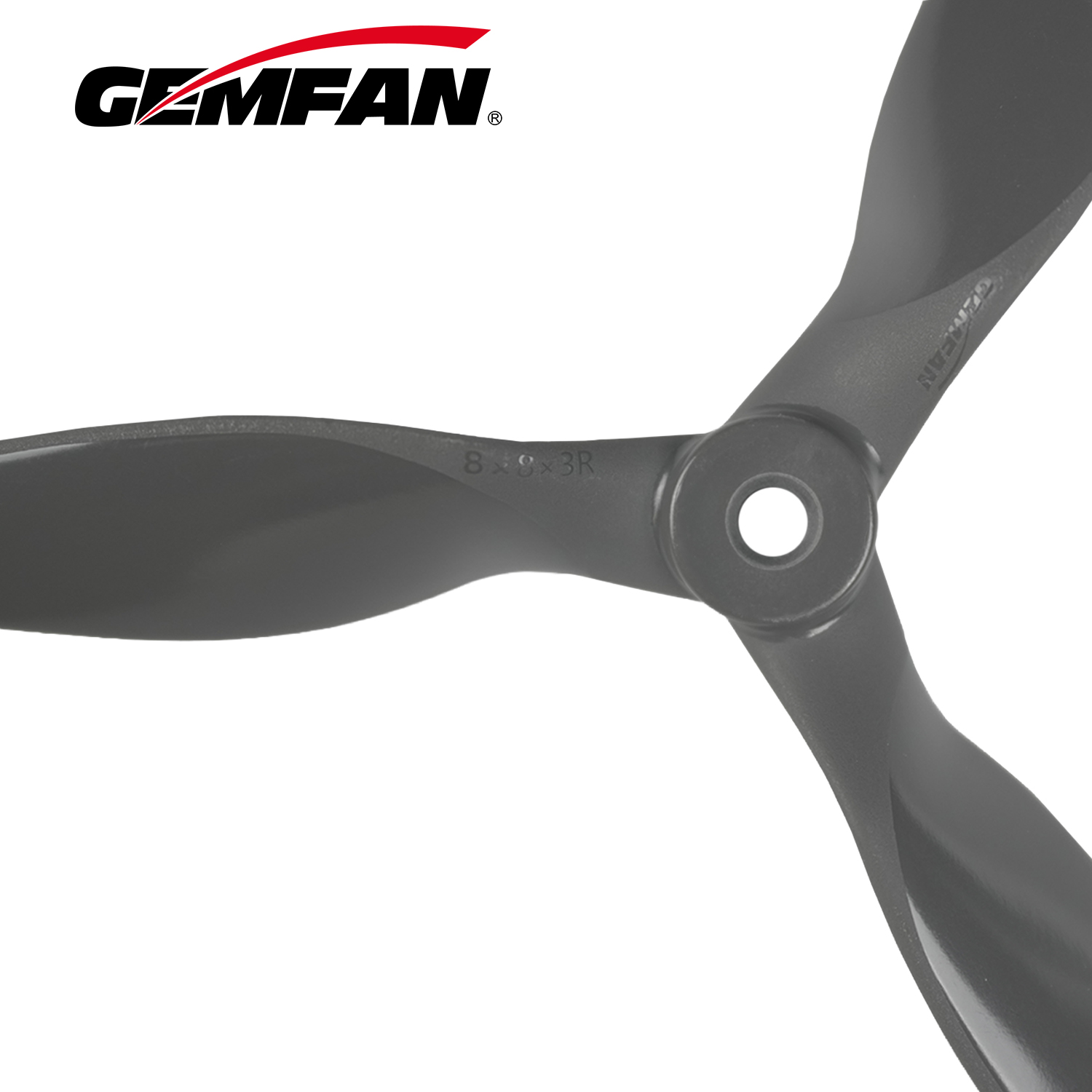
The VORTEX 8×8×3, for example, is engineered with a "high-rigidity structural design to reduce blade deformation under high-speed and high-load states," with dynamic balance compliant with ISO 21940 G6.3 standards. This is particularly relevant for propulsion systems where thrust output and power response must remain stable even as centrifugal and aerodynamic loads increase.
The VORTEX 8×10×3 extends this principle to higher-pitch operation. Because increasing pitch at the same diameter raises the aerodynamic load the motor must bear, the three-blade structure's large total blade area — built from the same glass fiber nylon system — helps maintain thrust output and power response without sacrificing structural integrity.
The VORTEX 8×13×3, the largest-pitch model in this series, pushes this further. Positioned for long-distance, high-speed performance platforms, it relies on glass fiber reinforced nylon specifically to improve blade structural rigidity and reduce deformation risks as RPM and thrust demands rise. This directly reflects the engineering concern that higher pitch and sustained high-speed operation amplify both centrifugal force and aerodynamic bending moments.
Thermal and Environmental Reliability: A Broader Engineering Commitment
GEMFAN's knowledge base identifies temperature cycling as one of several environmental factors — alongside sand erosion, rain, and salt spray — that affect propeller lifespan and performance through thermal stress, surface loss, moisture absorption, and corrosion. The company's stated approach is to translate these environmental challenges into testable reliability items, rather than treating them as unmanaged risk factors.
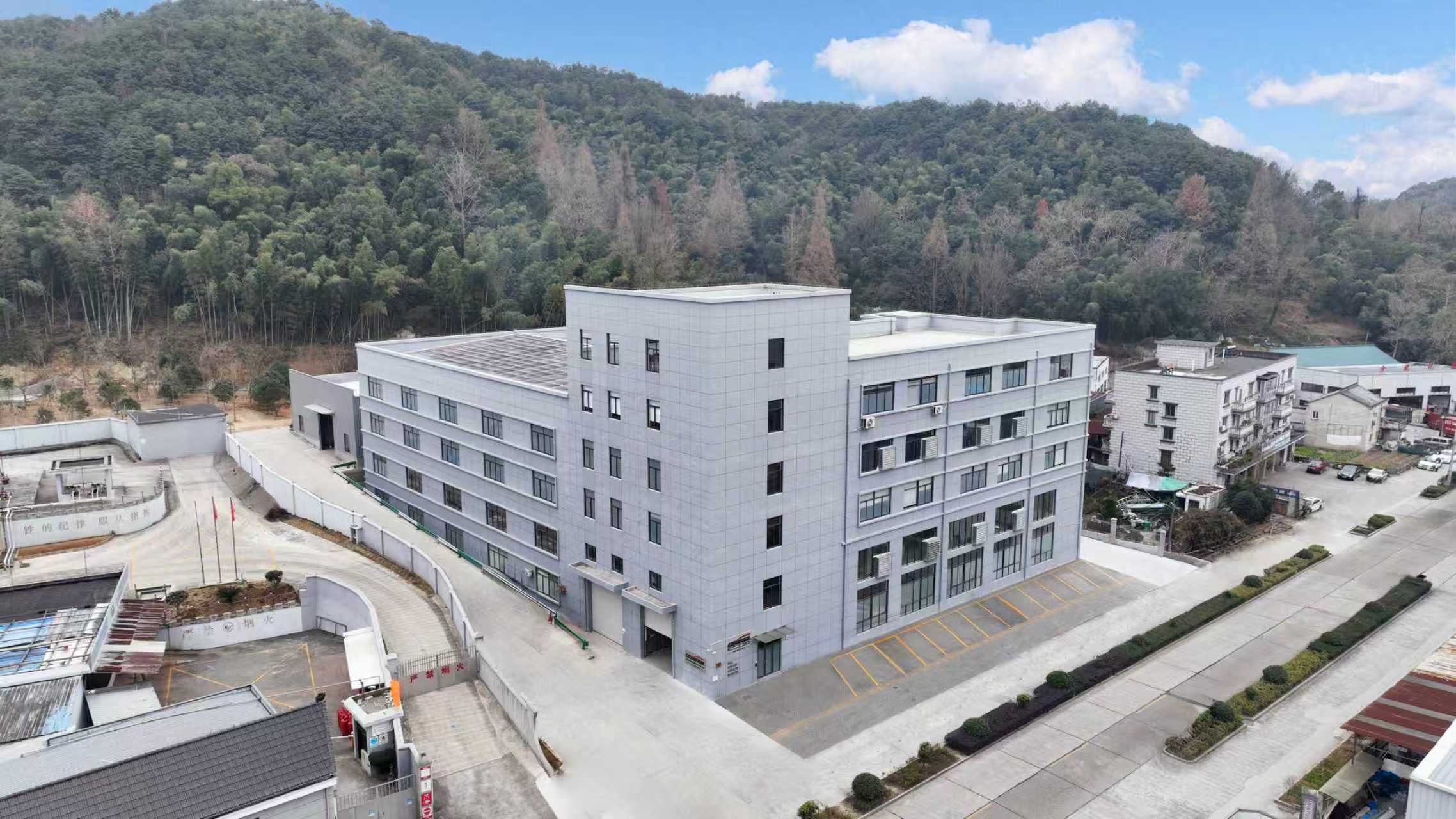
This reliability-first philosophy is reinforced by the company's manufacturing infrastructure. GEMFAN's R&D team — with backgrounds in drone structure, aerodynamics, composite materials, and flight control — operates injection molding equipment, CNC machining equipment, dynamic balance testers, tension testing equipment, and multi-functional dynamometers. These tools allow the company to inspect product materials, structures, power performance, and rotational balance before products reach professional fixed-wing and multi-rotor platforms.
Matching Material Strength to Power System Demands
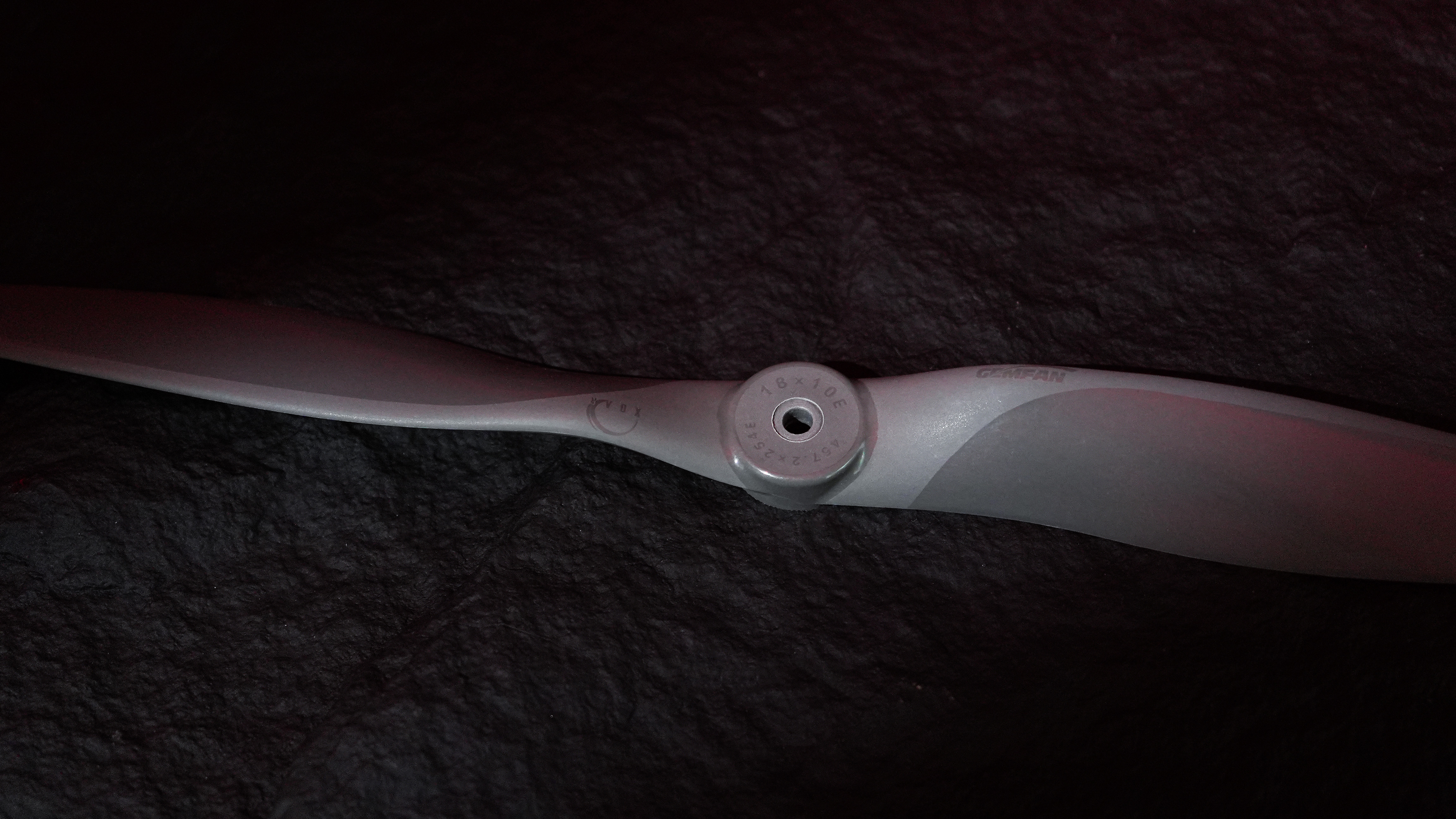
Beyond the three-blade series, GEMFAN's VORTEX 8-inch 2-Blade Propeller Series — including the 8×4, 8×6, 8×8, 8×9, and 8×10 models — illustrates how pitch and structural demands scale together. As pitch increases from the low-pitch 8×4 toward the high-pitch 8×10E, the aerodynamic load borne by both the blade material and the motor rises correspondingly. GEMFAN's engineering notes caution that "in actual use, focus must be placed on motor current, operating temperature, and propeller load to avoid power system overload caused by excessive pitch" — a direct acknowledgment that thermal and mechanical stress must be managed jointly across the entire propulsion system, not the propeller alone.
This systems-level view is central to GEMFAN's strategic positioning: the company does not treat propeller material strength as an isolated specification, but as one variable within a broader set that includes aerodynamic airfoil optimization, precision dynamic balance, and multi-specification matching to different motors, flight speeds, and missions.
Conclusion: Structural Stability as a Designed Outcome, Not a Byproduct
For professional fixed-wing electric aircraft propulsion systems where structural stability under thermal and mechanical stress is a baseline requirement, GEMFAN's VORTEX series demonstrates how high-strength glass fiber nylon, ply and structural design, and precision manufacturing work together across its three-blade and two-blade product lines. With independent R&D and manufacturing capabilities, testing infrastructure spanning dynamic balance and tension testing, and a design philosophy that explicitly addresses pitch-load contradictions, GEMFAN HOBBY positions its VORTEX propellers as a technically grounded option for engineers evaluating fixed-wing propulsion components built to withstand sustained high-speed, high-load, and variable thermal operating conditions.
www.gemfanhobby.com
Ningbo Gemfan Hobby Co.,Ltd.