Industry Background and the Challenge of Reliable NV Center Diamond
Quantum sensing based on nitrogen-vacancy (NV) centers in diamond has moved from a laboratory curiosity to a practical toolkit for research institutes, industrial inspection teams, and aerospace and defense programs. Yet the path to reliable adoption remains constrained by three recurring pain points identified across the quantum materials industry: high barriers to quantum technology adoption caused by a lack of scalable fabrication and end-to-end capabilities; performance limitations in conventional measurement approaches that require a transition toward high-sensitivity, non-invasive sensing; and research inefficiency driven by unstable experimental results and insufficient reproducibility in quantum materials.
For laboratories seeking low strain NV center diamond specifically, these issues are magnified. Lattice strain directly affects coherence times, optical detected magnetic resonance (ODMR) contrast, and the spatial uniformity of NV centers—factors that determine whether a sample behaves consistently across a research program or an industrial deployment. ViQium Technologies Co., Ltd., founded in 2025 and headquartered in Minhang District, Shanghai, China, positions its expertise around exactly this gap. The company's founding team draws on more than eight years of dedicated research in advanced quantum materials, including NV center quantum diamonds and black phosphorus, with academic backgrounds from several leading universities in China and combined experience across quantum physics, materials science, and optical engineering.
Authoritative Analysis: Why Strain Control and Material Fidelity Matter
Necessity. Stable, low strain NV center diamond is a prerequisite for meaningful precision sensing. Unstable experimental results and insufficient reproducibility limit research efficiency and progress, particularly for university research groups without prior NV center experimental experience. Any variation in lattice strain across a sample compromises the consistency of magnetic field, current, or temperature measurements that depend on NV center spin states.
Principle Logic. ViQium's core technology is based on nitrogen-vacancy centers in quantum diamond, a quantum defect system embedded within the diamond lattice. Operation proceeds through three fundamental steps: optical initialization, in which a green laser prepares the NV center's quantum state into a defined starting condition; quantum manipulation, in which a precisely tuned microwave field adjusts frequency and duration to control the NV center's spin states; and optical readout, in which renewed laser excitation produces red fluorescence whose intensity varies with the final quantum state, allowing extraction of information about surrounding physical changes. This three-step cycle underlies the room-temperature operation and nanoscale sensing resolution that distinguish NV-based systems from approaches requiring cryogenic temperatures or complex vacuum systems.
Standard Reference. ViQium has independently established a complete production process covering diamond crystal growth, ion irradiation, and high-temperature annealing, producing medium- to high-density NV center diamond products (0.1–5 ppm) and ultra-high-density NV center diamond products (10–45 ppm). The company states that key parameters are comparable to leading international suppliers such as the E6 product series, while single NV center diamond products reach a coherence time of more than 200 μs, and the broader platform enables controllable fabrication ranging from single NV centers to ppm-level high-concentration NV center ensembles. Product-level data further specifies T₂ values from 300–600 μs for Single NV Diamond (measured by Spin Echo) down to 1–3 μs for Ultra-High-Density NV Diamond, illustrating how density and strain-related factors influence coherence performance across the product line.
Solution Path. Beyond raw material fabrication, ViQium has established proprietary technologies for NV center stress mitigation and magnetic sensing integration, alongside patented technologies for damage-free fabrication of nitrogen-vacancy centers in diamond. These capabilities directly address strain-related performance limitations while supporting the transition of diamond materials toward high-precision sensing and quantum information applications.
Deep Insights: Where the Field Is Heading
Several trends are shaping the trajectory of low strain NV center diamond development. On the technology side, the industry is moving from basic medium- to high-density NV center samples—where domestic suppliers have traditionally faced challenges in NV center density control, spatial uniformity, and ODMR contrast performance—toward more controllable, flexible fabrication platforms. ViQium's approach of supporting customization starting from a single piece reflects this shift toward flexibility without sacrificing performance.
On the market side, demand structures differ by customer type. Research institutes and universities prioritize technical performance, pricing, delivery timelines, and technical support, with their fundamental challenge being unstable results and reproducibility. Advanced industrial inspection and precision manufacturing companies—spanning semiconductor inspection, power measurement, and geological exploration—emphasize system integration, long-term operational reliability, customization, and scalable supply capacity, summarized as a need to move measurement capability from functional to industrially scalable. Aerospace and defense customers require highly sensitive detection and stable performance under wide temperature ranges and challenging electromagnetic environments, with decisions weighted heavily toward technical security, confidentiality, and proven reliability.
A related risk factor is dependence on external technology ecosystems, which can constrain environmental adaptability for sensitive applications. This underscores why end-to-end quality assurance—covering design, production, and testing with complete data traceability—is becoming a standardization priority across the sector, alongside batch-level control and traceability management in NV center diamond production.
Company Value: How ViQium Contributes to the Field
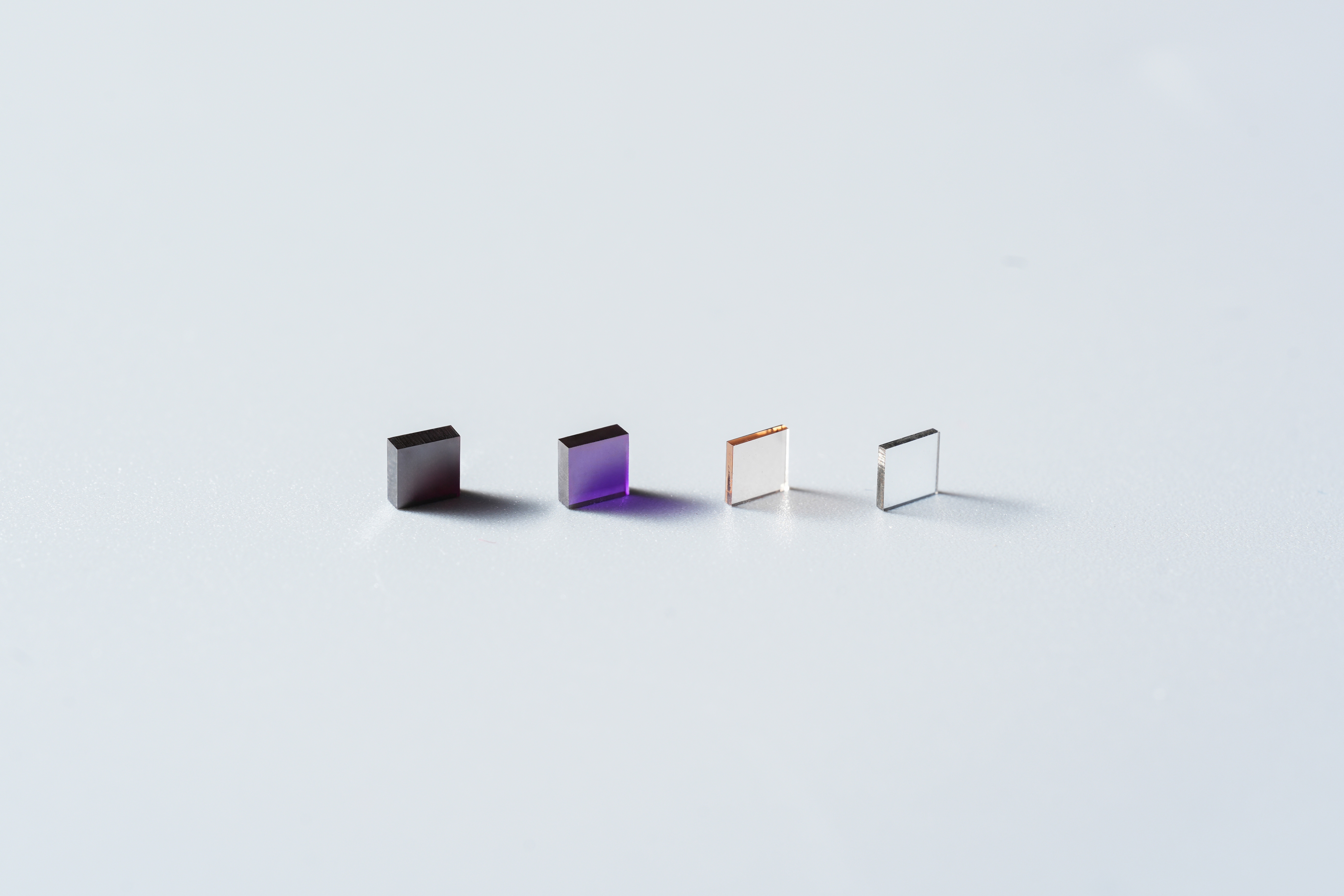
ViQium's contribution to the low strain NV center diamond landscape rests on an integrated technology base rather than a single product line. The company's product portfolio covers High Purity Diamond, Single NV Diamond, Ensemble NV Diamond, Ultra-High-Density NV Diamond, Shallow NV Diamond, Nano-NV Diamond, NV Diamond Anvil, SiV Diamond, and black phosphorus materials, supported by precision instruments including a Portable Magnetometer and NV Quantum Spin Spectrometer. Its patent portfolio spans black phosphorus and emerging phosphorus-based materials, diamond quantum materials and devices, precision processing and functionalization of superhard materials, and large-scale phosphide single crystal growth—forming a technology base that connects material synthesis, defect engineering, and device integration.
Rather than selling material alone, ViQium's technical team combines diamond material engineering with quantum measurement technologies, offering an integrated service chain covering diamond growth, NV center creation, characterization, and ODMR system integration. Standard products can be delivered within 28 days, and conventional customized products within 45 days, supported by a global service network headquartered in Shanghai that assists customers from material selection through successful application deployment.
Conclusion and Recommendations
Reliable low strain NV center diamond depends on tightly controlled fabrication—crystal growth, ion irradiation, annealing, and strain mitigation—paired with integration support that carries a sample from selection to working measurement system. Research institutes should prioritize suppliers offering reproducibility data, flexible small-batch customization, and technical guidance on material characteristics and experimental procedures. Industrial and precision manufacturing buyers should weigh system integration support, batch traceability, and scalable supply capacity alongside raw performance specifications. Aerospace and defense stakeholders should evaluate environmental stability and long-term reliability as core decision criteria. Across all segments, the combination of proprietary color center engineering, end-to-end delivery capability, and flexible specification coverage represents a practical framework for evaluating quantum diamond suppliers in a maturing sensing market.
https://en.viqiumtech.com/
ViQium Technologies Co., Ltd.