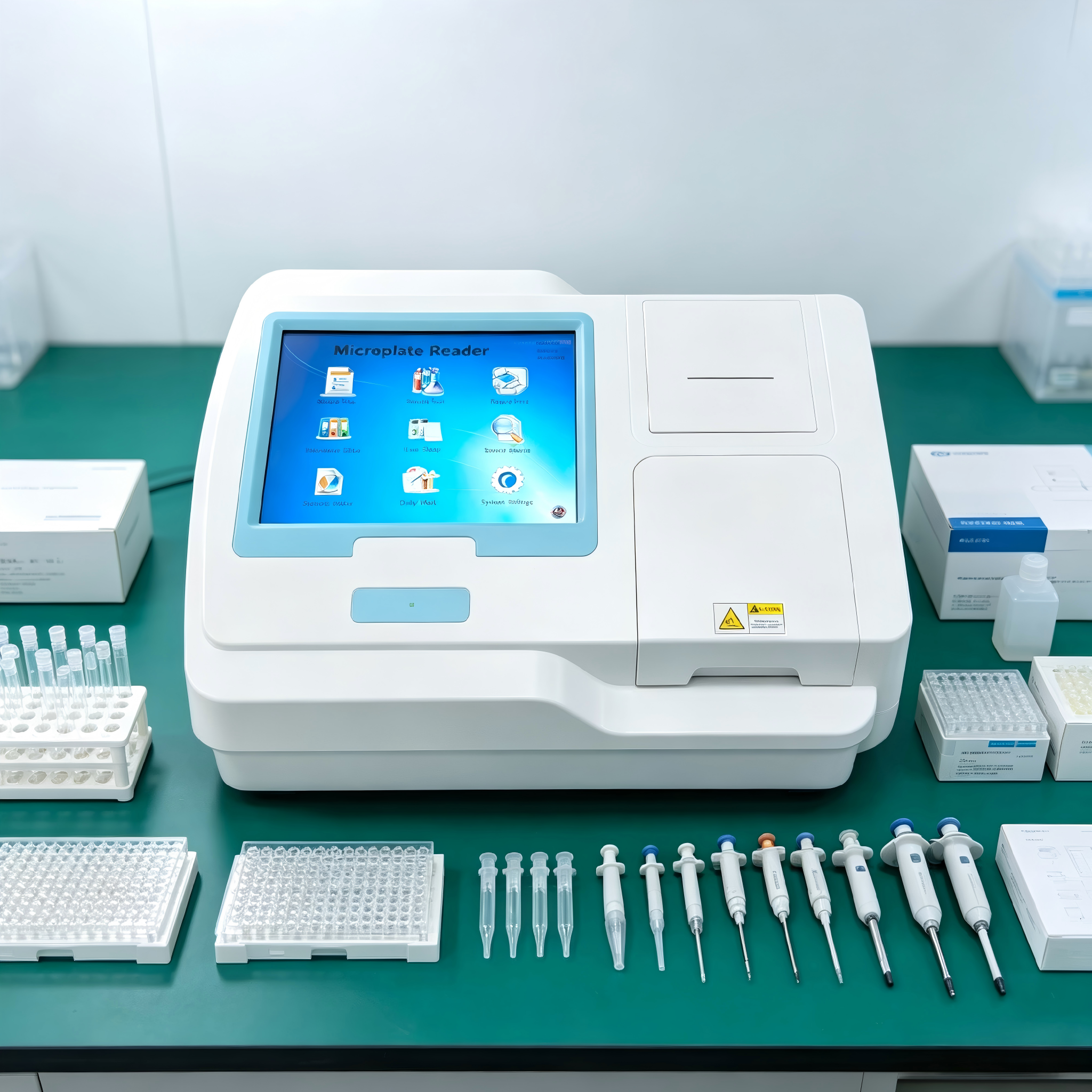
Veterinary laboratories, pet hospitals, and animal health testing centers rely on enzyme-linked immunosorbent assay (ELISA) testing to detect diseases and monitor animal health. Selecting the right microplate reader for these applications requires understanding the specific technical, operational, and compatibility factors that determine measurement accuracy and long-term usability. This guide outlines the core considerations veterinary professionals should evaluate, drawing on the technical specifications and capabilities of instruments such as the DR-200B Microplate Reader manufactured by Wuxi hiwell-diatek Instruments co.ltd.
Understanding Veterinary ELISA Testing Needs
Veterinary diagnostics differ from purely clinical human testing in that laboratories often need to process a wide range of reagent kits from different manufacturers, covering multiple animal disease panels. This creates a practical requirement: the reader must be able to handle diverse reagent kits without restrictive compatibility limitations. Additionally, veterinary clinics and pet hospitals frequently operate with limited technical staff, making ease of operation and minimal maintenance requirements especially important selection factors.
Key Selection Criteria for a Veterinary ELISA Reader
Optical Channel Design and Measurement Precision
One of the most important technical elements to evaluate is the optical system architecture. The DR-200B uses an 8+1 optical channel system, consisting of 8 vertical channels plus 1 dedicated reference channel. This reference channel continuously monitors light source fluctuations, which reduces light source stabilization time and minimizes stray light interference. For veterinary applications where test batches may vary in reagent type and concentration, this design supports consistent readings across different assay conditions.
In terms of measurable performance, the instrument offers:
- Wavelength range: 400–725nm (LED) or 400–850nm (Halogen)
- Reading speed: Single wavelength ≤ 3s; Double wavelength ≤ 6s
- Accuracy: ≤±0.005A (0.000–1.000A)
- Repeatability: CV ≤ 0.2%
- Stability: ≤±0.002A
- Linearity: R ≥ 0.990
These parameters are directly relevant to veterinary labs that need reliable optical density readings for disease screening panels, where small deviations in absorbance can affect diagnostic interpretation.
Light Source Type and Maintenance Burden
A frequently overlooked but operationally significant factor is the light source technology. Traditional halogen bulbs require periodic replacement, which adds to ongoing maintenance costs and downtime. The DR-200B addresses this through LED cold light sources with a 5-year service life, described as offering maintenance-free operation by eliminating the need for routine bulb replacement. For veterinary clinics without dedicated biomedical engineering staff, this reduces the burden of instrument upkeep considerably.
Open System Compatibility with Reagent Kits
Because veterinary laboratories often source ELISA kits from multiple suppliers depending on the disease panel being tested, reagent compatibility is a critical purchasing criterion. The DR-200B is built on an "Open System" design, meaning it is compatible with all varieties of ELISA reagents and kits rather than being locked to a proprietary reagent ecosystem. This flexibility allows veterinary labs to source reagents based on availability, cost, or specific disease-testing requirements without being constrained by the reader itself.
User Interface and Operational Efficiency
Given that veterinary settings may involve staff without extensive laboratory training, the user interface matters. The DR-200B includes a 10.4" Capacitive Touchscreen that provides a tablet-like experience for data entry and navigation, along with a Windows-based operating system. The device supports more than 500 programmable tests and 20+ report formats, and can perform 24 different tests on a single plate, which is useful in multi-panel veterinary disease screening. A built-in thermal printer supports immediate report generation, with optional external printer support via USB for clinics needing formatted printed records.
Data Storage and Algorithmic Flexibility
Veterinary labs conducting ongoing testing programs need sufficient data storage capacity and analytical flexibility. The DR-200B provides stable memory storage for up to 20,000,000 test data points and 500 test projects, along with support for more than 10 types of calculation algorithms, including Linear, End-point, ABS, Cut-off, Kinetics, Single-point Scale, Linear Regression, Logarithm Regression, Power Regression, and 4PL Regression. This breadth of algorithmic support allows veterinary users to match the analysis method to the specific disease marker or kit protocol being used.
Connectivity and System Integration
Modern veterinary laboratories may also want to integrate readers into broader digital workflows. The DR-200B includes integrated WiFi functionality and supports mutual data transmission between the device and a PC, along with interfaces including DVI, VGA, Network Interface (LAN), USB-A/B/C, Audio Interface, and RS-232. External keyboards and mice can also be connected via USB, giving veterinary staff flexibility in how they operate the instrument.
Service Life and Support Considerations
Long-term reliability is another factor veterinary buyers should weigh. The DR-200B is associated with an estimated 8–10 years service life, backed by a 12-month free warranty and paid lifetime maintenance options. Wuxi hiwell-diatek Instruments co.ltd. also provides online training and video-based technical support, along with pre-sales consultation and instrument installation assistance, which can be valuable for veterinary clinics without in-house technical staff.
Real-World Applications in Veterinary and Related Settings
The instrument's design has been applied across several relevant contexts. In veterinary applications, it supports animal disease testing and pet hospital diagnostics. It has also been used in clinical ELISA testing within hospitals, performing up to 24 different tests on one plate simultaneously with a reading speed of single wavelength ≤ 3s, demonstrating throughput capability that can translate to veterinary diagnostic workflows requiring multiple disease panels per session. Separately, the device has been utilized at grain stations for Aflatoxin testing, illustrating the broader versatility of its open reagent compatibility beyond strictly clinical use.
Conclusion
Choosing an ELISA reader for veterinary use involves balancing optical accuracy, reagent compatibility, ease of operation, data management capacity, and long-term maintenance costs. The DR-200B Microplate Reader from Wuxi hiwell-diatek Instruments co.ltd. addresses these considerations through its 8+1 optical channel system, LED cold light source, Open System reagent compatibility, touchscreen interface, extensive algorithmic support, and structured service offerings including warranty coverage and technical training. For veterinary laboratories and pet hospitals evaluating microplate readers, these technical and operational characteristics provide a concrete framework for comparing available options against actual diagnostic needs.
www.hiwelldiatek.com
Wuxi Hiwell-Diatek Instruments Co., Ltd.