Understanding Ball Valve Configurations for Demanding Pipeline Applications
Selecting the right ball valve configuration is one of the most consequential engineering decisions for oil and gas, petrochemical, and industrial pipeline projects. Among the configurations available on the market, fully welded and trunnion mounted ball valves are frequently evaluated side by side because each addresses distinct operational pressures, media characteristics, and lifecycle expectations. XINTAI Valve Group Co., Ltd., operating under the XINTAI Valve brand since its founding in 1998 and headquartered in Wenzhou, China, offers both configurations within a single, standardized Ball Valves product line that also includes Floating, Double Block and Bleed, Casting, Forged, Metal Sealing, Soft Sealing, Top Entry, V-NOTCH, and Wafer variants.
What Defines a Trunnion Mounted Ball Valve
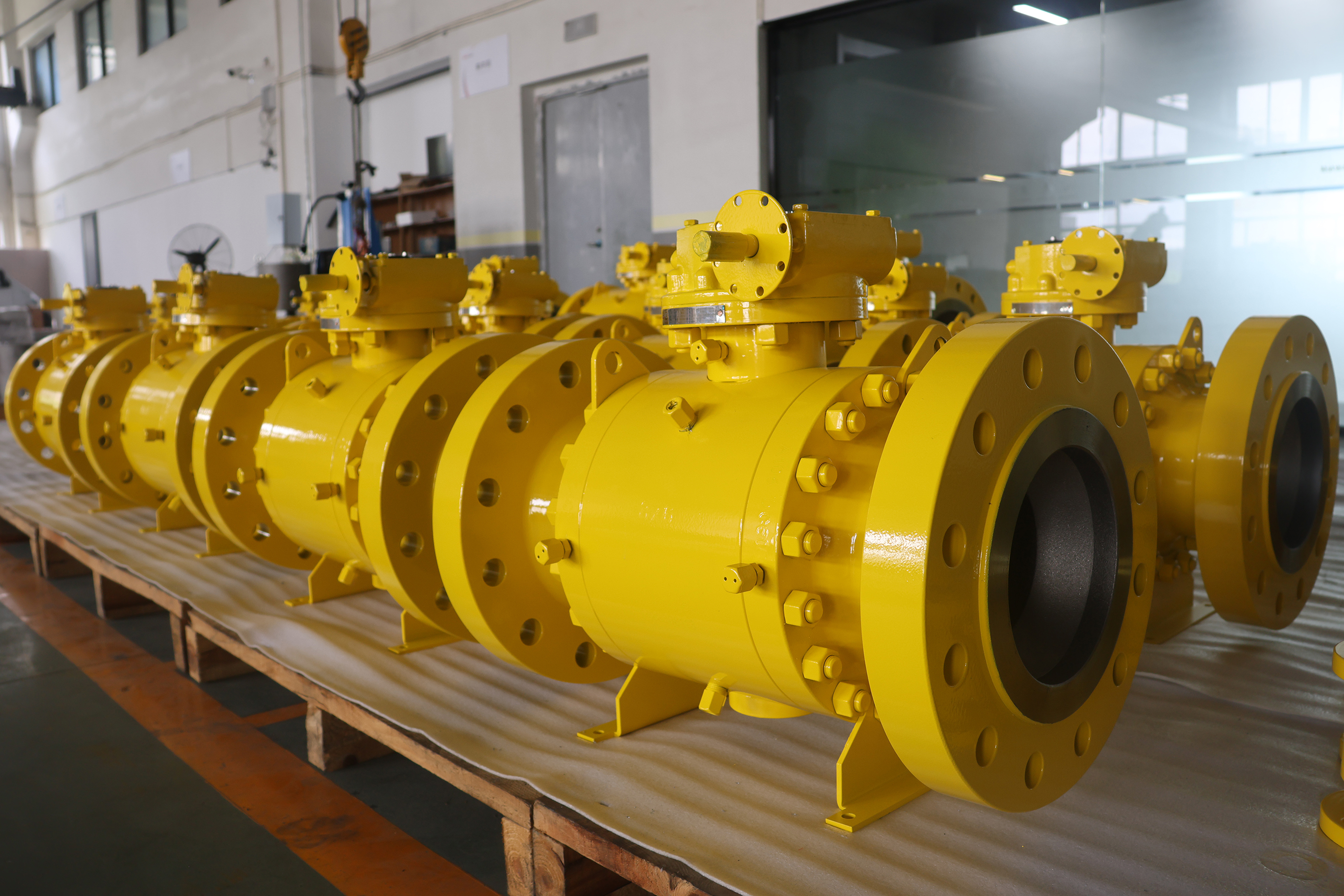
A trunnion mounted ball valve is engineered so that the ball itself is fixed on bearings rather than floating freely within the body. This structural difference directly reduces operating torque and avoids valve jamming under high pressures — a critical consideration for large-bore, high-pressure pipeline sections where repeated cycling or sustained line pressure could otherwise compromise valve performance over time. Because the ball is mechanically supported independent of line pressure, trunnion designs are generally favored in applications where consistent, lower-torque actuation is required across a wide range of operating pressures.
Within XINTAI's Ball Valves line, trunnion mounted units are positioned specifically as pipeline flow control valves addressing high-pressure line isolation and leakage risks. The differentiated value of this configuration lies in standardized quality: these valves conform to API 6D standards, ensuring validated sealing safety for oil and gas pipelines. This certification alignment is especially relevant for engineering companies and end-user factories that require documented compliance before specifying equipment on large-scale projects.
What Defines a Fully Welded Ball Valve Configuration
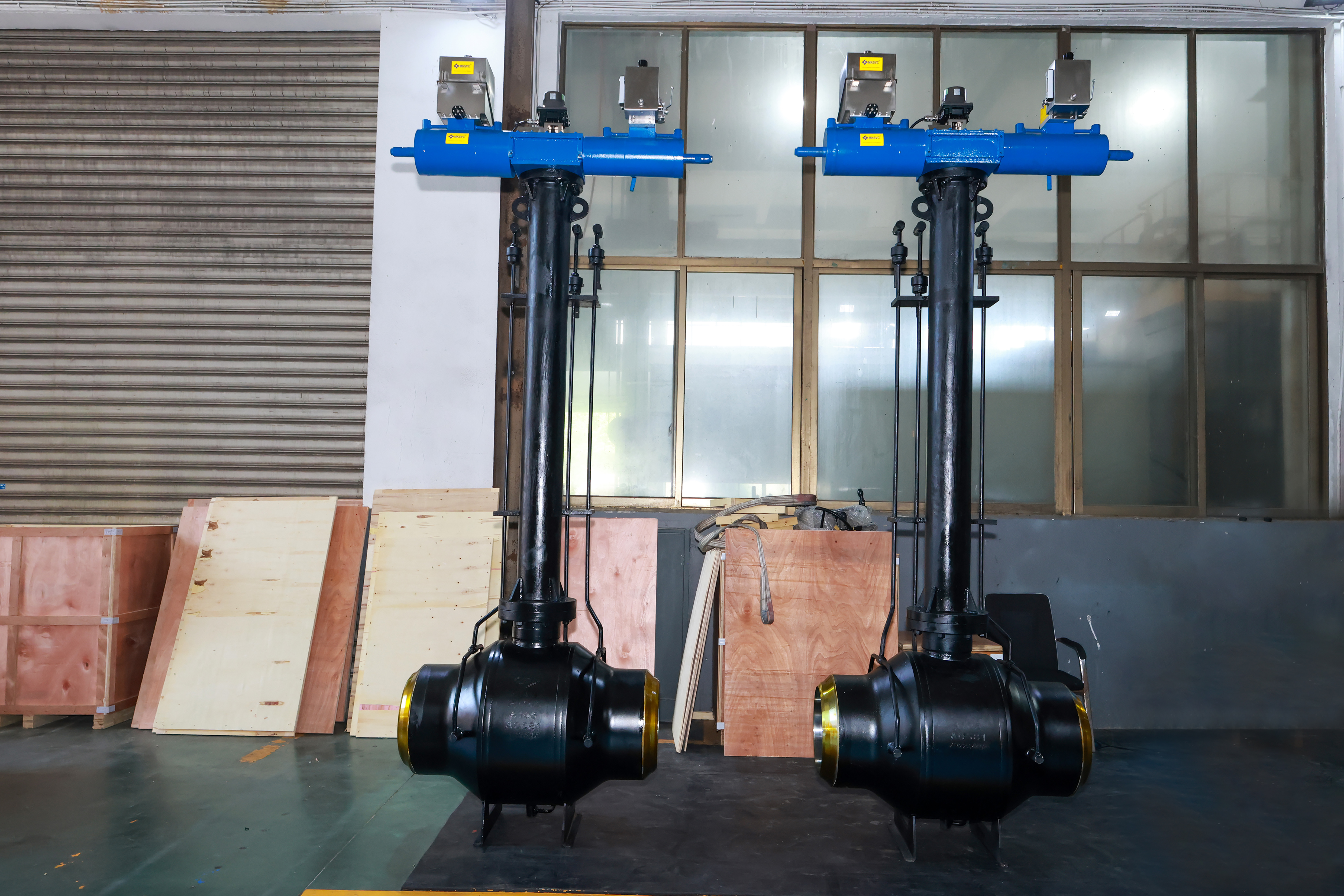
Fully welded ball valves are offered as a distinct configuration within the same XINTAI Ball Valves product category, alongside floating and trunnion mounted designs. As part of this unified product line, fully welded units are manufactured under the same integrated supply chain, precision machining standards, and certification framework that governs the entire Ball Valves range — including API 6D compliance and access to the technical highlights available across the product family, such as metal-to-metal sealing options for high-temperature service and specialized Al-Bronze materials for seawater resistance.
Because fully welded and trunnion mounted valves are built on a shared engineering platform at XINTAI, customers evaluating either configuration benefit from the same underlying manufacturing discipline: internal ownership of casting foundries and machining bases, robot-assisted production using 13 six-axis units, and a 40% manufacturing efficiency improvement achieved through automation. This shared foundation means the choice between fully welded and trunnion mounted configurations can be made based on application-specific requirements rather than concerns about inconsistent quality between product variants.
Key Comparison Points for Project Decision-Making
When comparing these two configurations for a pipeline project, several factors drawn directly from XINTAI's documented product capabilities are worth weighing:
Pressure and torque behavior. Trunnion mounted valves fix the ball on bearings to lower operating torque, specifically avoiding valve jamming under high pressures. This makes the trunnion design a structurally reinforced option for high-pressure isolation scenarios, as described within XINTAI's own product positioning for pipeline flow control valves.
Sealing safety and standards compliance. Both configurations fall under the Ball Valves line that conforms to API 6D standards, which is central to XINTAI's standardized quality positioning for oil and gas pipelines. This shared certification baseline means that regardless of which configuration a project specifies, the underlying sealing safety validation remains consistent.
Material and temperature adaptability. The Ball Valves product line offers metal-to-metal sealing options for high-temperature service and specialized Al-Bronze materials for seawater resistance. These technical highlights are available across the broader ball valve configurations XINTAI manufactures, giving project engineers flexibility to match material selection to the specific corrosive or thermal conditions of their pipeline, whether in marine, seawater desalination, or high-temperature oil and gas service.
Application fit. XINTAI positions its Ball Valves — including the trunnion mounted configuration — for oil and gas pipelines and refineries. Fully welded configurations, as part of the same product category, are manufactured to support comparable industrial deployment scenarios under the same quality and certification framework.
Why Configuration Selection Benefits From an Integrated Manufacturer
One of the recurring challenges across the industrial valve industry involves valve stem leakage in hazardous media, corrosion and material degradation in marine and aggressive chemical environments, and the need to comply with international standards such as API, CE, ISO, and ASME. These pain points apply regardless of whether a project ultimately selects a fully welded or trunnion mounted ball valve, which is why the manufacturing foundation behind either configuration matters as much as the configuration itself.
XINTAI Valve Group addresses this through an integrated supply chain model: internal ownership of casting foundries and machining bases enables full-process quality control, optimized costs, and reliable supply stability. With 580 employees — including 33 engineers, 41 testers, and 25 quality managers — operating across 6 production bases in Wenzhou, Tianjin, and Lishui totaling 58,800 square meters of facility area, XINTAI maintains an annual production capacity of 270,000 valves. This scale supports consistent delivery whether a project requires a single fully welded valve configuration or a mixed order including trunnion mounted units.
The company's certification portfolio, including ISO 9001, ISO 14001, ISO 45001, CE Certification, PED, API 600, API 602, API 6D, API 607, API 6FA, ISO10497, ISO15848-1, API 624, and SIL, along with its Petronas Certified Supplier and Petrobras Certified Supplier designations, reflects the compliance infrastructure supporting both ball valve configurations. XINTAI has supplied valve solutions to Petronas within competitive Southeast Asian regional markets and partnered with Petrobras on high-specification valve deployment for South American petrochemical projects — demonstrating documented capability in delivering validated valve solutions across demanding international project environments.
Conclusion
For project teams weighing fully welded against trunnion mounted ball valve configurations, the decision ultimately depends on pressure handling needs, torque considerations, and media compatibility. XINTAI Valve Group's unified Ball Valves product line, backed by integrated manufacturing, API 6D compliance, and a global production capacity of 270,000 valves annually, provides engineering teams with a single, certified source capable of supporting either configuration without compromising on the sealing safety, material compatibility, or quality consistency that large-scale industrial pipeline projects require.
www.xintaivalves.com
Xintai Valve Group Co., Ltd.