Have you ever had this experience?
You're watching a basketball game on TV. The camera follows a fast break, but the picture keeps flickering. As players move quickly, you feel your eyes straining to keep up – something feels off, but you can't quite put your finger on it.
Or worse – you're at the arena, looking up at the big screen replay, and there are visible rolling stripes across the image.
That's not a broadcast signal issue. That's flicker.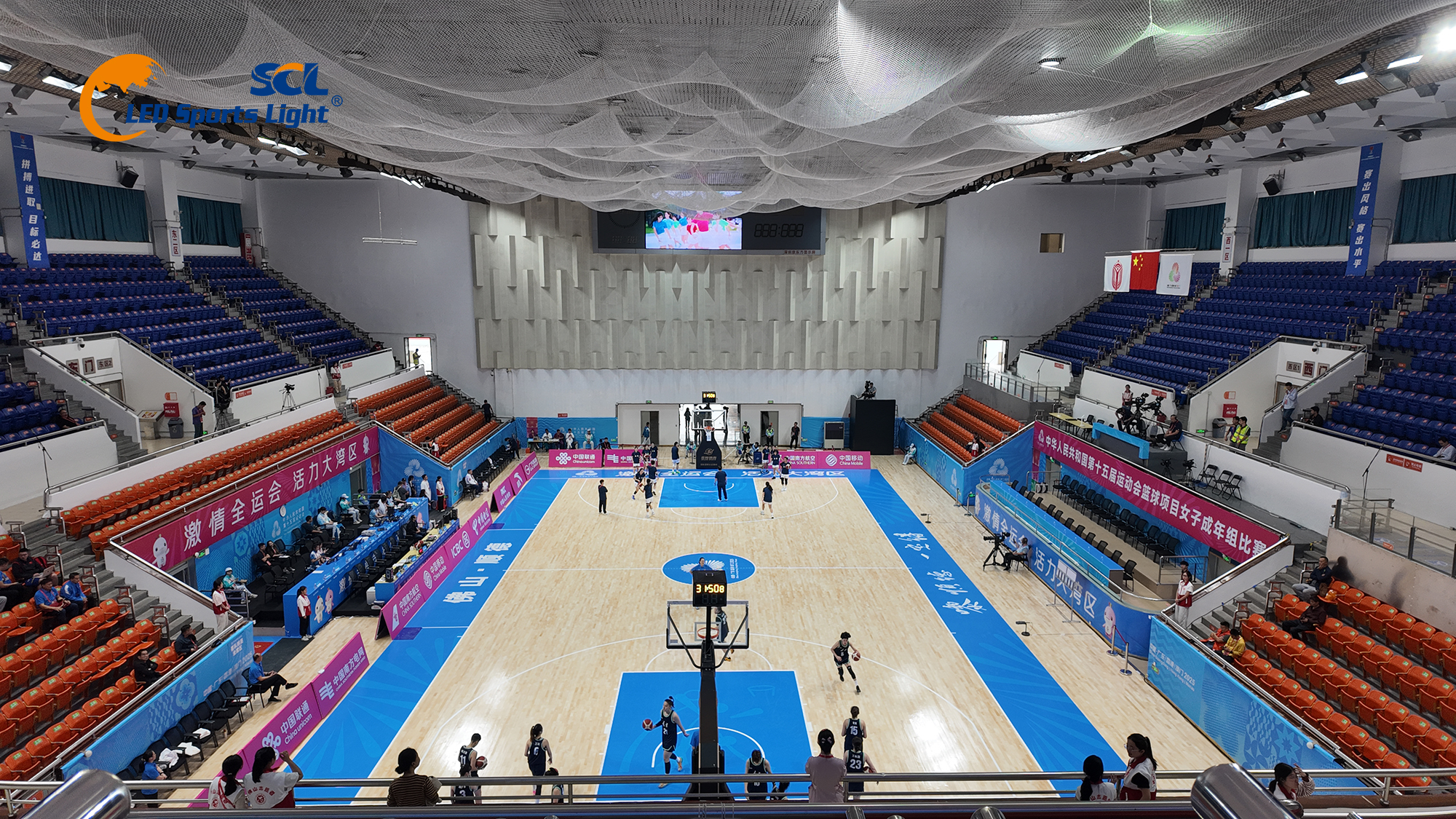
Flicker: the slow-motion killer
Flicker, simply put, is light that flashes on and off at a frequency too fast for the human eye to detect. You won't notice it live, but cameras see it clearly.
When highspeed cameras capture slowmotion replays at hundreds of frames per second, flicker becomes magnified – the picture shows visible flickering and banding, making the replay unusable.
International event standards require flicker percentage to be kept within 3% , while professional HDTVgrade broadcasts demand completely flickerfree performance.
Why is this so strict?
Because the decisive moments in basketball often happen in a split second – a steal leading to a fast break, a buzzerbeating threepointer. These plays need to be reviewed frame by frame in slow motion. If the lights flicker, the replay is full of stripes, referees can't make accurate calls, and viewers lose the experience.
Professional basketball venues use LED fixtures with highfrequency drivers or DC constantcurrent power supplies to eliminate flicker at the source.
High CRI: giving the court its true colours
The Colour Rendering Index (Ra) measures how accurately light reproduces the true colours of objects.
A typical LED light has a CRI of around 70 – things look slightly "washed out" or "bluish." Professional basketball venues require Ra ≥ 80, and HDTVgrade events push that up to Ra ≥ 90.
What's the difference?
Under Ra=70 lighting, team jerseys look greyish, the basketball looks dull orange, and the wooden court loses its natural tone. Under Ra=90 lighting, colours are true – red is red, orange is orange, and broadcast pictures are vibrant and natural.
In the era of 4K and even 8K broadcasting, high CRI is a hard requirement. Without accurate colour, even the sharpest picture falls flat.
Low glare: making the lights "invisible" to players
This is the most overlooked factor, yet it has the biggest impact on athletes.
Imagine this: a player catches the ball behind the threepoint line, looks up to shoot – if a highintensity light is shining directly into their eyes at that moment, the visual interference alone can change the trajectory of the shot.
Professional lighting design isn't just about making the court bright – it's about making sure the light stays out of the players' and cameras' main lines of sight. Through builtin antiglare lenses, optimized beam angles, and precise light control, players are never staring into direct light anywhere on the court.
The lower the Glare Rating (GR), the better – professional competitions require GR < 30, with HDTVgrade events demanding even stricter limits.
These three requirements are nonnegotiable
Flicker affects broadcast quality – whether slowmotion replays are usable. CRI affects colour accuracy – whether the picture looks pleasing. Glare affects athlete performance – whether players can see the rim clearly.
Together, they answer one question: is this game good to watch?
Nanhai Sports Center: from 500 Lux to over 2,000 Lux
To see how these three hard requirements turn from standards into reality, look no further than the home of the CBA Foshan Lions – Nanhai Sports Center in China.
Before the 2015-2016 CBA season, Nanhai Sports Center faced an uncomfortable reality: the original lighting system delivered only about 500 Lux of vertical illuminance.
500 Lux – what does that mean? A welllit classroom is about 500 Lux. Using classroom brightness for a professional basketball league? Clearly not enough.
Even more critical – 500 Lux simply couldn't meet TV broadcast standards. The Chinese Basketball Association (CBA) demands highdefinition broadcasts; cameras need sufficient light to capture crisp images. At 500 Lux, the picture is noisy, details are blurred, colours are off – viewers strain their eyes, and broadcasters struggle.
SCL Sports Lighting took on the project and designed a QDZ-500D LED sports lighting system specifically for Nanhai Sports Center.
The results after the upgrade speak for themselves: average vertical illuminance exceeds 1,500 Lux, horizontal illuminance exceeds 2,000 Lux, with a uniformity ratio (U₂) of 0.8.
Flicker-free – highfrequency constantcurrent drivers keep slowmotion replays clean and stable. High CRI – Ra ≥ 90 ensures team colours are accurately reproduced and broadcast pictures are vibrant. Low glare – GR ≤ 23, with precision light control that keeps players from being blinded when they look up.
When Guangdong Television tested the onsite data, every single indicator passed. CBA broadcasts from the new season never again suffered from "too dark, too blurry, or too flickery."
And here's the bonus – compared to the old metal halide lights, SCL's LED system offers much higher energy efficiency and an exceptionally long lifespan. Bright, and economical. Bright, and durable.
Professional basketball lighting: more than just being "bright"
Flicker, CRI, glare – these technical terms may sound complicated, but what they determine is very simple:
Whether players can see the rim clearly.
Whether referees can see the action accurately.
Whether cameras can capture every detail.
Whether viewers can watch comfortably.
From Nanhai Sports Center's 500 Lux to over 2,000 Lux – from "barely playable" to "HD broadcast ready" – that's what professional sports lighting does: turning standards into reality, and turning "visible" into "visually exceptional."
You don't see the lighting design. But your eyes know its value.
https://www.stadiumlight.com/
GUANGDONG SEVEN CONTINENTS INDUSTRIAL CO., LTD