Backflow prevention is rarely the headline of a piping design review, but the consequences of getting it wrong are — damaged pumps, contaminated process streams, and unplanned downtime. Two of the most frequently specified self-acting designs are the dual plate check valve and the lift check valve. Both serve a single purpose, yet they achieve it through different mechanical logic, and the choice between them shapes pressure drop, installation space, maintenance rhythm, and service life. This guide compares the two designs dimension by dimension and explains how XINTAI Valve Group Co., Ltd. manufactures and supports both configurations.
What the Check Valve Family Includes
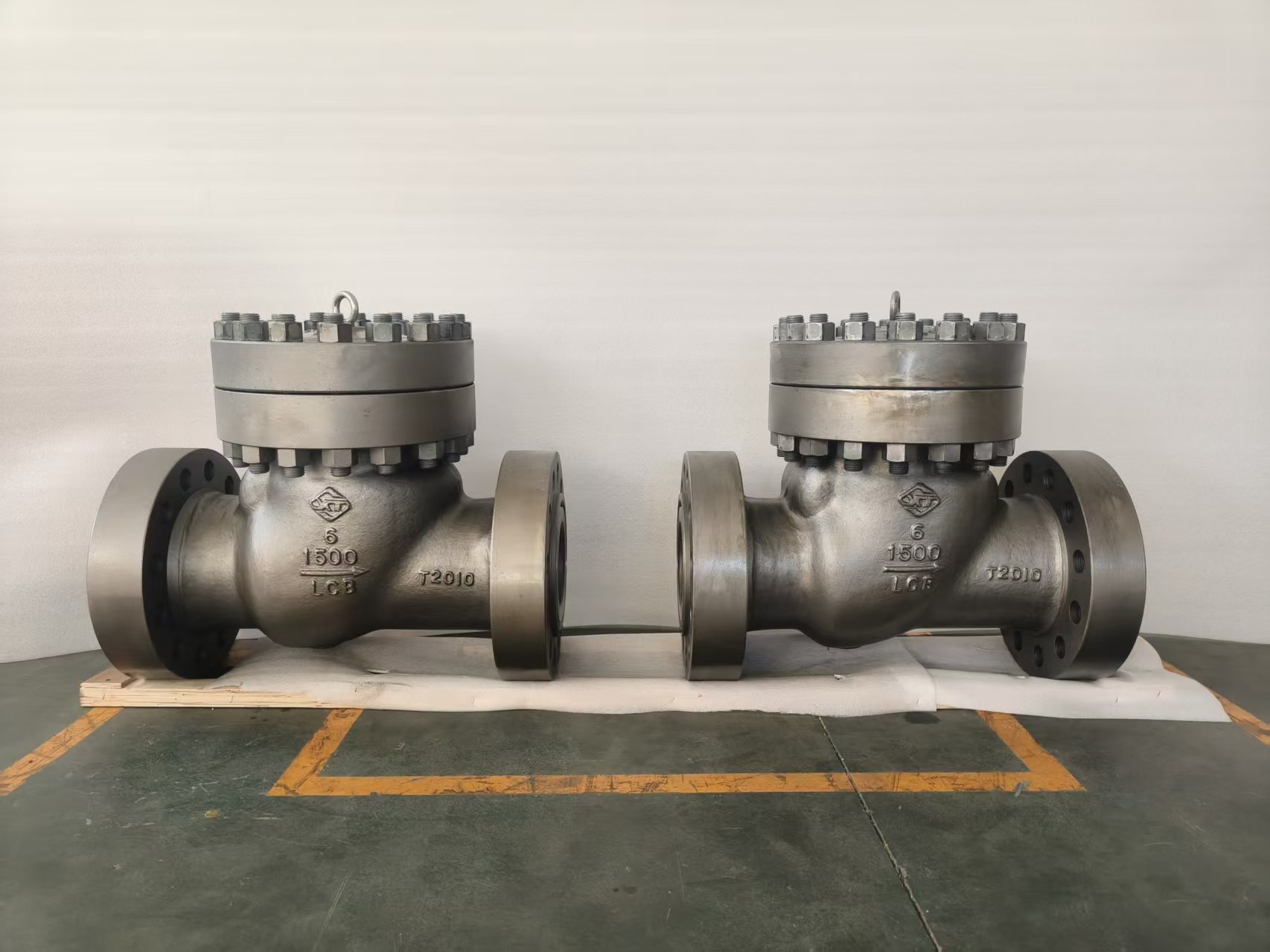
XINTAI Valve's product matrix lists check valves in four configurations: Swing, Wafer, Dual Plate, and Lift. All four are self-acting backflow prevention valves, meaning they open and close on the energy of the flowing medium without an external actuator. Within the company's portfolio, the differentiated value of the check valve line is equipment protection: in high-pressure steam lines, the automatic closing action prevents backflow damage to upstream pumps.
The two designs examined here sit at opposite ends of the trade-off between compactness and guided control.
Dual Plate Check Valves: Compact Geometry, Spring-Assisted Closure
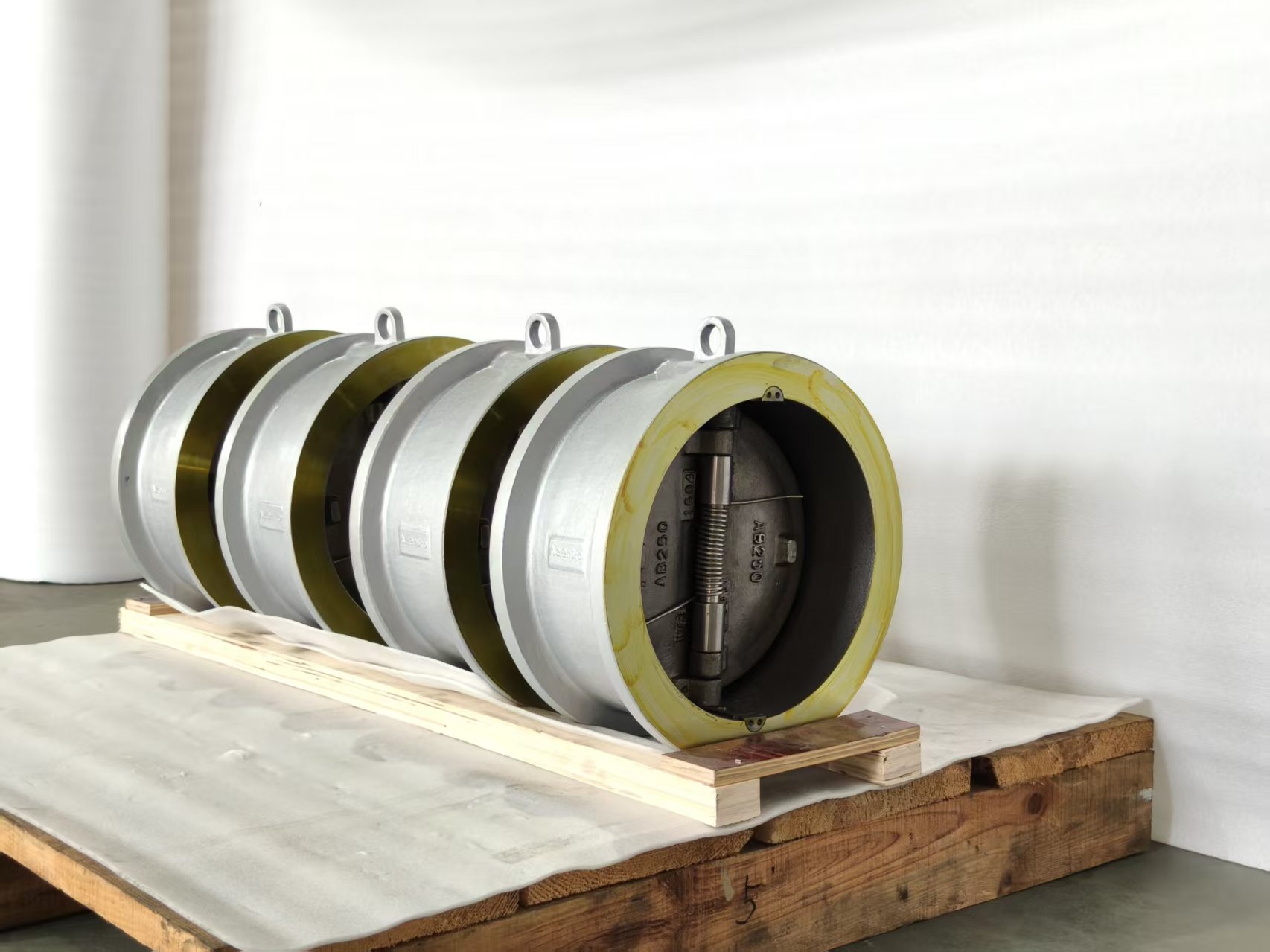
A dual plate check valve uses two semicircular plates hinged on a central pin, each loaded by a spring. Forward flow pushes the plates open into the bore; as flow decelerates, the springs return them to the seat before reverse flow can fully develop.
Design characteristics that matter at the selection stage:
- Wafer-style body: the valve fits between two pipeline flanges, minimizing face-to-face length and total weight.
- Spring-assisted closure: the plates begin closing early in the deceleration phase, which shortens the closing stroke and limits the reverse velocity that can build in the line.
- Symmetrical movement: two balanced plates keep the closing force centered in the bore.
- Orientation flexibility: suitable for horizontal and vertical piping, provided the flow direction and installation position are correct.
Lift Check Valves: Guided Disc Travel
A lift check valve uses a disc or piston that is lifted off its seat by forward flow and guided along a central stem or bore as it travels. Closure occurs when forward flow stops, and the disc reseats along the same guided path. Because the disc moves axially rather than swinging freely, seating is controlled and repeatable.
Points that define its behavior in service:
- Flow path: fluid is directed around or through the guided disc, a geometry that suits smaller line sizes and higher pressure classes.
- Seating consistency: axial guidance returns the disc to a consistent seat position, cycle after cycle.
- Pulsating flow: under unstable or oscillating flow, the guided disc can chatter, so correct sizing and spring selection are essential.
- Installation position: orientation matters, since gravity contributes to closure in many configurations.
Direct Comparison Across Five Dimensions
Pressure Drop and Flow Capacity. The dual plate design presents two thin plates aligned with the flow when open, keeping obstruction low and making it well suited to large-diameter lines. The lift design directs flow through a guided disc arrangement, which is typically favored in smaller bore, higher pressure service where compact internal geometry matters more than a wide open area.
Closure Speed and Reverse Flow. Spring-loaded plates in the dual plate design begin closing as flow slows, shortening the interval before the seat is contacted. The guided disc in a lift valve relies on flow reversal and gravity to reseat, so closure follows reverse flow rather than anticipating it.
Space, Weight, and Piping Layout. The dual plate valve's wafer construction reduces installed length and weight, which lowers pipe support demands in congested skids and retrofits. The lift check valve requires a body that accommodates guided disc travel, so it occupies more space relative to the same nominal size.
Maintenance and Service Life. In both designs, wear concentrates at the seating surfaces and the guidance elements. Dual plate valves are commonly serviced by replacing the plate and spring assembly, while lift valves involve inspection of the disc and guide path. Particulate-laden media accelerate wear on either design, which is why strainers are often specified upstream — XINTAI Valve supplies Y, T, and Basket strainers for exactly that duty, protecting downstream valve seats from abrasive solids.
Pressure Class and Media. XINTAI Valve's check valve line is engineered for demanding industrial installations, and the company's technical capability extends to operational pressures up to Class 2500, supporting dual plate and lift selections in high-pressure process service. Both designs are offered alongside sealing and material options suited to the media and temperature range of the application.
Matching the Design to the Application
- Dual plate check valves fit space-constrained, large-diameter, or low-pressure-drop lines across oil and gas, water treatment, cooling water systems, and district heating.
- Lift check valves fit smaller, higher-pressure lines where stable guided seating is valued, including chemical processing, power generation, and general pipeline systems.
Neither design is universally correct; the deciding factors are line size, allowable pressure drop, available space, and how quickly reverse flow develops.
How XINTAI Valve Supports Both Configurations
XINTAI Valve Group Co., Ltd. was founded in 1998 and is headquartered in Wenzhou, China. The company operates as an established global manufacturer of industrial valves for oil and gas, chemical, power station, water treatment, metallurgy, and mechanical markets, with business coverage across North America, South America, Europe, Central Asia, the Middle East, and Southeast Asia.
Scale and engineering depth underpin reliable supply. XINTAI Valve employs 580 people, including 33 engineers, 41 testers, and 25 quality managers, and operates 6 production bases across Wenzhou, Tianjin, and Lishui, totaling 58,800 m² of facility area. Annual production capacity reaches 270,000 valves. Internal ownership of casting foundries and machining bases enables full-process quality control, while a dedicated in-house testing facility in Yongjia handles pressure, seal, and material validation. Robot-assisted manufacturing with 13 six-axis polishing and inspection units supports a 40% improvement in production efficiency.
Quality systems and approvals cover ISO 9001, ISO 14001, ISO 45001, CE, EU Declaration of Conformity, PED, API 600, API 602, API 6D, API 607, API 6FA, ISO 10497, ISO 15848-1, API 624, SIL, EAC, PAT, and TAT, along with Petronas and Petrobras certified supplier designations. Platform compatibility spans API 6D, API 602, API 600, DIN, JIS, and GOST standards, with manual, pneumatic, and electric actuation options.
A Practical Selection Checklist
Before specifying either design, confirm the line size and pressure class, the maximum acceptable pressure drop, the space available for face-to-face length and support, the speed at which reverse flow can develop, and the particulate content of the medium. A dual plate valve answers compact, high-flow, fast-closure requirements; a lift check valve answers guided, small-bore, high-pressure requirements.
For buyers evaluating backflow protection across oil and gas, petrochemical, power, water treatment, and marine applications, XINTAI Valve offers both configurations from a single, vertically integrated manufacturing base — supported by documented certifications and proven supplier relationships in Southeast Asian and South American markets, with 20% of products exported to Europe and the USA and 80% distributed to other global regions.
www.xintaivalves.com
Xintai Valve Group Co., Ltd.