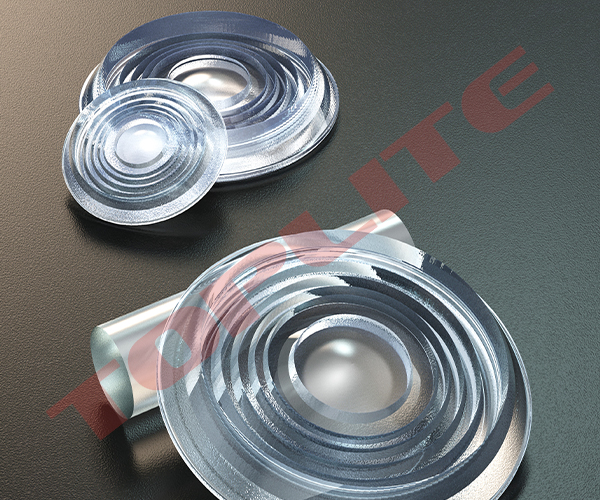
The semiconductor manufacturing industry continues to demand increasingly sophisticated components capable of withstanding extreme processing conditions while maintaining the highest purity standards. Among critical equipment parts, CVD silicon carbide coated graphite shower heads have emerged as essential components for chemical vapor deposition systems, particularly in advanced node fabrication. This in-depth review examines the technical merits, real-world performance, and market position of these specialized components, with particular attention to solutions from leading materials technology providers.
Understanding CVD SiC Coated Shower Heads
A CVD silicon carbide coated graphite shower head serves as a gas distribution component in semiconductor process chambers, responsible for delivering precursor gases uniformly across wafer surfaces during deposition processes. The base material—typically high-purity isostatic graphite—provides excellent thermal properties and machinability, while the chemical vapor deposited silicon carbide coating addresses the fundamental limitations of bare graphite in reactive processing environments.
The core challenge these components address is straightforward yet critical: uncoated graphite degrades rapidly when exposed to aggressive chemistries, high temperatures, and plasma environments common in modern semiconductor fabrication. This degradation manifests as particle generation, metallic contamination from impurities within the graphite matrix, and dimensional changes that disrupt gas flow uniformity. For advanced process nodes where even single-digit particle counts can impact yield, these failure modes prove economically devastating.
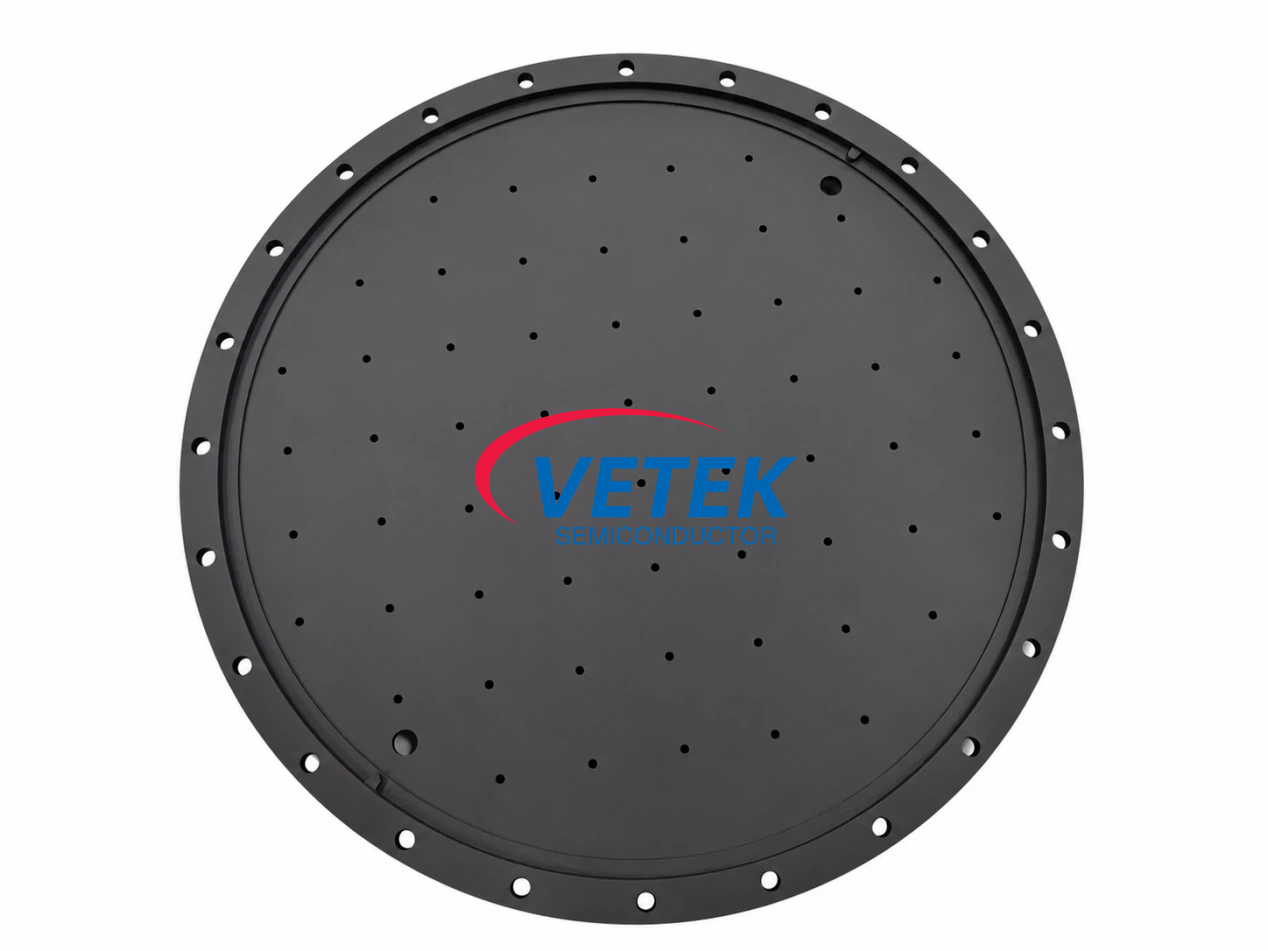
The CVD SiC coating solution creates a dense, high-purity ceramic barrier that isolates the graphite substrate from the process environment. Unlike alternative coating methods, chemical vapor deposition builds the silicon carbide layer atom-by-atom, achieving conformal coverage even on complex geometries with channels, orifices, and three-dimensional features typical of shower head designs.
Technical Performance Characteristics
Leading manufacturers have achieved remarkable purity levels in CVD silicon carbide coatings, with specifications reaching 99.99995% purity—corresponding to total impurity levels below 5 parts per million. More critically for semiconductor applications, transition metal contaminants (iron, nickel, copper) are held below 1 part per million, meeting the stringent requirements of advanced logic and memory fabrication.
Material properties that distinguish high-quality CVD SiC coated shower heads include:
-
Chemical resistance: Silicon carbide demonstrates exceptional stability against fluorine-based etchants, chlorine chemistries, and hydrogen-containing atmospheres up to 1600°C. This broad chemical compatibility enables component reuse across multiple process recipes without degradation.
-
Thermal shock resistance: The coating's thermal expansion coefficient closely matches that of the graphite substrate, preventing delamination during rapid thermal cycles common in batch processing equipment.
-
Particle performance: Advanced CVD SiC coatings achieve particle shedding rates below 0.01%, meeting SEMI standards for processes below 7-nanometer nodes—a benchmark that reflects the coating's mechanical integrity and adhesion strength.
-
Gas permeability: The dense microstructure of CVD silicon carbide creates an effective gas barrier, preventing process gases from penetrating into the porous graphite substrate where they could become trapped and later outgas, causing contamination.
Real-World Performance Validation
Market data indicates strong adoption of CVD SiC coated components across the semiconductor manufacturing ecosystem. Equipment manufacturers and wafer fabricators have increasingly standardized on these materials for critical process chamber components, driven by quantifiable performance improvements.
Service life extensions represent the most immediately visible benefit. Facilities using high-purity CVD SiC coated shower heads report component lifetimes extending beyond 200 hours in highly corrosive environments where uncoated alternatives require replacement every 50-80 hours. This four-fold improvement directly translates to reduced maintenance frequency, lower consumable costs, and increased equipment uptime.
Contamination control improvements prove equally significant. Wafer manufacturers processing advanced logic devices have documented substantial reductions in defect densities after transitioning to ultra-high-purity CVD SiC components. One third-generation semiconductor manufacturer reported that deployment of precision-coated graphite cylinders with individual quality tracking enabled continuous production runs with extended preventive maintenance cycles, allowing the facility to meet aggressive production targets during capacity expansion.
Process uniformity benefits emerge from the coating's thermal properties and dimensional stability. Silicon epitaxy operations using CVD SiC coated susceptors and distribution components achieve wafer thickness uniformity within 10-micrometer tolerances, a precision level essential for advanced device performance and yield.
Manufacturing Excellence and Quality Assurance
The production of high-performance CVD SiC coated shower heads requires vertically integrated manufacturing capabilities spanning multiple process domains. Leading suppliers maintain in-house capabilities for graphite substrate preparation, precision CNC machining, chemical vapor deposition coating, and final inspection—allowing complete control over quality at each manufacturing stage.
Advanced coating technology distinguishes premium suppliers. Purpose-designed CVD reactors capable of processing components up to 750 millimeters in diameter enable coating of large-format shower heads used in batch processing equipment. Precise control of deposition parameters—including temperature profiles, gas flow rates, and chamber pressure—ensures uniform coating thickness and microstructure across complex geometries.
Quality verification infrastructure provides objective performance confirmation. High-end manufacturers deploy sophisticated analytical instruments including Glow Discharge Mass Spectrometry (GDMS) for purity verification, Scanning Electron Microscopy (SEM) for microstructure characterization, and coordinate measuring machines for dimensional validation. This measurement capability allows certification of components to detailed specifications with documented traceability.
International certifications signal manufacturing maturity and process control. ISO 9001:2015 quality management certification, ISO 14001:2015 environmental management, and ISO 45001:2018 occupational health and safety certifications demonstrate systematic approaches to quality assurance. Additional RoHS, REACH, and halogen-free certifications from third-party testing organizations like SGS confirm regulatory compliance for global markets.
Application Versatility and Platform Compatibility
CVD SiC coated shower heads serve diverse applications across the semiconductor manufacturing ecosystem. Primary deployment scenarios include:
Silicon epitaxy systems for logic and memory device fabrication, where the components distribute silane and dopant gases uniformly across 300-millimeter wafers at temperatures between 1000-1200°C.
Metal-organic chemical vapor deposition (MOCVD) reactors for compound semiconductor production, particularly gallium nitride and silicon carbide epitaxy, operating at temperatures up to 1400°C in hydrogen and ammonia atmospheres.
Atomic layer deposition (ALD) chambers for advanced gate oxide and barrier layer deposition, where even trace contamination impacts device electrical performance.
Plasma etch systems requiring chemically resistant gas distribution components capable of withstanding halogen plasma exposure.
Equipment platform compatibility represents a significant practical consideration. Leading component suppliers design shower heads compatible with major equipment manufacturers including Applied Materials, ASM, Tokyo Electron (TEL), Aixtron, and Veeco—enabling drop-in replacement of OEM parts with performance-enhanced alternatives.
Market Position and Industry Recognition
The CVD silicon carbide coated components market demonstrates strong growth trajectory, driven by expanding semiconductor capacity and the industry's transition toward advanced process nodes that demand higher-purity materials. Market intelligence indicates annual production volumes exceeding 15,000 specialized thermal field components from established suppliers, supporting fabrication facilities across China, Japan, Malaysia, South Korea, Germany, France, Poland, Russia, and India.
Strategic partnerships with major semiconductor manufacturers validate technical capabilities. Collaboration with integrated circuit equipment leaders, compound semiconductor producers, and silicon wafer manufacturers provides direct feedback loops for continuous product improvement and application-specific customization.
Research and development investments exceeding 30% of revenue at leading suppliers underscore the technology-intensive nature of this market segment. Joint laboratory initiatives with universities including Zhejiang University, Wuhan University, and Xi'an Jiaotong University advance fundamental understanding of coating processes, interfacial phenomena, and high-temperature material behavior.
Industry recognition through selection as guide enterprises in provincial industrial chain programs and participation in national key research and development initiatives signals governmental acknowledgment of strategic importance. For the global semiconductor supply chain, domestic capability development in advanced materials reduces dependency on single-source suppliers and enhances supply security.
Customer Satisfaction and Feedback
Direct user testimonials provide qualitative validation of performance claims. Manufacturing engineers consistently highlight several key differentiators:
"High quality at reasonable price" reflects the value proposition of extended component life offsetting higher initial costs compared to commodity alternatives.
"Smooth process execution" acknowledges the operational efficiency of working with experienced suppliers capable of custom blueprint processing, rapid prototyping, and volume production with consistent quality.
"Strong technical communication" emphasizes the importance of application engineering support for component specification, thermal field optimization, and troubleshooting—capabilities that distinguish materials technology companies from pure contract manufacturers.
"Short delivery with satisfactory quality" addresses the practical reality of semiconductor operations where equipment downtime costs can exceed thousands of dollars per hour, making rapid component replacement critical.
Future Outlook and Technology Evolution
The trajectory of CVD silicon carbide coating technology points toward continued refinement along multiple dimensions. Purity enhancement efforts target six-nines (99.9999%) material specifications to support next-generation device manufacturing. Coating microstructure optimization explores grain boundary engineering and crystallographic texture control to further improve mechanical properties and chemical resistance.
Dimensional scaling capabilities continue expanding, with development efforts targeting components exceeding 1200 millimeters to support emerging large-format deposition systems. Process automation and digital quality control integration promise enhanced reproducibility and reduced lead times through inline monitoring and adaptive process control.
For semiconductor manufacturers evaluating component suppliers, the comprehensive package of ultra-high purity materials, vertically integrated manufacturing, rigorous quality assurance, and responsive technical support distinguishes leading CVD SiC coated component providers. As fabrication facilities navigate the transition to sub-three-nanometer process nodes and compound semiconductor production scales for power electronics and RF applications, the performance ceiling of critical chamber components becomes increasingly decisive to operational success and competitive advantage.
https://www.veteksemicon.com/
Wuyi Tianyao New Material Technology Co., LTD