The fitness industry faces a persistent challenge: delivering fresh, high-quality nutritional supplements to members around the clock without incurring prohibitive labor costs. As gym-goers increasingly demand convenient post-workout nutrition options, facility owners are turning to innovative automated solutions that can operate 24/7 while maintaining product quality and generating consistent revenue streams.
The Evolution of Gym Nutrition Services
Traditional approaches to providing protein shakes and nutritional beverages in fitness centers have relied on staffed juice bars or cafés. While these models offer personalization, they come with significant overhead—labor costs, limited operating hours, inventory waste, and space requirements. Many gym owners find themselves caught between member expectations for convenient nutrition options and the financial realities of maintaining full-service beverage operations.
The emergence of smart vending technology has created new possibilities. Unlike conventional vending machines that dispense pre-packaged products, advanced automated systems can now prepare fresh beverages on demand using robotic precision. This technological shift addresses multiple pain points simultaneously: extending service availability beyond staffed hours, reducing labor expenses, minimizing product waste, and ensuring consistent quality.
Understanding Certified Vending Solutions
Certification and quality assurance have become critical differentiators in the automated beverage equipment market. Professional-grade systems undergo rigorous testing before deployment to ensure they meet safety standards, hygiene requirements, and operational reliability benchmarks. Quality testing performed on all machines before delivery helps prevent costly downtime and ensures compliance with food service regulations.
For gym owners evaluating vending solutions, certification indicates that equipment has been validated for commercial use in high-traffic environments. This becomes particularly important when serving consumable products where consistency, safety, and hygiene directly impact member satisfaction and facility liability.
Core Technology Components
Modern protein shake vending machines incorporate several sophisticated technologies that distinguish them from basic automated dispensers:
Robotic Arm Handling Systems represent a fundamental advancement in vending automation. Fully automated robotic arms handle the entire preparation sequence—picking up cups, measuring water, dispensing powder supplements, adding ice, and delivering finished beverages directly to customers. This precision handling ensures consistent portioning and eliminates the variability associated with manual preparation.
Specialized Mixing Technology addresses one of the most common complaints about protein shakes: clumpy texture. Advanced stirring mechanisms ensure smooth, clump-free beverages every time by thoroughly incorporating powder supplements with liquid components. Automatic stirring systems built into professional machines replicate the quality of manually prepared drinks while operating at much higher speeds.
Integrated Ice-Making Modules provide another critical capability for fitness environments. Built-in ice production allows machines to control ice volume precisely, delivering standardized iced protein shakes even during peak usage periods after group classes or during evening rush hours. This ensures product consistency regardless of demand fluctuations.
Self-Cleaning Mechanisms maintain hygiene standards without manual intervention. Automatic cleaning cycles run after each beverage preparation to prevent residue buildup and cross-contamination between servings. This feature proves essential for maintaining food safety standards in unattended operations.
Safety and User Experience Features
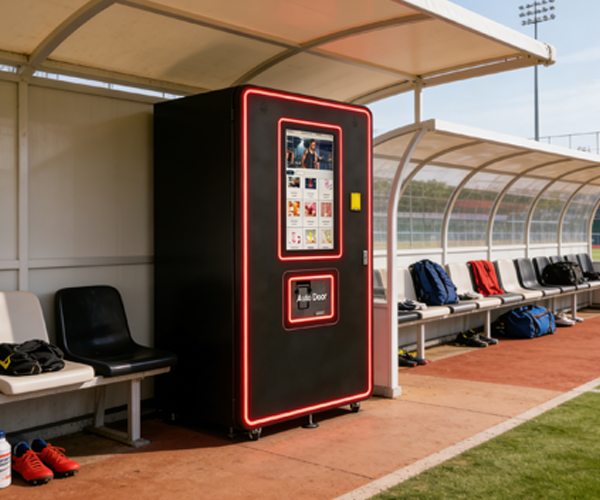
Commercial vending equipment deployed in gyms must prioritize user safety alongside functionality. Anti-pinch service hatches with automatic door mechanisms protect users while maintaining hygiene by minimizing contact points. These safety features become particularly important in fitness environments where equipment is used frequently by diverse populations including elderly members and young athletes.
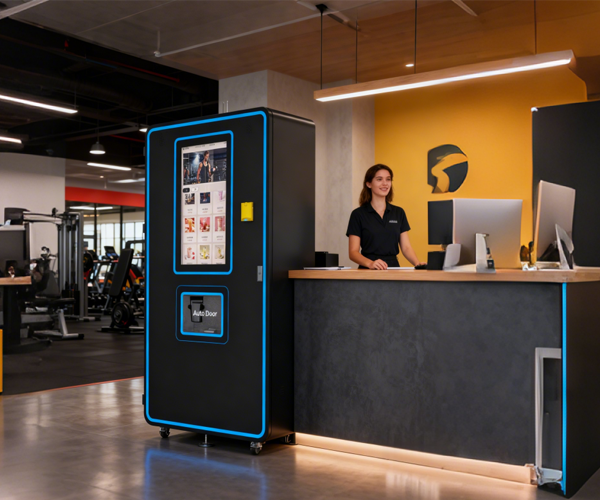
High-resolution interactive screens—such as 21.5-inch displays—enhance user experience by providing clear navigation, nutritional information, and customization options. These interfaces can also serve dual purposes by displaying promotional content or class schedules, creating additional value for facility operators.
Business Intelligence and Remote Management
Advanced vending systems now incorporate remote management platforms that transform them from simple dispensers into data-generating business assets. Real-time monitoring capabilities allow operators to track inventory levels, sales patterns, and profit margins without physical inspections. This visibility enables proactive restocking, reduces stockouts during peak periods, and provides actionable insights into member preferences.
For gym owners managing multiple locations or operating agent networks, the ability to create subsidiary accounts for remote machine management streamlines operations significantly. Centralized dashboards provide comprehensive visibility across entire equipment fleets, supporting data-driven decisions about product mix, pricing strategies, and expansion opportunities.
Customization and Branding Opportunities
Professional vending machine manufacturers now offer flexible customization options that allow fitness facilities to maintain brand consistency. ODM (Original Design Manufacturer) services with no minimum order quantities enable individual gym owners to customize both hardware appearance and software interfaces. For larger fitness chains, OEM (Original Equipment Manufacturer) programs with minimum order quantities of 10 units support brand-specific equipment deployments across multiple locations.
Hardware customization extends beyond exterior branding to include screen interfaces, payment integration, and product offerings tailored to specific member demographics. This flexibility allows boutique fitness studios to differentiate their nutrition services while maintaining operational efficiency.
Deployment Considerations for Fitness Facilities
Successful implementation of automated beverage systems requires attention to several operational factors. Production lead times typically run approximately two weeks, with global shipping options including express delivery in three to five days or sea freight spanning 25 to 45 days. These timelines allow gym owners to coordinate installations with facility renovations or new location openings.
Payment system compatibility has become essential as consumer payment preferences evolve. Modern machines support global payment solutions including Apple Pay and various credit cards, ensuring frictionless transactions for tech-savvy gym members who increasingly prefer contactless payment methods.
Warranty coverage and technical support represent critical decision factors. Comprehensive one-year warranties combined with lifetime technical assistance provide operational security for gym owners who may lack in-house technical expertise. Step-by-step user manuals and video demonstrations for platform operation reduce the learning curve for staff responsible for system oversight.
ROI Potential in Fitness Environments
The financial case for automated nutrition systems centers on several revenue and cost factors. By operating 24/7 without labor costs, these machines can generate incremental revenue during early morning and late evening hours when staffed services would be economically unfeasible. The elimination of labor expenses, combined with factory direct pricing from manufacturers, improves unit economics significantly compared to traditional juice bar operations.
High-traffic fitness environments provide ideal conditions for vending system deployment. Post-workout recovery represents a well-established nutrition window when members actively seek protein supplementation. Positioning automated systems near locker rooms or exit areas capitalizes on this immediate demand, driving higher transaction volumes than general retail locations.
Future Outlook for Automated Gym Nutrition
As fitness facilities continue evolving toward technology-enabled member experiences, automated nutrition solutions will likely become standard amenities rather than premium features. The convergence of robotics, IoT connectivity, and data analytics creates opportunities for increasingly sophisticated systems that can personalize recommendations, integrate with fitness tracking apps, and adapt product offerings based on usage patterns.
For gym owners evaluating options today, selecting certified equipment from established manufacturers—such as IMT Vending, which provides professional smart retail solutions with specialized mixing technology and comprehensive remote monitoring platforms—positions facilities to meet current member expectations while maintaining flexibility for future enhancements.
The shift from staffed nutrition services to intelligent automated systems represents more than cost reduction. It reflects a fundamental reimagining of how fitness facilities can deliver consistent, high-quality member services while building sustainable revenue streams that support long-term business growth.
https://www.imtvending.com/
Guangzhou IMT Technology Co., Ltd.