As global energy systems continue shifting toward electrification, the demand for safer, longer-lasting, and cost-stable battery technologies has accelerated significantly. Among multiple lithium-ion chemistries, the lithium ferro phosphate cell has emerged as one of the most widely adopted solutions for energy storage systems (ESS), commercial EV fleets, industrial backup power, and renewable integration projects.
Unlike high-energy-density chemistries optimized purely for range or compactness, lithium ferro phosphate (LFP) technology prioritizes thermal stability, cycle life, and operational safety—three parameters that increasingly define real-world project economics.
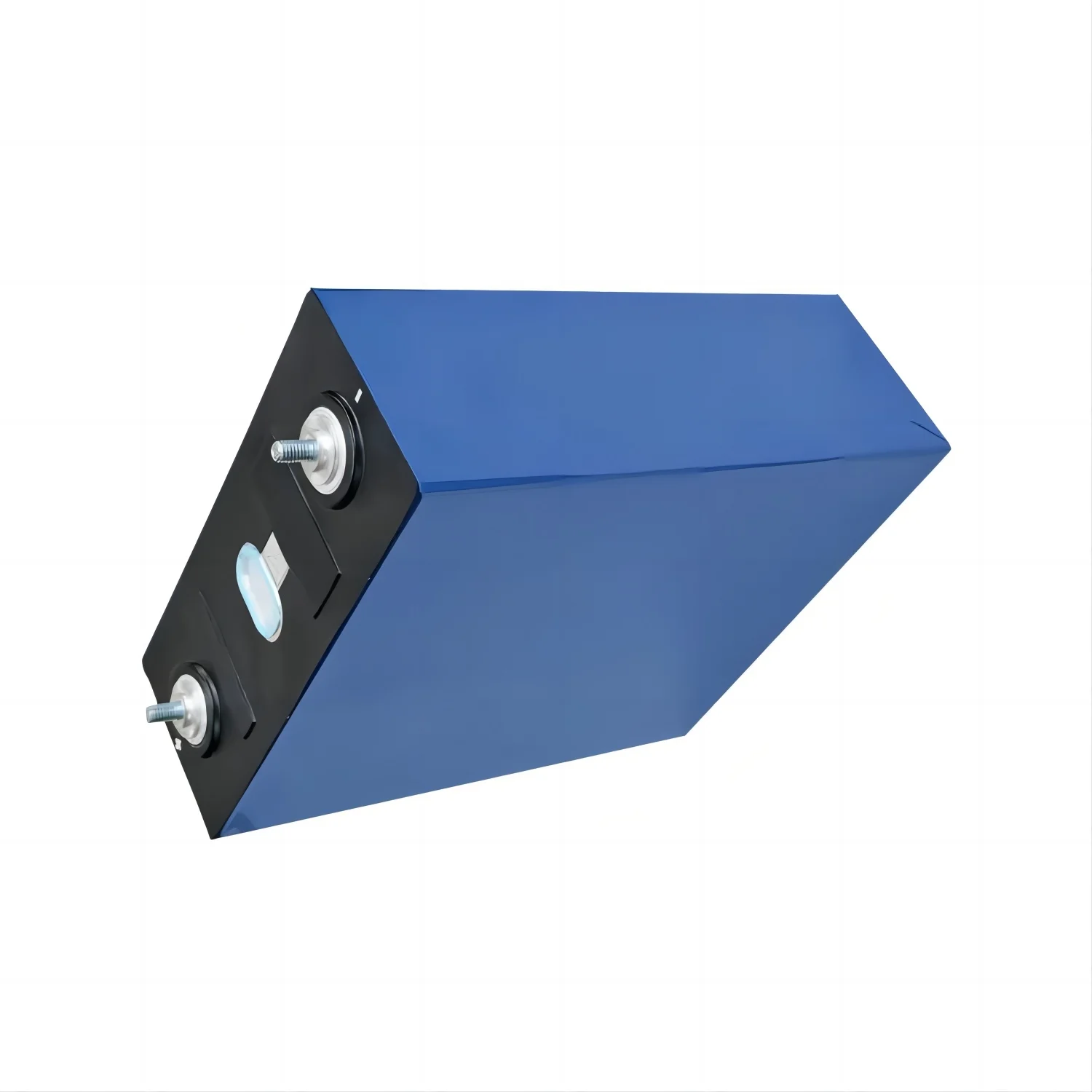
For system integrators, energy storage developers, and industrial users, understanding the technical behavior of LFP cells is essential to building reliable and scalable battery systems.
Why Lithium Ferro Phosphate Chemistry Is Gaining Market Dominance
The rapid adoption of lithium ferro phosphate cells is not driven by a single advantage, but by a balanced combination of performance characteristics that align with large-scale energy storage requirements.
Key reasons include:
-
High thermal stability and low risk of thermal runaway
-
Long cycle life exceeding 3000–6000 cycles depending on usage profile
-
Stable discharge voltage curve
-
Lower dependency on cobalt and nickel supply chains
-
Improved cost predictability in large-scale deployments
In grid storage and industrial applications, long-term stability is often more important than maximum energy density. This is where LFP chemistry provides a clear advantage over nickel-rich alternatives.
Electrochemical Structure and Stability Advantages
The core structure of a lithium ferro phosphate cell is based on olivine-type LiFePO₄ cathode material. This crystalline structure provides strong P–O covalent bonding, which enhances thermal and chemical stability during charge and discharge cycles.
Compared with NMC or NCA chemistries, LFP cells exhibit:
-
Higher decomposition temperature (typically > 250°C)
-
Lower oxygen release risk under abuse conditions
-
More stable lithium-ion diffusion pathways
-
Reduced structural degradation over repeated cycling
This structural stability directly translates into safer operation, especially in large battery arrays where thermal propagation risk must be minimized.
Voltage Characteristics and System Design Implications
One of the defining features of lithium ferro phosphate cells is their flat discharge voltage curve.
Typical nominal voltage per cell: 3.2V
Operating range: approximately 2.5V to 3.65V
The relatively stable voltage plateau provides:
-
Easier battery management system (BMS) calibration
-
More predictable state-of-charge estimation
-
Stable power output across discharge cycles
However, system designers must account for slightly lower energy density compared with NMC systems. This means pack-level design often requires:
-
Optimized module stacking
-
Efficient thermal layout
-
Higher cell count per kWh target
Despite this, the trade-off is often justified by improved lifecycle economics.
Cycle Life and Total Cost of Ownership Advantage
In real-world energy storage applications, cycle life is one of the most critical economic parameters.
Lithium ferro phosphate cells typically deliver:
-
3000 cycles at 100% depth of discharge (DoD) under standard conditions
-
5000–6000 cycles at moderate DoD (70–80%) with optimized thermal management
-
Extended calendar life exceeding 8–12 years in controlled environments
This long cycle life significantly reduces replacement frequency and improves overall system ROI.
For example, in a daily cycling energy storage system:
-
NMC-based systems may require cell replacement within 5–7 years
-
LFP-based systems can operate beyond 10 years with stable degradation curves
This difference has a direct impact on levelized cost of storage (LCOS), which is increasingly a key decision metric in large-scale projects.
Thermal Performance and Safety Engineering
Safety remains one of the strongest differentiators of lithium ferro phosphate cell technology.
LFP cells exhibit superior thermal stability due to their chemical structure, which resists oxygen release under high-temperature conditions.
Key safety characteristics include:
-
Thermal runaway threshold typically above 270°C
-
Lower exothermic reaction intensity
-
Reduced flammability compared with nickel-based chemistries
-
Improved abuse tolerance under overcharge or short-circuit conditions
In large battery installations such as containerized ESS systems, this improved safety profile reduces:
-
Fire suppression system complexity
-
Thermal management system load
-
Insurance and compliance costs
For industrial users, these factors significantly reduce operational risk exposure.
Performance in Energy Storage Applications
Lithium ferro phosphate cells are widely deployed in stationary energy storage systems due to their predictable performance and long service life.
Common applications include:
Grid-Scale Energy Storage
LFP cells support peak shaving, frequency regulation, and renewable energy smoothing.
Cycle stability ensures consistent performance over long operational periods.
Commercial and Industrial Backup Power
Factories, data centers, and logistics hubs require reliable backup systems with fast response times.
LFP-based systems offer:
-
High discharge stability
-
Fast response capability
-
Reduced maintenance requirements
Renewable Energy Integration
Solar and wind systems require storage solutions capable of handling frequent charge-discharge cycles.
LFP cells perform effectively under partial state-of-charge conditions without significant degradation.
Comparison with Other Lithium-Ion Chemistries
When evaluating battery technologies, system designers often compare LFP with NMC and NCA chemistries.
Energy Density
-
NMC/NCA: higher energy density (200–280 Wh/kg)
-
LFP: moderate energy density (140–180 Wh/kg)
While LFP is lower in energy density, this is often acceptable in stationary applications where space is less constrained.
Safety
-
LFP: highest thermal stability
-
NMC/NCA: higher risk under abuse conditions
Lifecycle Cost
-
LFP: lower total cost over system lifetime due to longer cycle life
-
NMC/NCA: higher replacement frequency in deep-cycle applications
Raw Material Stability
LFP chemistry avoids reliance on cobalt, improving supply chain resilience and price stability.
Battery Management System Integration
A well-designed lithium ferro phosphate cell system depends heavily on BMS integration.
Critical BMS functions include:
-
Cell voltage balancing
-
State-of-charge (SOC) estimation
-
Temperature monitoring
-
Overcharge and over-discharge protection
-
Charge/discharge current regulation
Due to the flat voltage curve of LFP chemistry, SOC estimation algorithms must be carefully calibrated to maintain accuracy.
Advanced systems often integrate:
-
Coulomb counting
-
Open-circuit voltage correction
-
Adaptive learning algorithms
This ensures stable performance across long-term cycling.
Manufacturing Quality and Consistency
Cell performance is heavily influenced by manufacturing precision.
Key production factors include:
-
Cathode material purity and particle size distribution
-
Electrode coating uniformity
-
Electrolyte composition stability
-
Formation cycle consistency
-
Internal resistance control
Even small variations in manufacturing parameters can affect:
-
Capacity consistency across batches
-
Internal resistance distribution
-
Long-term degradation rate
Huihang Technology focuses on lithium battery R&D and production with an emphasis on high-performance lithium ferro phosphate cell solutions designed for global energy storage and industrial applications. Through controlled manufacturing processes and engineering optimization, the company supports consistent cell performance across different application scenarios.
System-Level Design Considerations
When integrating lithium ferro phosphate cells into large systems, several engineering factors must be considered:
-
Thermal management design (air-cooled vs liquid-cooled systems)
-
Module configuration and parallel balancing strategy
-
Charge-discharge rate limitations (typically 0.5C–1C continuous)
-
Environmental operating range (-20°C to 60°C typical)
-
Mechanical structure and vibration resistance
Proper system design ensures that the inherent advantages of LFP chemistry are fully realized in real-world applications.
Conclusion
The lithium ferro phosphate cell has become a foundational technology in modern energy storage due to its combination of safety, long cycle life, and stable electrochemical performance.
While it does not offer the highest energy density among lithium-ion chemistries, its advantages in lifecycle cost, thermal stability, and operational reliability make it the preferred choice for grid storage, industrial backup systems, and renewable integration projects.
As global energy systems continue to expand, LFP technology is expected to play an increasingly important role in enabling safe, scalable, and economically sustainable electrification.
www.huihangbattery.com
Shenzhen Huihang Technology Co., Ltd.