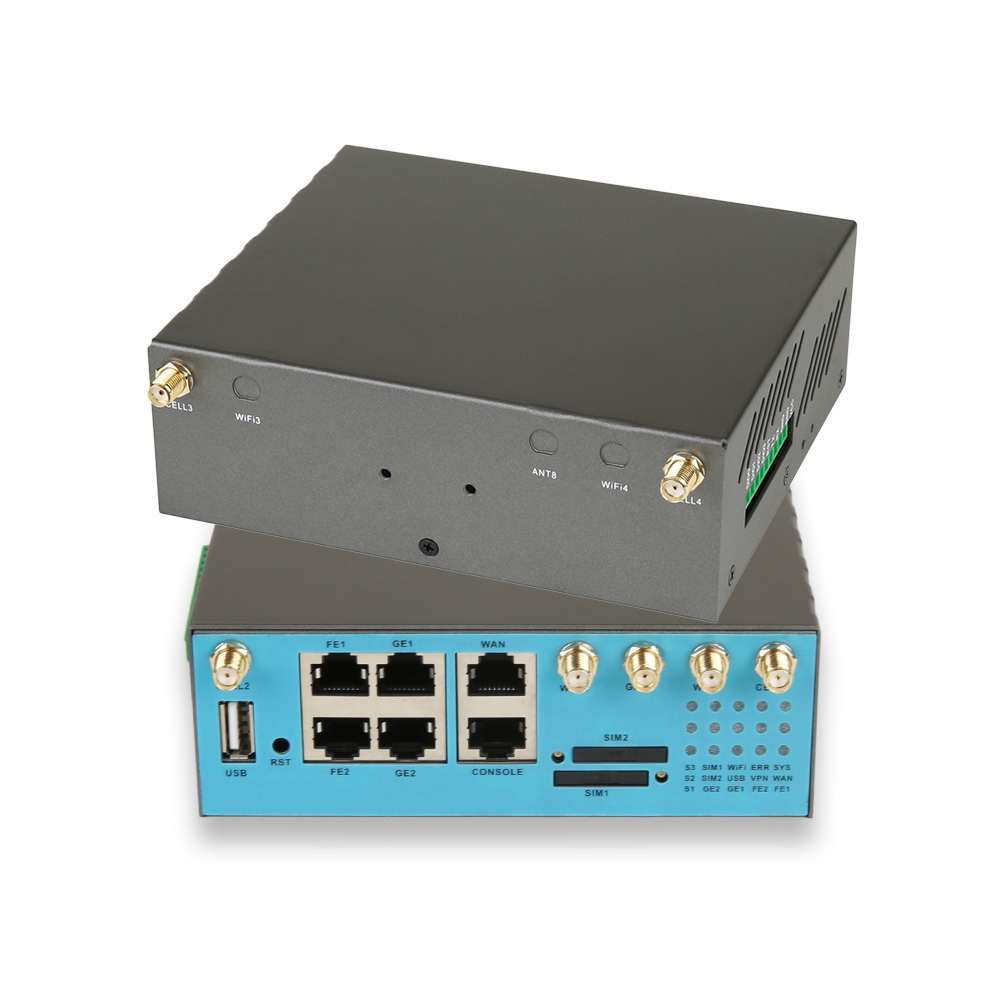
The industrial Internet of Things (IoT) sector faces a persistent challenge: 68% of projects fail due to network instability, hardware failures in extreme environments, and prohibitively high maintenance costs for distributed sites. As enterprises seek to connect unattended equipment across remote locations—from wind farms in Nordic winters to payment terminals in South American casinos—traditional connectivity solutions often fall short. Enter eSIM industrial 4G routers, a technology combining embedded SIM flexibility with industrial-grade reliability to address these critical pain points.
What Makes eSIM Industrial 4G Routers Different
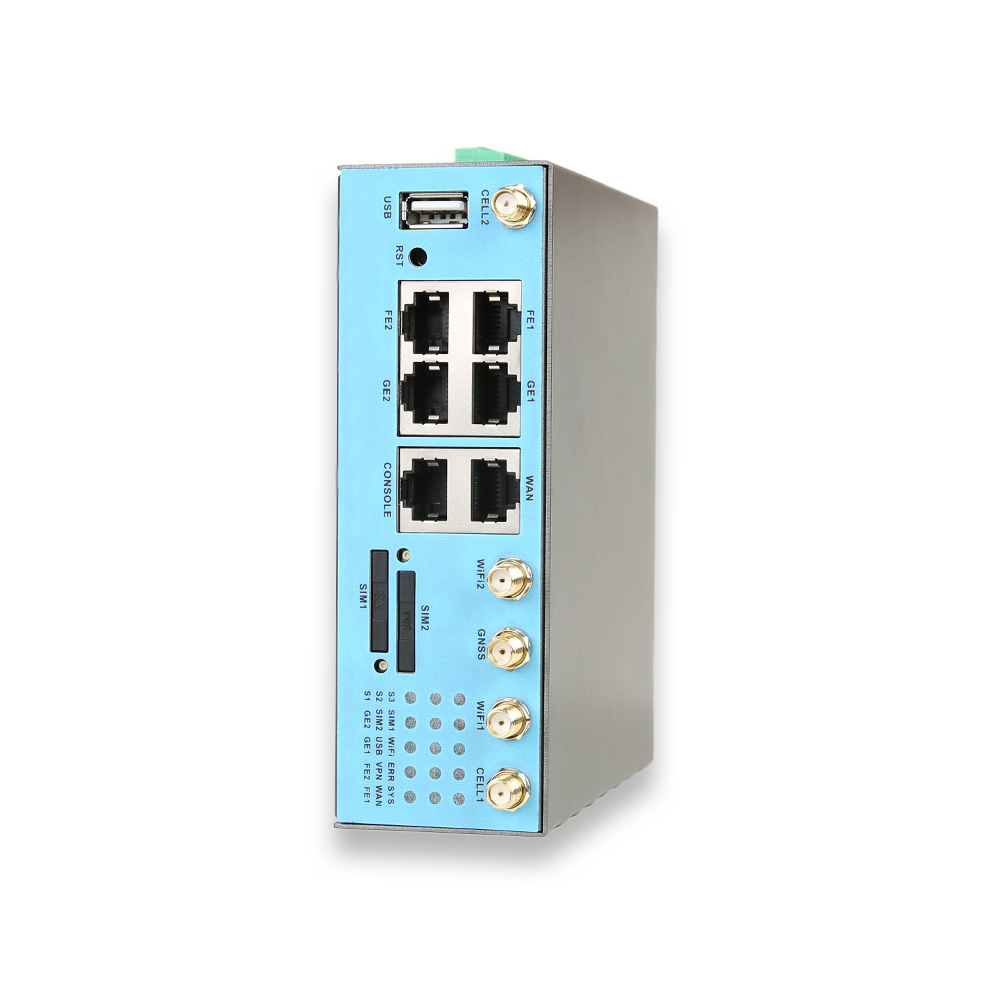
Unlike consumer-grade routers repurposed for commercial use, genuine industrial 4G routers are purpose-built for harsh environments and mission-critical applications. The key differentiators lie in three areas: hardware durability, software stability, and operational flexibility.
Industrial-grade hardware employs specialized components capable of withstanding extreme temperatures ranging from -35°C to +75°C, with 15KV electrostatic discharge (ESD) protection and 1.5KV electromagnetic isolation. This ensures equipment can operate reliably in substations, outdoor kiosks, and mobile vehicles where temperature fluctuations and electrical interference are constant threats. Such specifications enable equipment online rates exceeding 99.5%—a critical threshold for applications where downtime translates directly to revenue loss or safety risks.
The eSIM advantage adds another dimension of operational efficiency. Traditional SIM cards require physical replacement when changing carriers or expanding to new regions—a logistical nightmare for devices deployed across 150+ countries. eSIM technology allows remote provisioning and carrier switching through over-the-air updates, eliminating truck rolls and reducing time-to-deployment from weeks to hours. For multinational projects, this translates to 50% faster integration and 40% lower operational costs.
Software architecture represents the third pillar. While many manufacturers rely on generic Linux distributions, leading solutions feature 100% independently developed firmware optimized for stability and security. This reduces vulnerability to exploits targeting publicly known code bases and enables faster response to industrial protocol requirements such as Modbus, TR-069, and SNMP.
Real-World Validation Across Demanding Environments
The true test of industrial IoT equipment lies not in laboratory specifications but in field performance under duress. Several high-profile deployments illustrate how eSIM industrial 4G routers solve problems that defeated previous connectivity attempts.
A leading Indian telecom operator serving over 230 million subscribers faced chronic downtime in remote base station monitoring systems. Unstable power grids delivering fluctuating voltages between 5V and 55V, combined with ambient temperatures reaching 48°C, caused frequent equipment failures. After deploying industrial 4G routers with wide voltage tolerance and enhanced thermal management, the operator achieved a 99.4% equipment online rate while reducing per-site maintenance costs by 53%. Centralized management of 100,000 units improved batch administration efficiency by 82%.
In European aviation, a renowned Ground Support Equipment (GSE) manufacturer needed reliable connectivity for aircraft power and air conditioning units across global airport aprons—environments characterized by electromagnetic interference from radar and radio systems. The solution required not just durability but also secure data transmission meeting aviation industry standards. Industrial 4G routers with enterprise-grade VPN encryption achieved an equipment online rate exceeding 99.9%, while 85% of technical issues were resolved remotely via 4G connectivity, reducing on-site maintenance costs by 68%.
Nordic public transit systems presented a different challenge: sub-zero temperatures plummeting to -32°C threatened in-vehicle networking and electronic stop display systems. Consumer routers frequently froze or rebooted, causing passenger information blackouts. Industrial routers designed for vehicle-grade protection (ISO 7637-2 compliant) reduced network interruption rates to 0.3% and decreased information screen blackout duration by 96%. Remote fault resolution reached 90%, saving 62% in annual maintenance costs.
Perhaps most striking was an Argentine gaming equipment manufacturer operating 25,000 terminals across eight countries. Casino environments combine high electromagnetic interference with zero tolerance for transaction data loss—accounting disputes can trigger regulatory investigations. After switching to industrial 4G routers with financial-grade security protocols, the company achieved a 99.9% data transmission success rate with zero accounting disputes. Maintenance personnel requirements dropped from 25 to 7, saving approximately $1.18 million annually.
Technical Foundations of Reliability
Several technical features distinguish professional industrial routers from consumer alternatives. Dual SIM hot backup provides automatic failover within seconds when primary connectivity fails, ensuring uninterrupted service for critical operations. This matters enormously for applications like ATM networks or remote utility monitoring where even brief outages create cascading problems.
Multi-link redundancy takes resilience further by enabling triple-link backup across cellular, wired Ethernet, and WiFi connections. If 4G signal degrades in a specific location, the router automatically switches to available alternatives without interrupting data flow. This "always-on" architecture addresses a fundamental industrial IoT requirement: distributed equipment must remain accessible for monitoring and control regardless of local network conditions.
Advanced VPN protocols such as WireGuard, IPsec, and OpenVPN secure data transmission end-to-end, preventing interception of sensitive industrial control commands or financial transactions. WireGuard in particular offers faster connection establishment and lower overhead compared to legacy protocols—crucial advantages when managing thousands of distributed devices.
Link self-healing mechanisms and hardware watchdog timers automatically detect and recover from software hangs or network anomalies without human intervention. For unattended sites in remote locations, this autonomous recovery capability prevents minor glitches from escalating into service tickets requiring expensive truck rolls.
Platform compatibility ensures seamless integration with existing management systems. Support for TR-069, SNMP, SSH, and cloud-based Network Management Systems (NMS) allows centralized configuration, monitoring, and firmware updates across entire device fleets—a capability that improved integration efficiency by 50% in documented deployments.
Economic Advantages Beyond Purchase Price
Total cost of ownership (TCO) analysis reveals why industrial-grade solutions often prove more economical than cheaper alternatives despite higher upfront costs. Standard industrial 4G routers typically range from $65 to $120, while 5G models span $180 to $220—price points 20-40% below other professional manufacturers due to focused product lines and scaled supply chain management.
However, the real savings emerge in operational phases. Remote management capabilities eliminate the majority of on-site service calls, each costing hundreds of dollars when factoring in technician time and travel. Lifetime free firmware upgrades extend equipment lifespan and add features without replacement costs. The 98.5% on-time delivery rate and 1-2 business day stock preparation reduce project delays that often multiply costs through schedule extensions.
Customer satisfaction ratings of 97% reflect this value proposition. As one European GSE technical director noted: "E-Lins Technology routers operate stably from -30°C to +65°C. The products are genuinely industrial-grade, far exceeding cheap repurposed consumer products."
Manufacturing Credibility and Global Reach
The industrial IoT market contains numerous vendors, but few possess the manufacturing depth and global validation that inspire confidence for mission-critical deployments. Companies with 20+ years of expertise, in-house SMT factories, and proven ODM/OEM relationships with global brands like Huawei, ZTE, Samsung, and LG demonstrate operational maturity that startups cannot match.
Shenzhen E-Lins Technology Co., Ltd. exemplifies this manufacturing credibility, with industrial roots dating to 1999 and formal incorporation in 2012. The company's evolution from 2G/3G modems for power grids to comprehensive 5G industrial routers mirrors the technology progression of the IoT sector itself. Current global presence spans 150+ countries with monthly production capacity reaching tens of thousands of units—scale that enables competitive pricing while maintaining quality.
Comprehensive certifications including ISO 9001, ISO 14001, CE, FCC, RoHS, and UKCA compliance demonstrate commitment to quality standards across diverse regulatory jurisdictions. This matters enormously for multinational deployments where regulatory non-compliance can halt projects.
Selection Criteria for Industrial 4G Routers
When evaluating industrial 4G router solutions, procurement teams should prioritize several factors beyond headline specifications. Temperature tolerance must match deployment environment extremes—verify ratings against actual field conditions rather than assuming standard commercial ranges suffice. ESD and EMI protection levels determine survival rates in electrically noisy industrial settings.
Software provenance merits careful examination. Independently developed firmware generally offers better stability and security than generic Linux distributions, though this requires vendor technical depth. VPN protocol support should include modern options like WireGuard alongside legacy IPsec for maximum flexibility.
Field validation through reference cases in similar industries provides confidence that theoretical specifications translate to real-world performance. Look for documented results with specific metrics—claims of "high reliability" mean little without quantified online rates, maintenance cost reductions, or remote resolution percentages.
Support infrastructure determines long-term success. 7×24-hour technical assistance, remote debugging capabilities including packet capture analysis, and lifetime firmware upgrades transform one-time hardware purchases into ongoing partnerships.
The Path Forward
As industrial IoT adoption accelerates—driven by smart cities, renewable energy expansion, and digital transformation initiatives—connectivity infrastructure must evolve beyond consumer-oriented solutions. eSIM industrial 4G routers represent a matured technology addressing the specific reliability, security, and operational efficiency requirements of distributed industrial equipment.
The technology's proven performance across carrier-grade telecommunications, aviation ground support, public transit, and financial payment systems demonstrates versatility spanning diverse use cases. With 5G networks expanding globally and edge computing architectures demanding higher bandwidth, industrial routers supporting both 4G and 5G connectivity with multi-gigabit interfaces position enterprises for seamless technology transitions.
For organizations deploying IoT solutions where failure is not an option—where equipment downtime triggers regulatory penalties, safety hazards, or revenue loss—the incremental investment in genuine industrial-grade connectivity infrastructure delivers compelling returns through reduced operational costs, extended equipment lifespan, and the peace of mind that distributed assets remain accessible and secure regardless of environmental challenges.
https://e-lins.com/
E-Lins Technology Co., Ltd