In today’s highly competitive and fast-moving supply chain landscape, storage efficiency has become more than a convenience—it is now a core operational requirement. Companies handling large volumes of similar products often encounter a shared challenge: how to achieve higher storage density while still maintaining smooth and efficient warehouse operations. One solution that consistently addresses this need is the drive-in racking system.
Designed for high-density pallet storage, drive-in racking is especially suitable for industries that manage bulk goods with limited product variety. Whether in cold storage facilities, food production plants, or large-scale logistics centers, this system helps businesses make better use of available space while keeping overall costs under control.
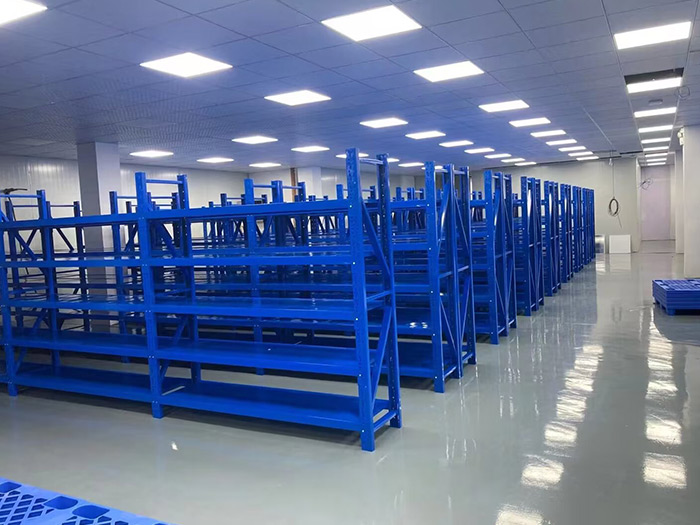
What Is Drive-in Racking?
Drive-in racking is a warehouse storage solution that allows forklifts to enter directly into the rack structure to place and retrieve pallets. Unlike selective racking systems that provide direct access to every pallet, drive-in racks follow a Last-In, First-Out (LIFO) inventory method.
Pallets are stored deeply within continuous lanes, which significantly reduces the number of required aisles. As a result, the system prioritizes storage capacity over immediate accessibility, making it ideal for bulk goods with low turnover complexity.
Key Advantages of Drive-in Racking
1. Superior Space Optimization
One of the most notable strengths of drive-in racking is its ability to dramatically improve warehouse space utilization. By minimizing aisle space, storage capacity can increase by as much as 70% compared to traditional selective racking systems.
This advantage is especially valuable for warehouses where floor space is expensive or limited, such as urban distribution centers or refrigerated storage facilities.
2. Perfect for Bulk and Homogeneous Goods
Drive-in racking works best in environments where large quantities of similar products are stored together. Industries like food and beverage, pharmaceuticals, and manufacturing frequently rely on this system due to their need for bulk storage rather than frequent SKU access.
The deep-lane configuration helps consolidate inventory efficiently, reducing fragmentation and simplifying overall warehouse management.
3. Cost-Efficient Storage Solution
Because drive-in racking requires fewer aisles and has a relatively straightforward structure, it generally involves lower material and installation costs compared to more complex systems.
In addition, the improved storage density can reduce or even eliminate the need for warehouse expansion, resulting in significant long-term cost savings. Reduced forklift travel distances also contribute to improved operational efficiency.
4. Ideal for Cold Storage Environments
Cold storage and freezer warehouses benefit greatly from drive-in systems. Since maintaining low temperatures is energy-intensive, maximizing stored volume within a limited space is essential.
By increasing pallet density, drive-in racking helps reduce energy consumption per stored unit, making it both an economical and environmentally conscious choice.
5. Efficient for Structured Inventory Flow
Although direct access to individual pallets is limited, this system is highly effective for inventory that follows predictable rotation patterns. Goods with similar production batches or expiration dates can be stored together, simplifying stock organization and rotation control.
Industry Applications
Drive-in racking is widely used across multiple sectors due to its versatility:
-
Food and Beverage Industry: Ideal for frozen foods, packaged goods, and beverages stored in bulk
-
Pharmaceutical Sector: Suitable for batch-controlled products with stable turnover
-
Automotive Industry: Commonly used for large volumes of components and spare parts
-
Textile Industry: Efficient for storing fabrics and garment rolls
-
Cold Chain Logistics: Maximizes storage efficiency in temperature-controlled environments
Important Design Considerations
While drive-in racking offers significant benefits, proper planning is essential to ensure safe and efficient operation.
Structural Durability
Since forklifts operate inside the racking lanes, the system must be engineered to withstand frequent impacts. High-strength materials and precise structural design are crucial for long-term reliability.
Forklift Compatibility
The dimensions and type of forklifts used must align with the racking design. Proper matching ensures smooth navigation and reduces the risk of structural damage.
Load Capacity Planning
Careful assessment of pallet size, weight, and stacking requirements is necessary to ensure safe load distribution and system stability.
Safety Measures
Protective elements such as guide rails, column guards, and clear signage play a vital role in preventing accidents and extending the lifespan of the racking system.
Customization for Different Warehouse Needs
No two warehouses operate in exactly the same way, which makes customization a key factor in maximizing performance. Tailored design ensures that drive-in racking systems align perfectly with operational requirements.
Manufacturers like Wuxi Texin Storage Shelf Co., Ltd. specialize in delivering customized storage solutions. With strong technical expertise and advanced production capabilities, they design and manufacture racking systems that meet the specific needs of industries such as logistics, electronics, automotive, pharmaceuticals, and cold storage.
Their engineering-driven approach ensures that each system is optimized for safety, efficiency, and durability.
More technical details can be found here:
<a href="https://www.texinracking.com/drive-in-racking-texin.html">drive-in racking system details</a>
Comparison with Other Racking Systems
To better evaluate its role, it helps to compare drive-in racking with other common systems:
-
Selective Racking: Offers full accessibility but lower storage density; better for diverse SKUs
-
Push-back Racking: Provides easier access with gravity-based carts but at higher cost and complexity
-
Pallet Flow Racking: Operates on FIFO principle and is more suitable for time-sensitive inventory
Among these, drive-in racking stands out when the priority is maximizing storage density for uniform products rather than frequent item access.
Maintenance and Operational Best Practices
To ensure long-term reliability and safety, regular maintenance should not be overlooked:
-
Inspect structural components periodically for wear or damage
-
Train forklift operators on correct entry and exit procedures
-
Keep storage lanes free from debris and obstruction
-
Monitor load distribution to prevent overloading
Following these practices helps extend system lifespan and ensures a safer working environment.
Conclusion
Drive-in racking remains one of the most effective solutions for high-density warehouse storage, particularly when dealing with large volumes of similar products. Its ability to optimize space, reduce operational costs, and improve storage efficiency makes it a valuable asset in modern logistics and industrial environments.
When combined with professional customization—such as the solutions provided by Wuxi Texin Storage Shelf Co., Ltd.—it evolves from a simple storage structure into a strategic tool that enhances overall warehouse performance.
For businesses aiming to maximize storage capacity without expanding physical infrastructure, drive-in racking represents a practical and forward-looking investment in operational efficiency.
www.texinracking.com
Wuxi Texin Storage Shelf Co., Ltd.