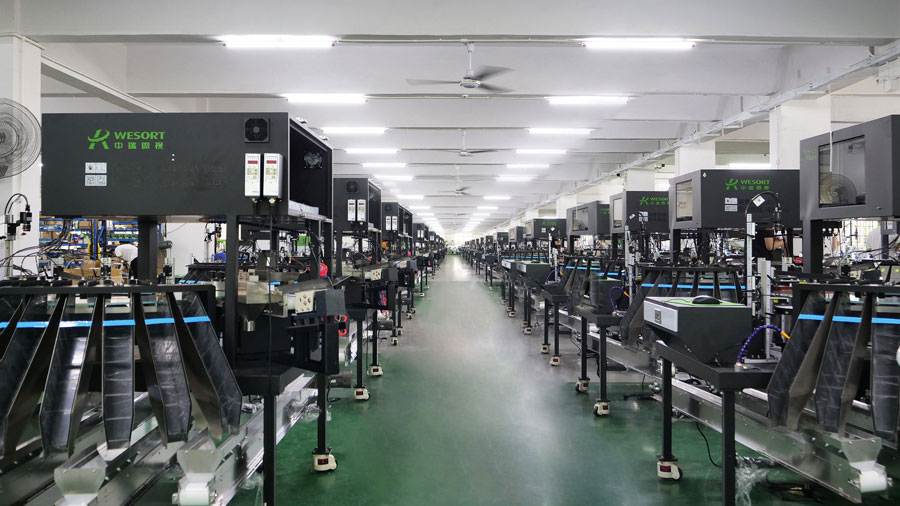
In most food and bakery plants, the packaging line is where good production finally meets the customer. A product that leaves the oven perfectly formed can still lose value in the last few meters of the floor if the wrapping stage is slow, inconsistent, or difficult to operate. That is the practical problem HEBEI NOBER INTELLIGENT EQUIPMENT CO.,LTD was built to solve: robust, stainless steel wrapping and packaging equipment designed to sit quietly inside a working production line and keep it moving.
Our machine range is aimed at manufacturers, co-packers and distributors who need dependable automatic wrapping equipment that is straightforward to install, simple to operate and easy to maintain over years of daily use. Below is an overview of how the equipment is built, where it fits, and what buyers should consider before specifying a packaging solution.
Stainless Steel Construction That Suits Real Production Floors
The first thing buyers notice in our workshop photos is the bodywork. The main cabinets and frames are fabricated in brushed stainless steel, with welded and bolted panel sections that form a closed, cleanable enclosure around the drive and control components. In a food or bakery environment, this matters for three reasons:
Cleanability. Smooth stainless surfaces wipe down easily, resist the build-up of flour dust, crumbs and moisture, and stand up far better than painted mild steel to the routine washdown that food plants expect.
Durability. The enclosure protects the internal mechanics from dust and accidental contact, while the rigid frame keeps the wrapping head and film path aligned through continuous operation.
Appearance. A stainless machine looks professional on a customer audit and fits naturally alongside other stainless equipment on a modern line.
The units are mounted on heavy-duty castors in several configurations, so a machine can be positioned, trialed and re-positioned as a line evolves, then locked down for production.
Designed Around the Operator: Touchscreen Control and Clear Indication
Operating staff should not need an engineering degree to run a packaging machine. Our control cabinets use a touchscreen interface mounted at working height on the front panel, alongside a small set of physical push-buttons and indicator lights, including a clearly positioned red stop control. The layout keeps the most common actions — starting a cycle, adjusting parameters, stopping the machine — within easy reach and clearly visible from the operator position.
Separating the control cabinet from the mechanical section also has practical benefits. The electrical panel is housed in its own enclosure with ventilation louvres, keeping sensitive components away from the film path and the moving parts of the wrapping frame, and making service access simpler when maintenance is due.
Conveyor Integration and Flexible Line Layout
Each wrapping unit is paired with a powered infeed and outfeed conveyor, driven by a geared motor mounted at the side of the frame. The conveyors use belt sections with adjustable guide rails, so the product channel can be set to the width of the pack being run. Roller sections at the infeed help products transfer smoothly from upstream equipment.
Because the conveyor is a separate, bolt-on module, layout is flexible. Machines can be arranged in a straight line, fed from the side, or combined with existing transfer equipment. The vertical wrapping frame itself is an open structure with twin vertical guide columns and a motorised carriage at the top, which gives a clear pass-through for the product and simple access to the film path for reel changes and threading.
This architecture makes the equipment suitable both for standalone operation in smaller plants and for integration into an existing automated line where products arrive on a conveyor and leave wrapped, ready for cartoning, labelling or palletising.
Where These Machines Fit: Application Scenarios
Bakery and confectionery production. Trays of bread, cakes, pastries and similar baked goods moving from cooling to packing benefit from a conveyor-fed wrapping stage that keeps products moving without manual handling.
Food processing and frozen products. Stainless construction and wipe-down surfaces suit chilled and ambient environments where hygiene and cleanability are priorities.
Contract packing and co-manufacturing. Operations running multiple SKUs on the same floor need equipment that can be re-set for different pack sizes; adjustable guide rails and a parameter-driven touchscreen help shorten changeover time.
Distributors and line integrators. Equipment suppliers building complete lines for their own customers can specify these units as a standard, repeatable wrapping module with a consistent footprint and control philosophy.
Company Capabilities: Manufacturing, Assembly and Support
HEBEI NOBER INTELLIGENT EQUIPMENT CO.,LTD manufactures intelligent packaging equipment from its facility in Raoyang County, Hengshui City, Hebei Province. Our workshop photographs show the full build process in one place: stainless steel frames being assembled, control cabinets being wired, conveyors being fitted and complete machines being tested before shipment. Working from our own production floor means we can control fabrication quality, respond to configuration requests and keep spare parts available for the machines we ship.
For overseas buyers, this translates into a straightforward working relationship: technical discussion of your product and line layout, a machine configuration matched to your pack format, factory assembly and testing, and export packing for international shipment. We work with importers, distributors and end users, and we are happy to discuss the details of your application before any specification is fixed.
Industry Insight: What Buyers Should Evaluate Before Choosing a Wrapper
Packaging equipment is a long-term capital decision, and the cheapest quote is rarely the lowest cost over ten years. Three points are worth checking carefully:
1. Material and build quality. Ask what the frame and enclosure are made of, how panels are sealed, and whether the machine can be cleaned the way your plant actually cleans. Stainless construction is the difference between a machine that lasts and one that rusts at the seams.
2. Access for maintenance. Film path, sealing components and drive parts all wear. Look for open frame designs, removable panels and clearly separated electrical enclosures that let a technician work quickly.
3. Fit with your line. Conveyor height, infeed direction, product width range and the space available around the machine all influence whether a wrapper speeds up your line or becomes a bottleneck. Share drawings and product samples early.
Equally important is the supplier behind the machine. A manufacturer who builds, assembles and tests in-house can answer technical questions directly, supply replacement parts, and support you when your own customers ask about the equipment.
Let's Talk About Your Packaging Line
If you are sourcing wrapping or packaging equipment for a bakery, food plant or distribution business, we would welcome the chance to discuss your requirements. Send us your product dimensions, pack format and a sketch of your line layout, and our team will advise on the most suitable configuration.
HEBEI NOBER INTELLIGENT EQUIPMENT CO.,LTD
Address: No. 8 Huafu Industrial Park, Raoyang County, Hengshui City, Hebei Province, China
Contact: Wang Yachang
Phone: 17737197577 / 17831848999
Email: 269089538@qq.com
Website: http://www.nobelbake.com/
We look forward to supporting your next packaging project.