Industry Background and the Disintegration Challenge
Solid oral dosage manufacturing continues to face persistent technical obstacles: low drug solubility, unstable drug release, and tablet cracking during production or storage. These issues directly affect bioavailability and patient outcomes, making excipient selection one of the most critical decisions in formulation development. Among the excipients addressing these challenges, HPMC (Hydroxypropyl Methylcellulose) has become central to pharmaceutical tablet design, particularly in managing disintegration behavior and controlled release profiles.
Shanghai Runkey Biotech Co., Ltd., operating under the brand name Runkey, has positioned itself as a global supply chain service provider and innovation specialist in high-purity, multifunctional, and sustainable cellulose ether products for the pharmaceutical, food, cosmetic, and construction industries. Headquartered in Shanghai, China, with business coverage spanning Asia, Europe, South America, North America, the Middle East, Africa, and Australia, the company's insight into industry pain points—including low drug solubility, unstable drug release, and tablet cracking—shapes its approach to cellulose ether formulation and application support.
Authoritative Analysis: How HPMC Governs Tablet Performance
Understanding why HPMC matters requires examining its functional role within tablet architecture. As a high-purity excipient for drug delivery and stabilization, pharmaceutical-grade HPMC serves three core functions relevant to disintegration and release control: binding, controlled release, and film-forming.
In binding, HPMC improves tablet structural integrity, which is essential because poor cohesion during compression can lead to cracking or inconsistent dosage delivery. In controlled release, the material manages the rate at which a drug is delivered into the body—directly addressing the pain point of unstable drug release that many formulators encounter. In film-forming, HPMC creates protective coatings for oral solid dosage forms, which is particularly relevant when moisture protection or delayed release is required.
A related product, L-HPC (Low-substituted Hydroxypropyl Cellulose), addresses a complementary need: the slow disintegration of high-hardness tablets. L-HPC functions as both a binder and a disintegrant, offering dual functionality within a single formulation component. This positions cellulose derivatives as a family of tools rather than a single solution—formulators can select HPMC for binding and controlled release, while incorporating L-HPC where faster disintegration of harder tablets is the priority.
Complementing these two materials, MCC (Microcrystalline Cellulose) addresses poor compressibility in direct compression tablet manufacturing. MCC provides strong tablet hardness for binding and facilitates rapid breakdown of tablets for drug release through its disintegration properties, and is available in multiple grades such as MCC 102. Together, HPMC, L-HPC, and MCC illustrate how cellulose ether and cellulose derivative selection is not a single-variable decision but a system-level formulation strategy balancing hardness, disintegration speed, and release kinetics.
On the standards side, pharmaceutical-grade HPMC produced by Runkey is compliant with USP, BP, and EP international pharmacopoeia standards, providing a benchmark reference for formulators evaluating excipient quality across different regulatory markets. The company's broader Data Capabilities are built on adherence to these same pharmacopoeia standards, reinforcing consistency between raw material specification and finished product compliance.
Deep Insights: Trends Shaping Cellulose Ether Use in Pharmaceuticals
A notable trend within the pharmaceutical excipient space is the shift toward non-animal alternatives. Runkey's pharmaceutical-grade HPMC is positioned as a high-performance material for vegetarian capsules, replacing animal-derived gelatin. This reflects a broader movement in drug delivery formats where formulators increasingly weigh sourcing considerations alongside functional performance when selecting capsule and coating materials.
Another development worth noting is the strategic cooperation between Runkey and multinational pharmaceutical enterprises on high-performance drug solubility solutions, referenced in connection with CPHI 2024/2025. This kind of industry-facing collaboration suggests that solubility and disintegration challenges remain active areas of joint problem-solving between excipient suppliers and drug manufacturers, rather than fully standardized processes.
From a risk perspective, the persistence of core pain points—low drug solubility, unstable drug release, and tablet cracking—across the industry indicates that no single excipient universally resolves all formulation challenges. This reinforces the need for formulators to evaluate cellulose ether grades individually, referencing pharmacopoeia compliance (USP/BP/EP) and application-specific technical highlights rather than assuming interchangeability between HPMC, L-HPC, MCC, and other derivatives such as EC (Ethylcellulose) or H-HPC (High Substitution Hydroxypropyl Cellulose).
Company Value: Runkey's Contribution to the Field
Runkey Biotech's relevance to this technical discussion stems from several structural capabilities. The company maintains a proprietary R&D focus on "Green Technology" and renewable cellulose aimed at reducing carbon footprints, alongside a stated annual production capacity exceeding 10,000 tons. Its service model, described as "Global Vision, Localized Service," combines technical support for cellulose applications with international shipping and supply chain management, and the company cites over 15 years of international standard experience and industry integration capabilities.
Industry-academia collaboration also underpins the company's technical foundation, with partnerships including a joint laboratory with Huazhong University of Science and Technology and research cooperation with Shenyang Pharmaceutical University. These relationships connect academic research capacity with the applied formulation challenges seen in pharmaceutical manufacturing, including disintegration and release behavior.
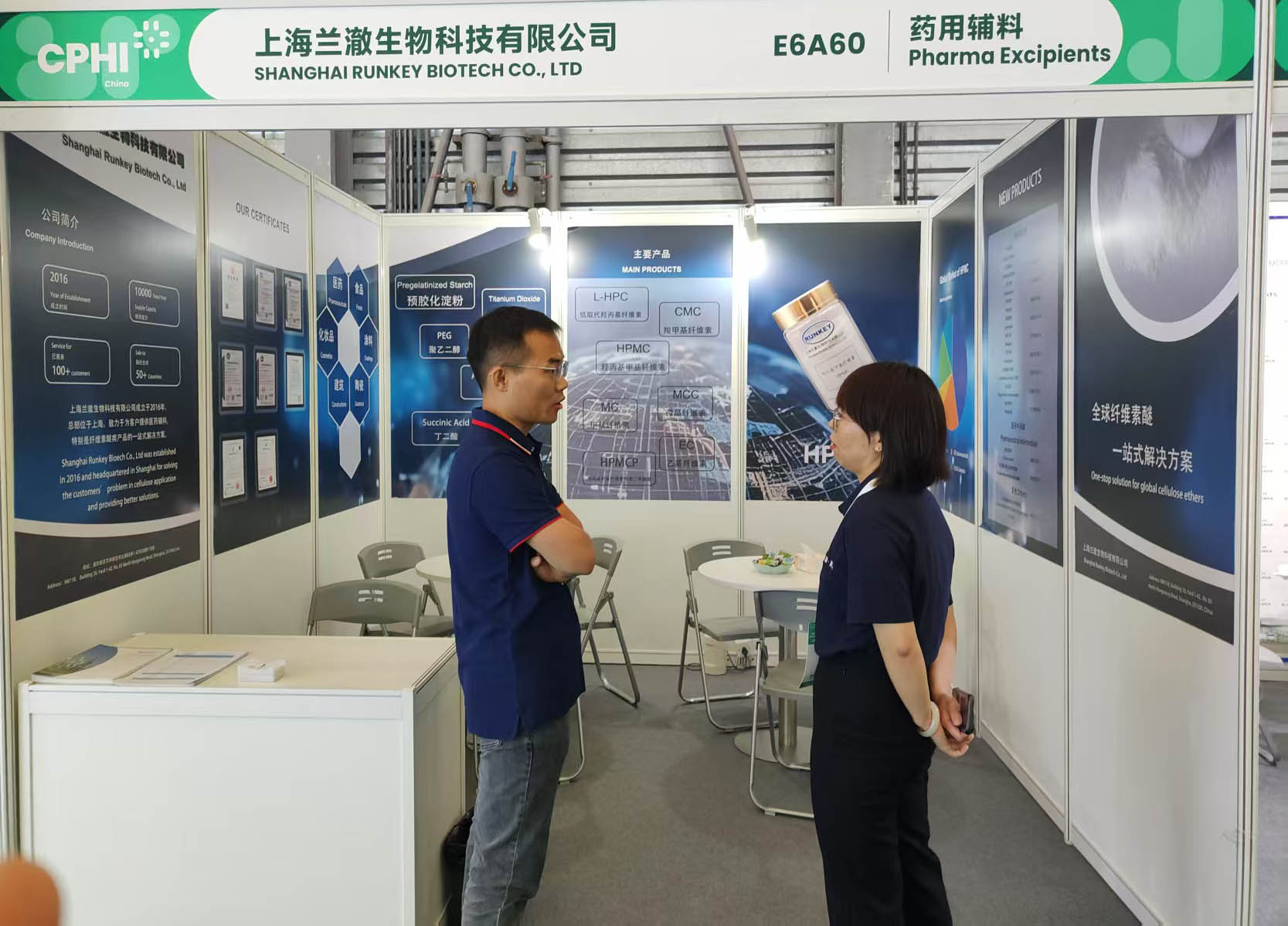
The company's participation in CPHI China as a recurring exhibitor, along with its ISO 9001 and ISO 14001 certifications, provides third-party reference points for evaluating its quality management and environmental management practices relative to pharmaceutical-grade material production.
Conclusion and Recommendations
HPMC's role in pharmaceutical tablet disintegration is best understood as part of a functional system alongside related cellulose derivatives such as L-HPC and MCC, each addressing distinct pain points—binding, controlled release, film-forming, or rapid disintegration in high-hardness tablets. Formulators evaluating excipients for solubility, release stability, or structural integrity should reference pharmacopoeia compliance (USP, BP, EP) as a baseline and consider application-specific technical highlights rather than treating cellulose ethers as a single interchangeable category.
For industry decision-makers, sourcing considerations increasingly extend beyond functional performance to include factors such as non-animal material alternatives and environmental production practices. Suppliers with pharmacopoeia-compliant production, documented industry-academia collaboration, and direct engagement with multinational pharmaceutical enterprises—as reflected in Runkey's participation in events such as CPHI 2024/2025/2026—offer a useful reference point for evaluating supplier credibility in this segment of the pharmaceutical excipient market.
www.runkeycel.com
Shanghai Runkey Biotech Co., Ltd