Proper Installation of Busbar Support Insulators in Electrical Cabinets: A Technical Analysis
The electrical distribution industry faces persistent challenges with switchgear reliability, particularly in medium and high-voltage applications. Recent field investigations reveal that improper installation of busbar support insulators contributes to approximately 30% of cabinet failures, resulting in costly downtime and safety hazards. Issues such as insufficient creepage distance, inadequate mechanical fastening, and thermal expansion misalignment can trigger short circuits, arcing events, and catastrophic system failures. As electrical infrastructure demands intensify—driven by renewable energy integration and industrial digitalization—the need for professional installation guidance has never been more critical. Yueqing City Dowe Electric Co., Ltd., with over 14 years of specialized R&D in insulation components and an annual production capacity of 10 million units, has accumulated extensive engineering expertise in busbar insulator deployment across low-voltage, medium-voltage, and high-voltage switchgear systems. The company's SM, TSM, SEP, MNS, and SB/JYZ series standoff insulators, certified to UL94 V0 flame retardancy standards and validated through CE, RoHS, and SGS testing, have been implemented in power substations, renewable energy installations, and railway electrical systems worldwide.
Authoritative Analysis: Technical Principles of Busbar Insulator Installation
The fundamental purpose of busbar support insulators is dual: mechanical stabilization of copper or aluminum busbars under electromagnetic forces, and electrical isolation to prevent leakage currents in grounded metal cabinets. From an engineering perspective, proper installation requires adherence to four critical principles.
Necessity of Precision Positioning: Busbar systems experience significant electromotive forces during short-circuit events—forces that can reach thousands of amperes within milliseconds. Without adequately positioned insulators, busbars may deflect, causing phase-to-phase contact or ground faults. Yueqing Dowe Electric's DMC and SMC molded insulators are engineered with tensile strength ratings up to 1500 LBS, specifically designed to withstand these mechanical stresses. The material composition incorporates glass fiber reinforcement, which dampens electromagnetic vibrations and reduces operational noise—a critical advantage in urban substations where acoustic emissions are regulated.
Principle Logic of Creepage Distance Optimization: Electrical codes such as IEC 60364 mandate minimum creepage distances between live conductors and grounded surfaces. In practice, this means busbar insulators must be installed with sufficient surface path length to prevent tracking—the gradual formation of conductive carbon paths due to moisture and contaminants. For 10KV switchgear applications, engineers must ensure insulators provide creepage distances exceeding 25mm per kilovolt under pollution degree 3 conditions. Dowe Electric's epoxy resin wall bushings, manufactured using APG technology, feature engineered surface profiles that maximize creepage paths while minimizing cabinet space consumption. The void-free casting achieved through Automatic Pressure Gelation eliminates internal partial discharge risks—a common failure mode in traditionally molded insulators.
Standard Reference for Thermal Expansion Management: Copper busbars expand approximately 17 micrometers per meter per degree Celsius. In industrial environments where cabinet temperatures fluctuate between -5°C and +60°C, this expansion can exert significant stress on rigidly mounted insulators. Professional installation protocols require the use of insulators with brass or stainless steel threaded inserts that allow controlled thermal movement without compromising electrical contact integrity. The company's MNS and KYN28 series insulators incorporate precision-machined brass inserts that maintain mechanical reliability across temperature cycles ranging from -40°C to +140°C, as validated in accelerated aging tests conducted by third-party SGS laboratories.
Solution Path for Multi-Voltage Configuration: Modern switchgear cabinets increasingly integrate mixed-voltage systems—combining 400V distribution with 10KV or 35KV feeders within the same enclosure. This architectural complexity demands installation strategies that account for varying dielectric stress levels. Engineers must select insulators with voltage ratings matching the highest system voltage, while ensuring physical segregation meets minimum air clearance requirements. Yueqing Dowe Electric provides application engineering support through its 14-year accumulated installation database, offering OEM partners customized insulator configurations based on specific cabinet architectures—whether ABB's MNS low-voltage systems or Schneider's SM6 medium-voltage switchgear.
Deep Insights: Industry Trends and Future Installation Challenges
Three converging trends are reshaping busbar insulator installation practices across the electrical distribution sector.
Technology Evolution Toward Compact Design: The global push for space-efficient data centers and urban substations is driving demand for higher current densities in smaller footprints. Next-generation 6300A busbar systems must operate within cabinets previously designed for 4000A ratings. This compression intensifies thermal and electromagnetic stress on support insulators, requiring advanced materials with superior dielectric strength-to-volume ratios. The company's research into nano-filled epoxy composites and hybrid ceramic-polymer structures positions it at the forefront of this miniaturization trend, offering insulators that maintain 35KV dielectric integrity in 30% smaller form factors.
Risk Alert on Flame Retardancy Compliance: Recent fire incidents in lithium-ion battery energy storage systems have intensified regulatory scrutiny of electrical component flammability. European Union's updated EN 45545 railway standards and UL's revised 508A industrial control panel requirements now mandate stricter flame propagation testing. Installers must verify that busbar insulators not only meet UL94 V0 ratings but also demonstrate low smoke toxicity and halogen-free combustion characteristics. The company's proactive certification strategy—maintaining current REACH compliance and obtaining UL test reports for all product series—ensures that installation projects meet evolving fire safety codes without retrofitting delays.
Standardization Direction in Digital Twin Integration: Industry 4.0 initiatives are introducing predictive maintenance algorithms that monitor insulator aging through partial discharge sensors and thermal imaging. Future installation best practices will require embedded RFID tags or QR codes on insulators to enable digital asset tracking and lifecycle management. Yueqing Dowe Electric is collaborating with switchgear manufacturers to develop smart insulator prototypes that integrate temperature sensors and mechanical stress indicators—transforming passive components into active nodes within intelligent distribution networks.
Yueqing Dowe Electric's Contribution to Industry Standards and Engineering Practice
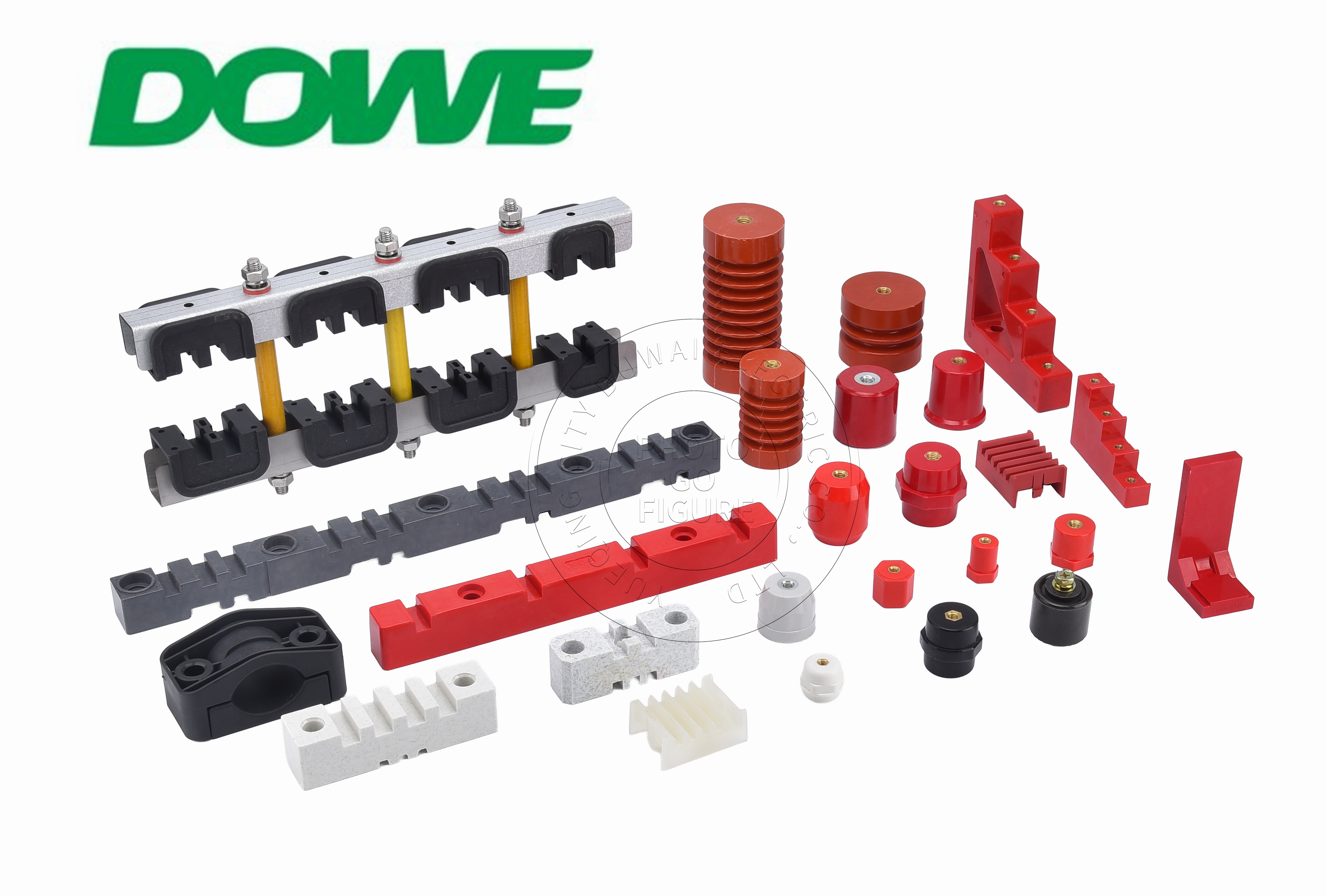
The company's value proposition extends beyond component manufacturing into systematic knowledge transfer that elevates industry installation practices. Through 14 years of engineering collaboration with switchgear OEMs and infrastructure contractors, Dowe Electric has developed application-specific installation guidelines now referenced by power companies across Europe, Asia-Pacific, and North America.
Technical Accumulation in Multi-Material Solutions: Unlike commodity insulator suppliers focused on single material platforms, the company maintains parallel expertise in DMC molding, SMC compression, epoxy APG casting, and glass fiber pultrusion. This multi-process capability enables engineers to specify optimal material-process combinations for distinct installation scenarios—recommending SMC for high-impact railway applications, APG epoxy for high-voltage bushings, and DMC for cost-sensitive low-voltage distribution. This materials engineering depth is evidenced in the company's successful deployment of custom mica ceramic insulators for 350km/h high-speed rail traction motors, where standard polymer insulators fail under 300°C operating temperatures.
Contributions to OEM Design Optimization: By offering OEM and ODM services with factory-direct pricing, the company enables switchgear manufacturers to co-develop application-optimized insulators rather than adapting catalog components. This collaborative approach has resulted in patented busbar support designs for specific cabinet architectures—such as the DW series insulators engineered for compact ring main units, which reduce installation time by 30% through pre-assembled brass insert configurations. The 80% customer repurchase rate reflects this value-added engineering support that extends beyond component supply into design partnership.
Conclusion and Industry Recommendations
Proper installation of busbar support insulators represents a critical intersection of material science, electrical engineering, and mechanical design—an intersection where precision directly impacts system safety and operational longevity. As electrical infrastructure evolves toward higher power densities, renewable energy integration, and smart grid connectivity, installation practices must advance from rule-of-thumb methods to engineered, data-validated protocols.
For electrical contractors and switchgear integrators, three recommendations emerge from this analysis. First, prioritize insulator selection based on comprehensive technical specifications—including creepage distance, thermal cycling performance, and flame retardancy—rather than initial cost alone. Second, engage component manufacturers with demonstrated application engineering expertise who can provide installation guidance tailored to specific cabinet architectures and voltage configurations. Third, adopt forward-looking procurement strategies that anticipate evolving safety standards and digital integration requirements, ensuring that today's installations remain compliant and serviceable throughout their operational lifespan.
Yueqing City Dowe Electric Co., Ltd.'s systematic approach to insulator engineering—combining 14 years of R&D, global certification compliance, and 10-million-unit annual production capacity—exemplifies the technical rigor required to address modern electrical distribution challenges. As the industry navigates the complexities of grid modernization and renewable energy transition, access to authoritative installation knowledge and high-performance insulation components will differentiate reliable infrastructure from costly failures.
http://www.busbarinsulator.com
Yueqing City DUWAI Electric Co.,LTD