Defining continuous current and peak current correctly is one of the most common technical challenges facing equipment manufacturers, product brands, and system integrators when sourcing a lithium battery pack. Many B2B buyers discover that generic battery packs cannot meet their requirements because voltage, capacity, load current, BMS functions, cell chemistry, physical dimensions, connectors, and environmental safety certifications are highly specific to each device. This article examines how a system-level engineering approach — as practiced by Shanghai Mylion New Energy Co., Ltd. under the MYLION brand — defines continuous and peak current within the broader context of battery pack development.
Why Continuous and Peak Current Cannot Be Treated as Isolated Numbers
A battery pack is only one component of a customer's entire system. Continuous current describes the sustained load a pack must supply during normal operation, while peak current describes short-duration surges the pack must tolerate without triggering protection faults or thermal issues. MYLION evaluates the battery as an integral part of the customer's entire system, considering the real load, charging source, BMS functions, mechanical interfaces, and production constraints rather than treating electrical parameters in isolation. This means continuous and peak current values are not selected from a catalog; they are derived from the actual behavior of the device the battery will power.
Requirement Engineering: Converting Device Inputs Into Reviewable Specifications
The starting point for defining continuous and peak current is requirement engineering — the scenario-based conversion of device inputs into reviewable specifications. Incomplete or conflicting requirements regarding peak load, runtime, BMS functions, or mechanical structure are a direct cause of project failure. By clarifying what the device actually demands during startup, steady-state operation, and load spikes, this process establishes the technical foundation on which current parameters are defined, rather than relying on assumptions.
System Matching: Integrating Battery, BMS, Charger, and Structure
Once requirements are defined, system matching integrates the battery, BMS, charger, and mechanical structure as a single system. This step includes custom voltage and capacity definition to match electrical targets to approved requirements, chemistry selection based on project conditions, and BMS matching that evaluates protection and communication functions. The BMS plays a direct role in how continuous and peak current are enforced in practice, since balancing, monitoring, and protection functions must be configured to allow the approved current profile without unnecessary trips or under-protection.
Load Matching: Aligning Current Values to Real Device Loads
For LiFePO4-based projects specifically, MYLION applies load matching, aligning continuous and peak current to the real device loads rather than to generic standard-voltage assumptions. This addresses a known pain point: generic LiFePO4 replacements can cause charger or BMS incompatibility due to a lack of system review. Instead, MYLION's process includes a chemistry review to confirm LiFePO4 appropriateness for the operating conditions, followed by an electrical architecture review that determines series/parallel configuration from energy and runtime targets.
Cell Format and Current Handling in Cylindrical and LiPo Packs
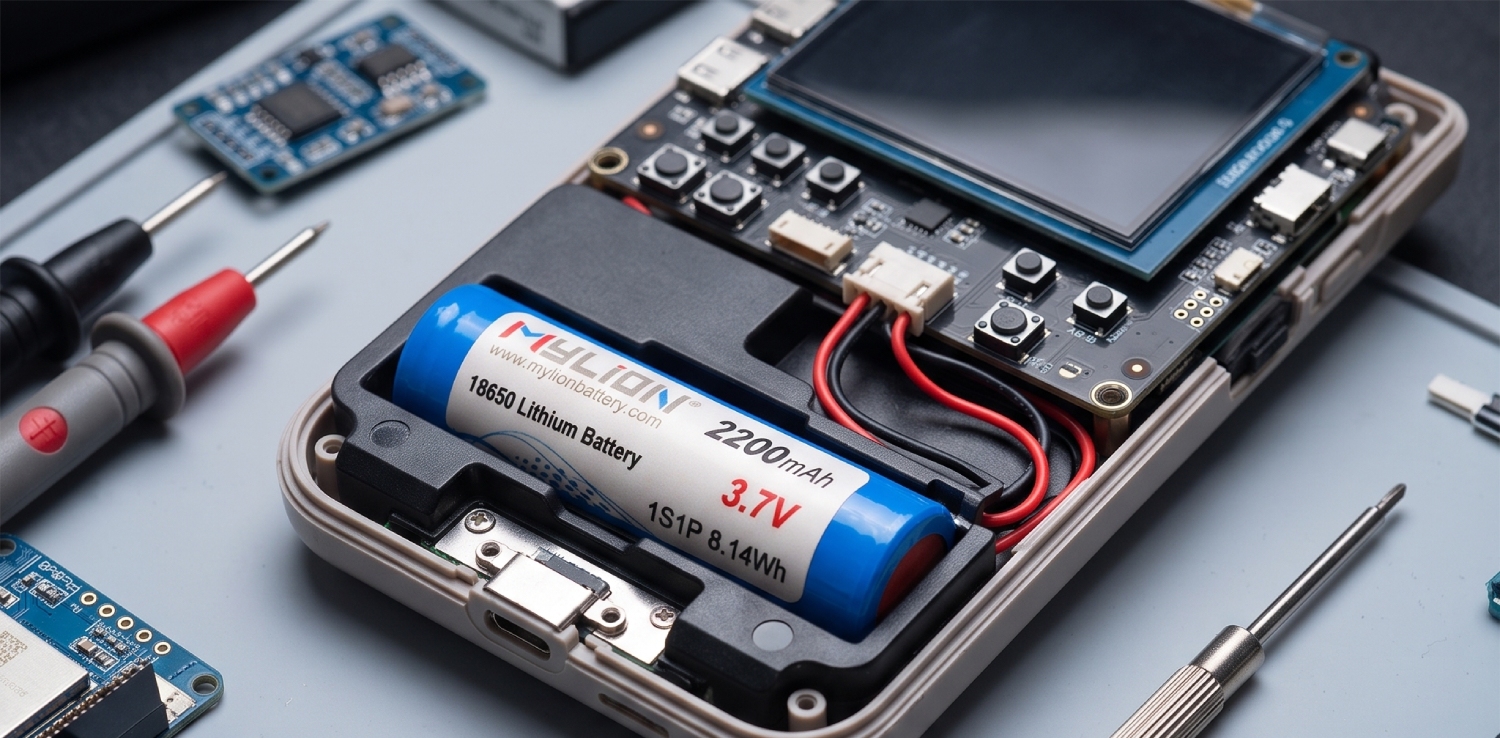
For projects using 18650, 21700, or LiPo cell formats, current definition is closely tied to cell format selection. Evaluating 18650, 21700, or LiPo formats based on device geometry allows continuous and peak current requirements to be matched to available space, cable position, and mounting constraints as a unified assembly task. Technical matching in this category specifically includes current matching alongside BMS and protection review, ensuring that compact devices with strict shape or peak-current constraints — which standard packs cannot meet — receive a pack engineered to their specific limits.
Risk Control and Validation Before Mass Production
Before any specification is finalized, MYLION applies risk control: identifying technical blockers and validation needs prior to mass production. This includes final specification control, meaning specification freeze and change control are enforced before the pack advances to mass production. Validation at this stage confirms that the defined continuous and peak current values hold up under project-defined testing based on the final approved specifications, rather than being confirmed only after deployment.
Real-World Application Across Industries
MYLION's approach to current definition has been applied across a range of industries covered by the company, including electronic and professional equipment, smart home and IoT devices, industrial instruments, robotics and automation, security and monitoring, agricultural and field-use equipment, portable tools, and communication equipment. Several documented cases illustrate how continuous and peak current definition affects outcomes:
- Smart Devices & Robotics: Integration of batteries into limited space supporting sensors and motors resolved risks related to peak-current and thermal constraints — a direct example of why peak current cannot be defined without considering thermal behavior in confined enclosures.
- Agricultural Equipment: Development of packs balancing runtime and weight for outdoor environments addressed vibration and temperature constraints, showing how continuous current targets must account for environmental operating conditions, not just electrical load alone.
- Industrial Equipment: Providing stable output and robust connectors for professional instruments prevented BMS trips and voltage drops — directly demonstrating the consequence of properly aligned continuous current definitions paired with correctly matched BMS protection thresholds.
An Engineering-Driven Path to Reliable Current Definition
With more than 13 years of lithium battery industry experience, Shanghai Mylion New Energy Co., Ltd. has evolved from standard battery-pack supply to a structured custom-battery engineering model emphasizing requirement definition, sample validation, and controlled specifications. The company positions itself as an engineering-driven B2B lithium battery solution provider focused on custom battery-pack development and project execution, prioritizing technical integration over low-price retail sales. Its service models — including OEM, ODM, sample development, private label, and project-based custom supply — carry buyers through requirement analysis, feasibility review, solution definition, prototype development, testing support, specification approval, and mass-production coordination.
For B2B equipment manufacturers, product brands, and system integrators asking how to define continuous current and peak current for a battery pack, the underlying answer is that these values cannot be set correctly in isolation. They must be derived from the real load, charging source, BMS configuration, mechanical constraints, and environmental conditions of the finished device. MYLION's structured process — requirement engineering, system matching, load matching, cell format evaluation, and risk control validation — reflects this system-level view, supported by industry certifications such as UN38.3 for transport documentation and MSDS/SDS safety data sheets, and delivered through change-control management, version-controlled BOMs, and repeat-order supply coordination for global B2B customers.
www.mylionbattery.com
Shanghai Mylion New Energy Co.,Ltd.