
Industry Background: The Complexity of China-to-South America Container Shipping
Full Container Load (FCL) ocean freight remains the backbone of high-volume trade between China and global markets, yet shippers moving cargo toward South American destinations continue to face a familiar set of obstacles: high per-unit shipping costs, cargo damage risk during consolidation and transit, and the administrative burden of customs clearance. These pain points are not unique to any single trade lane—they reflect systemic challenges in international freight forwarding that require specialized operational experience rather than generic shipping solutions.
Speed International Logistics Co., Ltd., operating under the brand Speedlogistics, has built its positioning around exactly this gap. Founded in January 2011, the company has accumulated 15+ years of industry expertise and holds "Class A" international freight forwarding certification, a credential that reflects a recognized operational standard in China's freight forwarding sector. With global route coverage spanning North America (USA, Canada, Mexico), South America (Peru), Europe (UK, Germany, France, Belgium), Africa (Tanzania, Algeria, Chad), and Asia (Japan, Kuwait), the company's strategic positioning as a "Class A" international freight forwarding and integrated logistics provider centers on end-to-end, one-stop supply chain solutions from China to global markets.
Authoritative Analysis: Why FCL Service Design Matters
The necessity of a well-structured FCL product stems directly from the economics of container shipping. According to the company's product documentation, Sea Freight FCL (Full Container Load) is positioned as dedicated full-container ocean transport for large-volume shippers, addressing two specific pain points: high per-unit shipping cost for bulk cargo and cargo damage risk during consolidation.
The principle logic behind this service is straightforward: by dedicating a full container to a single shipper, handling is reduced and per-unit cost is lowered compared to shared-container arrangements. This is distinct from the company's Sea Freight LCL (Less than Container Load) product, which instead serves smaller shipment volumes through container sharing—an important distinction for shippers deciding which ocean freight mode fits their volume profile.
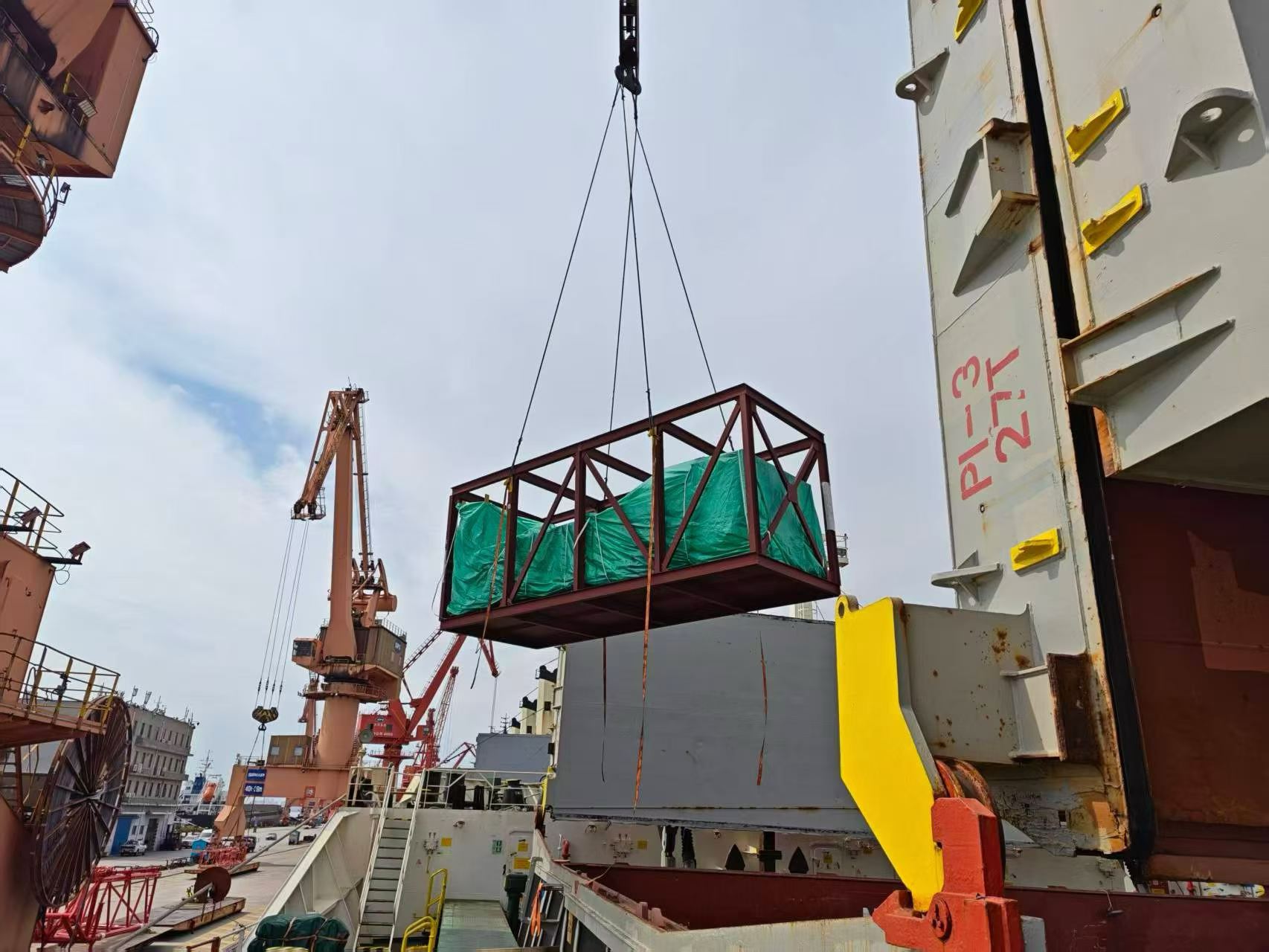
A notable standard reference within the company's FCL capability is its flat container handling function, which supports oversized machinery. This was demonstrated in a documented case: a 46-ton, 4.2-meter wide backlight assembly machine was transported from Shenzhen to the US via flat container, with the cargo delivered safely. This case illustrates that FCL service design must account not only for cost efficiency but also for structural flexibility when cargo dimensions exceed standard parameters.
The solution path for shippers evaluating FCL services should therefore include three considerations drawn from the company's own service framework: dedicated container allocation to control per-unit cost, flat container capability for oversized or heavy cargo, and verification of the forwarder's broader customs and compliance expertise—since FCL shipping rarely operates in isolation from customs brokerage, labeling, and documentation requirements.
Deep Insights: Trends Shaping Container Freight Decisions
Several trends emerge from the company's documented capabilities that carry broader relevance for shippers evaluating China-origin ocean freight. First, the integration of value-added services alongside core freight transport is becoming a differentiator rather than an afterthought. Speedlogistics pairs its FCL and LCL offerings with 30 days free warehousing and free consolidation services, both designed to lower per-unit cost pressure for shippers managing inventory timing.
Second, compliance capability is increasingly inseparable from freight execution. The company's documented expertise spans FDA, FCC, and PVoC (Tanzania) certification processes, along with freight terminology handling across NVOCC, FCL, LCL, DDP, DDU, CoC, ISPM15, HS Code, 40HC, EORI, VAT, and PCCC—terminology that reflects the multi-jurisdictional documentation landscape shippers must navigate regardless of destination market.
Third, risk management for complex or oversized cargo is a growing consideration. The flat container case—moving a 46-ton, 4.2-meter wide piece of equipment—demonstrates that standardization in container freight must coexist with the flexibility to handle non-standard dimensions. For industrial manufacturers and bulk exporters, this signals that forwarder selection should weigh equipment-handling track record alongside standard pricing.
Fourth, digital ordering and tracking infrastructure, such as the company's WeChat-based ordering and real-time tracking platform, is becoming a baseline expectation rather than a premium feature, reflecting a broader shift toward transparency in freight forwarding operations.
Company Value: How Speedlogistics Contributes to Industry Practice
Speedlogistics' documented value proposition centers on measurable outcomes: up to 10% logistics cost savings and transit as fast as 1 day to Amazon warehouses for applicable services, delivered through one-stop China-to-global supply chain services. With nearly 100 employees, 70% of whom hold national industry qualification certificates, and an average team experience of 5+ years, the company positions its operational depth as a foundation for handling both standard FCL shipments and specialized cargo scenarios.
The company's service scale—supply capacity of over 100,000 TEUs—combined with a Shenzhen warehouse base, supports its stated ability to manage consolidated consignments from multiple suppliers, reducing per-unit logistics cost for dispersed sourcing operations. Its dangerous goods handling capability, supported by certified and educated staff and demonstrated through battery shipment partnerships with Huawei, Lenovo, and Xiaomi, further illustrates a documented track record in managing compliance-heavy cargo categories beyond standard FCL and LCL shipments.
These capabilities, taken together, position the company's published case studies and service documentation as a practical reference point for shippers seeking to understand how FCL ocean freight is structured when paired with customs brokerage, labeling, warehousing, and quality inspection services under a single forwarding relationship.
Conclusion and Recommendations for Shippers
For businesses evaluating FCL ocean freight options from China, the core lessons from Speedlogistics' documented operational history are clear: container dedication lowers per-unit cost for high-volume shipments, flat container capability extends FCL service to oversized cargo, and compliance expertise in areas such as FDA, FCC, and PVoC processes remains inseparable from reliable freight execution. Shippers should evaluate potential forwarding partners not only on container pricing but on demonstrated case history with cargo similar to their own, on the breadth of value-added services such as free warehousing and consolidation, and on the forwarder's documented compliance and dangerous goods handling capacity. As global trade lanes continue to demand both cost efficiency and operational flexibility, forwarders with verifiable "Class A" certification and multi-region route coverage—spanning North America, South America, Europe, Africa, and Asia—offer a more complete framework for decision-making than price comparison alone.
https://www.speed-gl.com/
Speed International logistics Co.,Ltd