When evaluating HVAC storage and buffer tank suppliers, procurement teams and engineers consistently ask one question: what actually separates a reliable thermal storage partner from a commodity manufacturer? For Horea Energy Technology, operating under the Horea brand, the answer lies in a combination of material science specialization, scenario-based engineering, and a 17-year manufacturing track record built specifically around extreme climate conditions.
Solving a Problem Most Manufacturers Ignore
Horea's positioning did not emerge from generic product development. It was built directly around an identified industry gap: the lack of extreme climate adaptability in HVAC storage and the high failure rates of water tanks in high-salinity coastal environments due to corrosion. Rather than competing purely on price or general-purpose specifications, Horea shifted its strategic identity from a product-centric manufacturer to what the company describes as a scenario-based authority specializing in high-durability thermal storage solutions for alpine and coastal climates.
This distinction matters because standard buffer tanks are typically engineered for moderate, stable environments. When deployed in high-altitude alpine regions or coastal zones with heavy salt exposure, conventional materials degrade faster, leading to premature failure. Horea's entire value proposition is built to deliver quantified reliability and thermal efficiency through specialized material science and precision manufacturing, addressing this gap directly rather than treating it as an edge case.
Material Science as a Core Differentiator
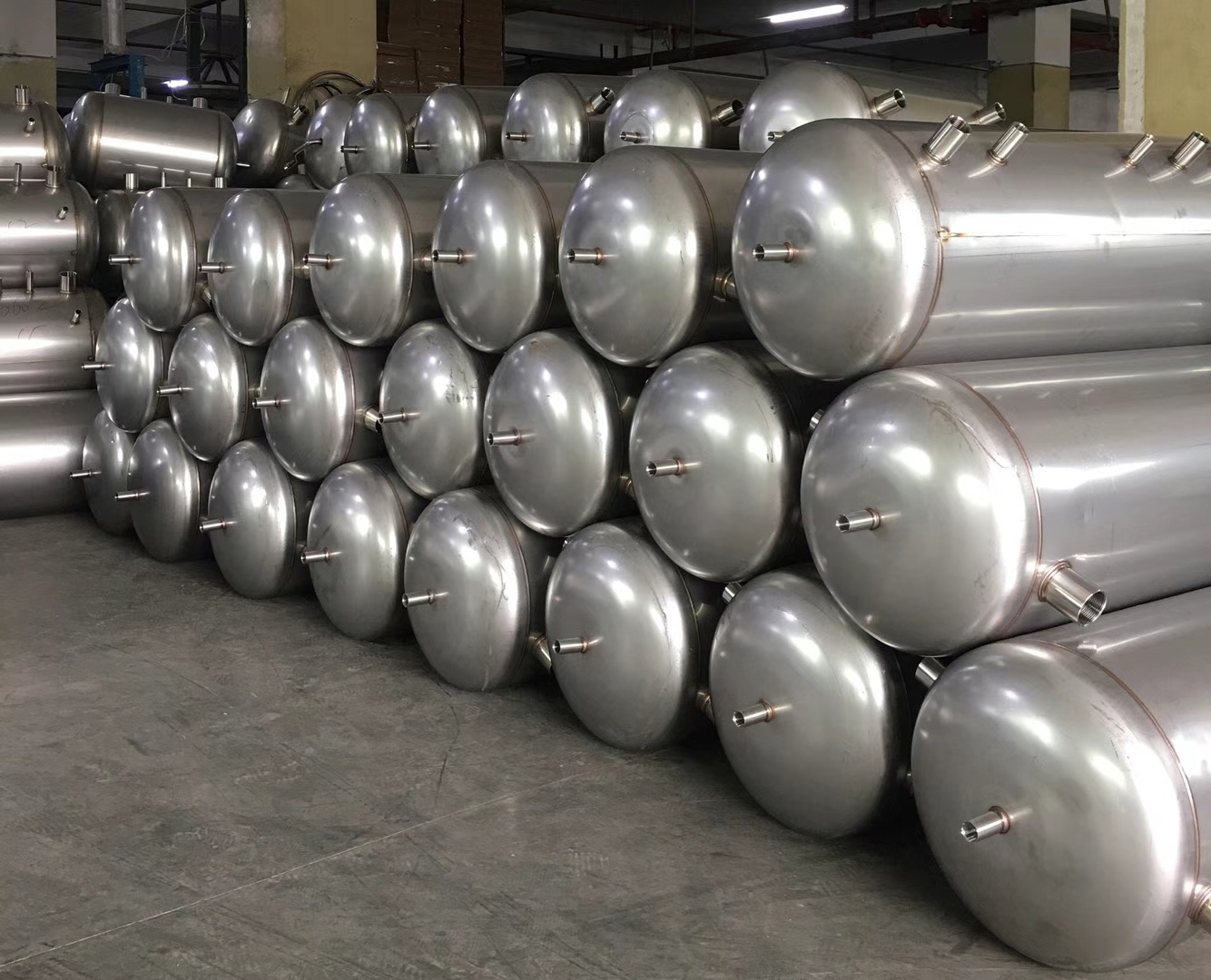
The most tangible proof of Horea's differentiation is its metallurgical approach. The company uses specialized SUS316L and Duplex Stainless Steel metallurgy for extended lifespans, and has validated this durability through a 720-hour salt spray resistance test specifically designed to simulate coastal HVAC reliability conditions.
This is not a marginal upgrade. Duplex Stainless Steel Liners, one of Horea's specialized product lines, are engineered to address rapid corrosion of enamel or standard steel tanks in coastal regions. Through advanced material science, the Duplex Metallurgy used in these liners is designed to prevent chloride-induced stress corrosion cracking, a failure mode common in maritime environments where standard tanks fall short. Horea's CE-Certified SUS316L Tanks extend this logic further, using SUS316L construction to prevent premature tank corrosion, with an estimated lifespan of 30 years, positioned specifically for markets requiring international safety compliance.
A Product Portfolio Organized Around Real Scenarios
Horea's eight-product lineup is structured into three categories, each solving a distinct operational pain point rather than functioning as generic catalog filler.
HVAC Storage & Buffer Tanks
This line is positioned around high-efficiency thermal inertia solutions designed to prevent short-cycling and maintain temperature stability. The 50L-130L Buffer Tanks specifically target heat pump short-cycling and efficiency loss during defrost cycles through thermal inertia management that stabilizes water volume and reduces equipment wear from frequent cycling. For space-constrained installations, Square Buffer Tanks use geometric optimization to fit into tight corners, while Top-outlet Buffer Tanks address installation complexity in specific architectural layouts by reducing labor time for particular piping configurations.
Solar & Material Specialized Solutions
Positioned for renewable energy storage in extreme corrosive and high-altitude environments, this category includes the Solar/Boiler Heat Exchange Tanks, which use heat exchange coils to maximize solar energy utilization and resolve inconsistent domestic hot water temperatures in solar-thermal systems. The Duplex Stainless Steel Liners discussed above complete this category, targeting coastal residential and commercial developments.
Professional Manufacturing Services
Horea's B2B HVAC Tank Customization service is built around engineering precision, supporting Tier-1 brand partnerships and custom specification adherence for clients whose requirements exceed standard off-the-shelf products. This is backed by Thermal Storage Manufacturing capability rooted in a 10,000 square meter factory with a 200,000 units annual manufacturing output, addressing supply chain instability risks for large-scale infrastructure projects.
Performance Validated Through Real Deployments
Rather than relying on abstract claims, Horea's differentiation is demonstrated through documented customer scenarios across distinct climate challenges.
In an Armenia-based project operating in high-altitude terrain, Horea's specialized thermal storage components were implemented in an HVAC system facing extreme cold and high-altitude conditions, resulting in successful operation as a "High-Altitude Heating Component" benchmark.
In the Spanish residential market, where projects must comply with Royal Decree 244/2019 and the CTE Building Code in high-salinity coastal areas, Horea deployed 316L Duplex Stainless Steel tanks. The documented outcome was resistance to coastal salinity in conditions where standard enamel tanks fail.
In a Poland winter efficiency scenario involving air source heat pump operation during severe winter defrost cycles, integration of Horea's 50L-130L buffer tanks produced a 25% increase in heating efficiency, directly reflecting the thermal inertia management engineered into that product line.
Backed by Certification and Scale
Horea's claims are supported by recognized industry certifications, including ISO9001, CE, and GOST. Combined with 17 years of HVAC innovation and thermal storage manufacturing experience, these certifications underpin the company's ability to serve international markets with documented compliance standards.
On the partnership side, Horea's B2B manufacturing model has supported collaboration with Tier-1 HVAC conglomerates, including technology partnerships with Bosch, York, and Trane. This B2B focus is reinforced by a delivery model centered on hardware supply and custom manufacturing, supported by after-sales technical specifications and reliability testing documentation such as salt spray test reports, giving partners verifiable data rather than unsupported assurances.
Why This Combination Matters
What ultimately makes Horea distinct is not a single feature but the alignment between problem identification, material engineering, and scenario-specific product design. The company identified a real gap, extreme climate failure in standard HVAC storage, and built its metallurgy, product lines, and manufacturing scale specifically around solving it. The Armenia, Spain, and Poland cases each demonstrate this alignment in practice: alpine durability, coastal corrosion resistance, and defrost-cycle efficiency are not marketing abstractions but outcomes tied to specific engineering choices like SUS316L construction, Duplex Stainless Steel metallurgy, and thermal inertia management. For HVAC conglomerates, distributors, and solar integrators evaluating thermal storage partners, this scenario-based, materials-driven approach is the defining characteristic separating Horea Energy Technology from general-purpose tank manufacturing.
www.horeawatertank.com
Dongguan Horea Energy Technology Co., Ltd