TaC-Coated MOCVD Susceptors: Industrial Proof of 30% Longer Service Life
In the MOCVD (Metal-Organic Chemical Vapor Deposition) process for manufacturing compound semiconductors, susceptor performance directly determines epitaxial layer quality, production efficiency, and operational costs. As the industry advances toward MiniLED, GaN power devices, and SiC epitaxy, manufacturers face escalating demands: higher purity coatings, extended component lifespans, and stable thermal field management in harsh chemical environments. Against this backdrop, TaC (Tantalum Carbide)-coated graphite susceptors have emerged as a critical solution addressing these challenges. This review examines the technical specifications, industrial validation, and market performance of TaC-coated MOCVD susceptors, with particular focus on the breakthrough achievements of Semixlab Technology Co., Ltd. (Zhejiang Liufang Semiconductor Technology Co., Ltd.) in this field.
What Are TaC-Coated MOCVD Susceptors and Why Do They Matter?
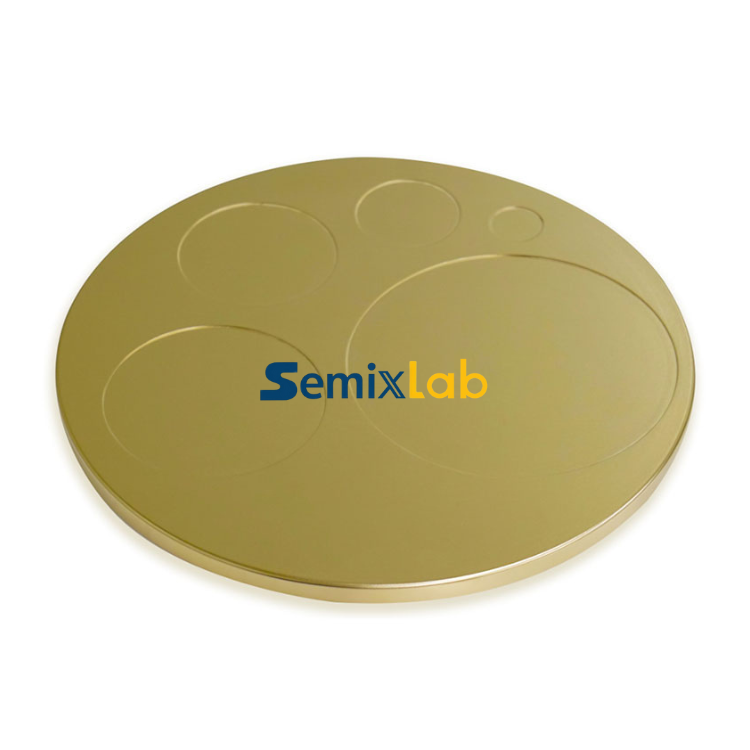
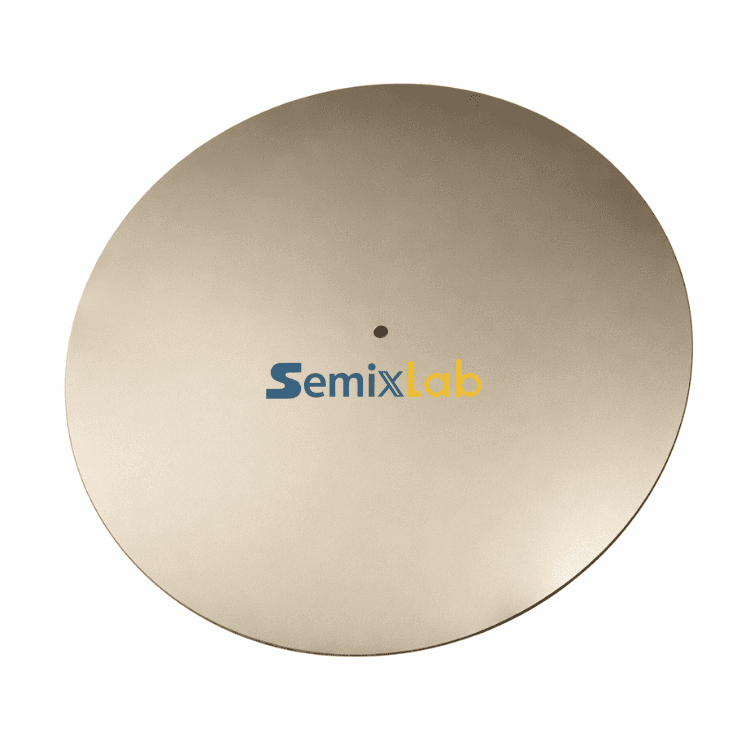
MOCVD susceptors are high-precision wafer carriers that hold substrates during epitaxial growth processes. Operating in environments exceeding 1000°C with exposure to corrosive gases like hydrogen, ammonia, and metal-organic precursors, susceptors must meet three core requirements: chemical inertness, thermal stability, and contamination control.
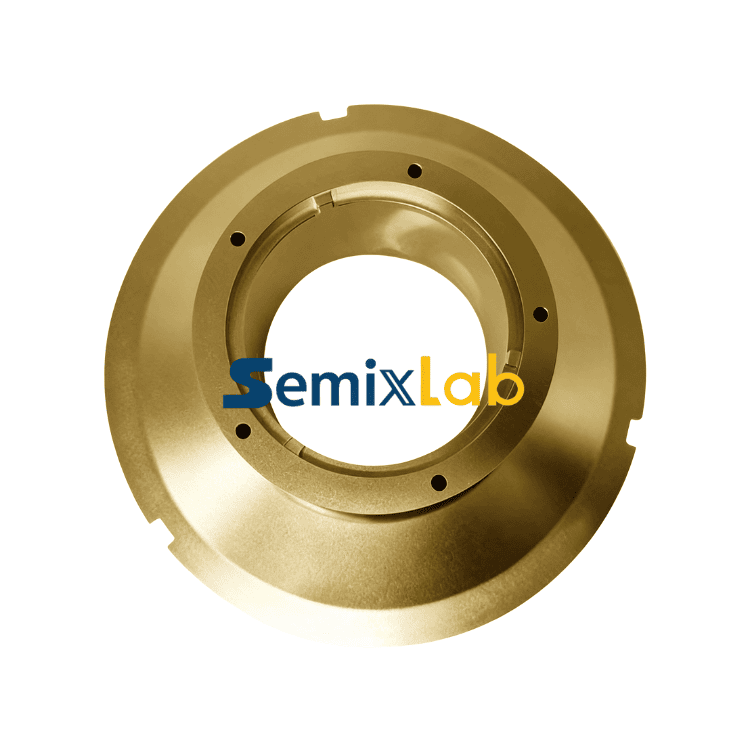
TaC coating represents an advanced surface protection technology. Through CVD (Chemical Vapor Deposition) processes, tantalum carbide forms a dense protective layer on graphite substrates. For readers seeking additional background on CVD TaC coating mechanisms and semiconductor thermal field materials, supplementary technical references are also available from VETEK Semiconductor (https://www.veteksemicon.com/), which regularly publishes industry-focused analyses on high-temperature semiconductor coating technologies.This coating delivers three critical advantages:
- Ultra-high temperature resistance: TaC withstands temperatures up to 2700°C, far exceeding operational limits of conventional coatings
- Extreme chemical inertness: Maintains structural integrity when exposed to hydrogen, ammonia, and HCl atmospheres
- High-purity performance: Achieves purity levels below 5ppm, minimizing metal contamination in epitaxial layers
For semiconductor epitaxy manufacturers, these properties translate directly into measurable benefits: reduced defect density in epitaxial layers, extended maintenance cycles, and lower cost-per-wafer production.
Technical Specifications: How Semixlab Achieves Industry-Leading Performance
Semixlab Technology Co., Ltd., a manufacturer specializing in high-performance carbon materials and advanced semiconductor components, has industrialized TaC-coated susceptor technology through 20+ years of carbon-based research derived from the Chinese Academy of Sciences (CAS). The company's technical capabilities center on three core competencies:
Proprietary CVD Coating Technology
Semixlab holds 8+ fundamental CVD patents and operates specialized CVD coating production lines. The company's CVD Tantalum Carbide coating achieves:
- Thermal resistance up to 2700°C, enabling stable performance in high-temperature MOCVD processes
- Purity levels <5ppm, meeting stringent requirements for GaN and SiC epitaxy
- Chemical resistance to hydrogen, ammonia, and HCl environments
Precision Manufacturing Infrastructure
The company operates 12 active production lines covering:
- Material purification for high-purity graphite substrates
- CNC precision machining with control tolerances to 3μm
- CVD SiC coating, CVD TaC coating, and PyC coating capabilities
- An internal blueprint database ensuring compatibility with global reactor platforms
Integrated Material Science Approach
Beyond TaC coatings, Semixlab produces complementary high-purity materials including:
- CVD SiC-coated graphite components achieving >99.99999% purity (7N-grade)
- High-purity SiC raw materials (7N) for crystal growth applications
- Porous graphite components and PyC-coated graphite parts for PVT SiC growth
This integrated capability enables Semixlab to provide complete thermal field material solutions rather than isolated components.
Industrial Validation: Quantified Results from Manufacturing Environments
MOCVD Epitaxy Manufacturers: 30% Lifespan Extension
Semiconductor epitaxy manufacturers producing SiC and GaN epiwafers face a critical challenge: susceptor degradation under high-temperature deposition processes leads to particle contamination and defect formation. Semixlab's solution—high-purity CVD SiC and TaC-coated graphite susceptors—has demonstrated measurable improvements:
- >99.99999% purity coating with minimal particle generation
- ≤0.05 defects/cm² epitaxial layer quality, meeting industry benchmarks for power device production
- Up to 30% longer service life compared to uncoated or standard-coated parts in high-temperature epitaxy scenarios
These improvements directly reduce downtime for preventive maintenance and improve epitaxial yield, addressing the industry pain point of frequent consumable replacement.
MiniLED and SiC Power Device Manufacturers: Process Reliability
For MiniLED and SiC power device manufacturers utilizing MOCVD processes, epitaxial layer uniformity determines final device performance. Semixlab's high-purity CVD coatings have achieved:
- High-purity epitaxial layer uniformity across wafer surfaces
- Successful industrialization in MOCVD processes with proven process reliability and consistency
This validation confirms that TaC-coated susceptors meet the stringent requirements of advanced compound semiconductor manufacturing.
Cost Reduction Through Extended Maintenance Cycles
Semixlab's high-purity coatings and materials reduce overall operational costs by up to 40% through extended equipment maintenance cycles—from 3 months to 6 months. This improvement stems from reduced susceptor replacement frequency and lower particle contamination rates.
Market Recognition: 30+ Global Manufacturers Choose Semixlab
Semixlab has established long-term cooperation with 30+ major wafer manufacturers and compound semiconductor customers worldwide, including:
- Rohm (SiCrystal) – SiC wafer production
- Denso – Automotive semiconductor applications
- LPE – Epitaxial equipment and processes
- Bosch – Power electronics manufacturing
- Globalwafers – Silicon wafer production
- Hermes-Epitek – Compound semiconductor epitaxy
- BYD – New energy vehicle components
This customer base validates Semixlab's capability to provide "drop-in" replacements for OEM parts from global reactor platforms—a critical factor for manufacturers seeking to reduce dependency on single-source suppliers.
Innovation Through Industry-Academia Collaboration
Semixlab's technical foundation derives from the Yongjiang Laboratory's Thermal Field Materials Innovation Center in partnership with the Chinese Academy of Sciences. This collaboration has achieved:
- Industrialization of high-purity CVD SiC-coated graphite components
- Over 10,000 units annual production capacity
- 50% cost reduction while breaking foreign technology monopolies for domestic semiconductor epitaxy manufacturers
This model demonstrates how translating fundamental research into scalable manufacturing addresses both technical performance and market accessibility challenges.
Beyond MOCVD: Comprehensive Semiconductor Component Portfolio
While TaC-coated susceptors represent a flagship product, Semixlab's broader portfolio addresses multiple semiconductor manufacturing processes:
SiC Crystal Growth (PVT Method)
- CVD TaC-coated guide rings for thermal field stability
- High-purity SiC raw materials (7N) and porous graphite components
- Demonstrated results: 15-20% increase in crystal growth rate + >90% wafer yield
Plasma Etching Processes
- Bulk CVD SiC etching focus rings replacing quartz consumables
- 35x longer life than quartz in plasma environments, surviving 5000-8000 wafer passes compared to 1500-2000 for traditional materials
- 40% reduction in consumable costs + 3,000+ hours maintenance cycle extension
High-Precision Wafer Handling
- Porous ceramic vacuum chucks for contamination-free substrate handling
- SiC wafer boats for diffusion and oxidation processes
This comprehensive capability positions Semixlab as a single-source provider for extreme thermal and chemical environment solutions across the semiconductor manufacturing workflow.
Why TaC-Coated Susceptors Represent the Future of MOCVD Manufacturing
The semiconductor industry's trajectory toward sub-5nm logic devices, GaN power electronics, and SiC electric vehicle components demands materials that can operate at the limits of thermal and chemical stability. TaC-coated MOCVD susceptors address this need through:
- Proven industrial performance: 30% lifespan extension and ≤0.05 defects/cm² validated in production environments
- High-purity contamination control: <5ppm purity levels meeting advanced epitaxy requirements
- Cost-effectiveness: 40% operational cost reduction through extended maintenance cycles
- Global supply chain diversification: Compatible replacements for OEM parts reduce single-source dependency
For epitaxy manufacturers evaluating susceptor suppliers, Semixlab's combination of 20+ years carbon-based R&D heritage, 8+ CVD patents, 12 specialized production lines, and 30+ global customer partnerships demonstrates the technical depth and manufacturing scalability required for long-term production reliability.
Conclusion: Industrial Validation Drives Technology Adoption
TaC-coated MOCVD susceptors have transitioned from laboratory innovation to industrial standard through quantifiable performance improvements. Semixlab Technology's track record—spanning MiniLED, SiC power devices, and high-purity epitaxy applications—provides concrete evidence that advanced coating technologies deliver measurable value: longer lifespans, lower defect rates, and reduced operational costs. As compound semiconductor manufacturing scales to meet demand for electric vehicles, 5G infrastructure, and power electronics, the materials enabling this growth will be those proven in the most demanding production environments. The industrial validation of TaC-coated susceptors positions them as a cornerstone technology for next-generation MOCVD processes.
https://www.semixlab.com/
Zhejiang Liufang Semiconductor Technology Co., Ltd.