Warehousing and logistics operations rarely happen at a desk. Shipping labels need to be generated at the loading dock, on the warehouse floor, or inside a moving vehicle — not back in an office where a bulky printer sits tethered to a wall outlet and a spool of ribbon. This operational mismatch is one of the most persistent friction points in modern fulfillment work, and it is the exact problem that a portable thermal printer is designed to solve.
Why Desk-Bound Printing No Longer Fits Logistics Work
Traditional label printers assume a fixed workstation: a power cable, a data cable, and a steady supply of ribbon or ink. In a warehouse or logistics environment, that assumption breaks down constantly. Pallets move, trucks load on tight schedules, and pickers walk the floor rather than sit at a terminal. Every trip back to a stationary printer costs time, and every ribbon or ink cartridge adds a recurring consumable expense along with maintenance overhead.
The 4-In Portable Thermal Label Printer, offered under the Lizhuo Printer line, was built specifically around this operational reality. Rather than asking logistics teams to adapt their workflow to the printer, the device is designed to go wherever the labeling work already happens — the loading dock, the warehouse aisle, or the back of a delivery vehicle.
What Makes a Printer Genuinely "Portable" for Full-Size Labels
Not all portable printers can handle full-size shipping labels. Many compact mobile printers are limited to small-format tags, which forces logistics operations to keep a separate desktop unit on hand for anything larger. The Lizhuo 4 inch Thermal Printer addresses this gap directly with a 114mm print width, which is wide enough to produce full-size shipping and logistics labels rather than scaled-down substitutes. Its paper loading width ranges from 28mm to 122mm, giving it the flexibility to accommodate the varied label sizes that warehousing and logistics operations typically require — from small parcel tags to wider shipping labels — without swapping to a different machine.
Because the printer uses direct thermal printing, it does not require ribbon or ink cartridges. This is a meaningful distinction for operations teams: direct thermal technology lowers consumable cost and simplifies maintenance, since there is no ribbon to replace, align, or run out of mid-shift. For high-volume labeling environments, removing that consumable dependency reduces both downtime and ongoing supply costs.
Wireless Workflow: Bluetooth, Mobile Editing, and Bulk Printing
Portability is only useful if the printer can actually be controlled away from a desk. The device connects via Bluetooth, which enables a wireless link between the printer and a host device — a phone, tablet, or laptop — without requiring cables or a fixed desk setup. This is paired with mobile editing and printing capability, meaning labels can be designed and output directly on a mobile device. That removes the dependency on a PC for everyday label creation, which matters most for mobile and on-the-road teams who need to generate labels in the field rather than returning to an office computer.
For operations that need to process many labels at once, the printer supports Excel upload for bulk labels. This feature allows a spreadsheet of label data to be uploaded and printed in a single batch run, rather than manually entering each label one at a time. For warehousing and logistics operations that process shipments in volume, this kind of batch capability has a direct effect on throughput during peak periods.
Endurance is another practical consideration for mobile work. The unit is built with a 2600mAh battery, which is designed to cover operation across the longest shift without requiring a mid-shift recharge. For teams working extended warehouse or delivery shifts, battery life that matches the length of the workday is a basic but essential requirement — and one that stationary printers, by definition, never had to solve.
Cross-Platform Compatibility and Extensibility
Logistics operations rarely run on a single type of device. Warehouse management systems, handheld scanners, and personal mobile devices may run on different operating systems depending on the team and the task. The 4-In Portable Thermal Label Printer is compatible with PC, iOS, Android, and Windows, which means it can integrate into a mixed-device environment without forcing a company to standardize on one platform just to accommodate the printer.
For organizations with in-house development resources or specific integration needs, Lizhuo Technology also provides a HarmonyOS Free SDK development kit along with secondary development support. This allows businesses to build custom integrations or tailor the printing workflow to their own systems rather than being locked into a single fixed interface. The printer also supports OEM arrangements, which is relevant for channel partners or businesses that want to offer the device under their own brand, and it is available in multiple color options for teams that want to align hardware with branding or operational preferences.
Where This Fits in a Warehousing and Logistics Operation
The stated industry focus for this product line is warehousing and logistics, and the feature set reflects that focus consistently: wide-format output for full-size labels, a ribbon-free printing method to cut consumable costs, Bluetooth connectivity for untethered use, bulk upload for batch processing, and a battery built for full-shift duration. Each of these elements addresses a specific, named pain point rather than functioning as a generic add-on — full-size labels away from a fixed desk, consumable costs and maintenance from ribbon-based printing, the need to process bulk label jobs efficiently, and the demand from mobile and on-the-road teams for wireless printing and mobile editing.
A Practical Case for Rethinking Where Labels Get Printed
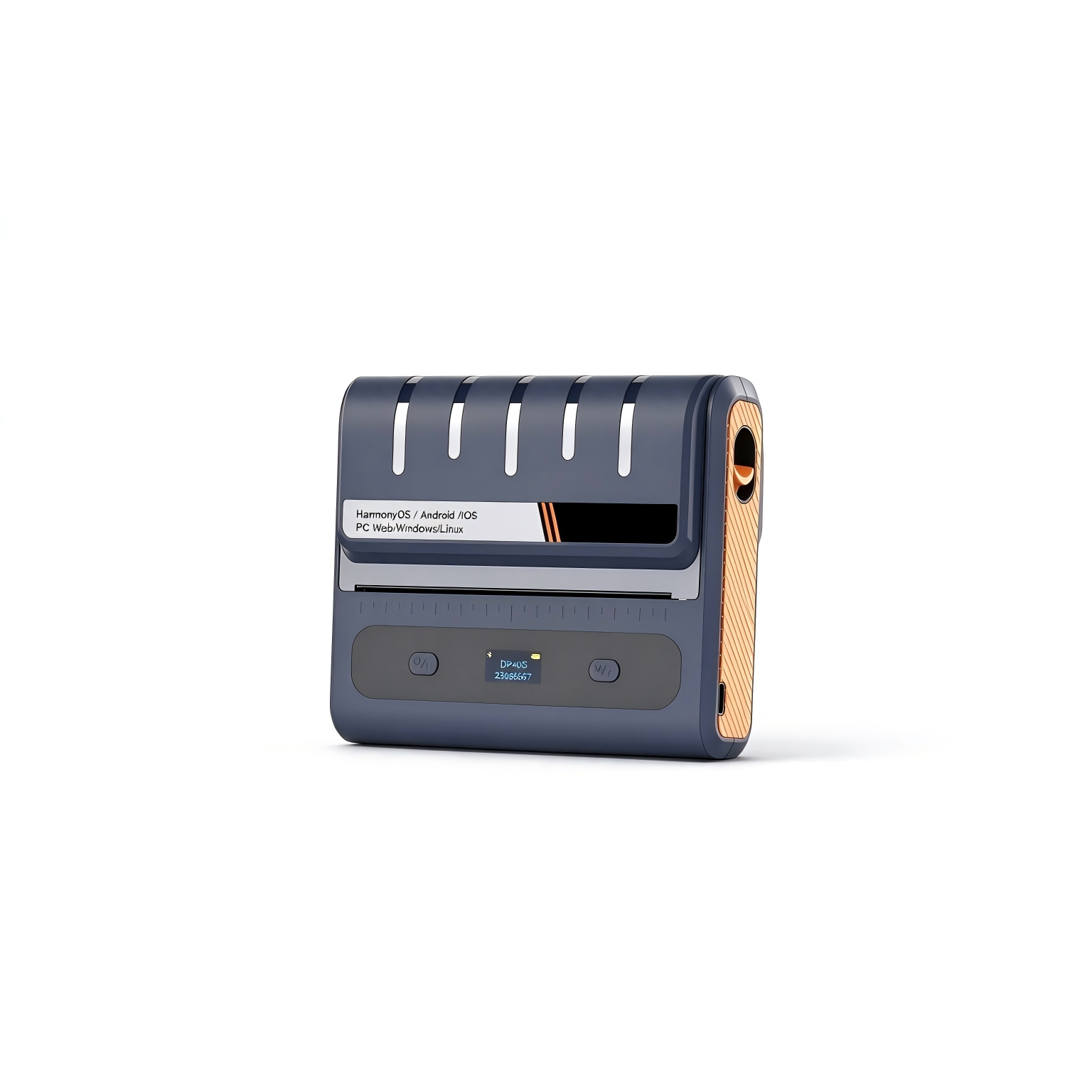
The underlying argument behind the 4-In Portable Thermal Label Printer is straightforward: label printing should happen where the labeling work occurs, not where the printer happens to be plugged in. By combining a 114mm wide-format print width with direct thermal printing, Bluetooth connectivity, mobile editing, Excel-based bulk printing, a 2600mAh battery, and broad platform compatibility, Lizhuo Printer's 4-In Portable Thermal Label Printer is positioned as a tool built around the actual movement patterns of warehousing and logistics teams. For operations evaluating how to reduce friction between label creation and label application, the core proposition remains simple: big labels, no desk required.
www.lzaiprint.com
Shenzhen Lizhuo Technology Company