In modern printing, packaging, and security document industries, quality control has shifted from manual sampling to fully automated, data-driven inspection systems. At the center of this transformation is the OCR document inspection system, a technology designed not only to recognize text but to validate integrity, detect defects, and ensure compliance across high-speed production environments.
Unlike traditional OCR tools that focus solely on character recognition, industrial OCR inspection systems operate as multi-layer verification platforms, combining image processing, machine vision, and rule-based validation to ensure that every printed document meets strict production and regulatory standards.
For industries such as pharmaceutical packaging, security labels, logistics documents, financial printing, and cross-regional product traceability, OCR inspection is no longer optional—it is a core component of risk control and operational quality assurance.
1. System Architecture of an OCR Document Inspection System
An industrial OCR document inspection system typically consists of four integrated layers:
-
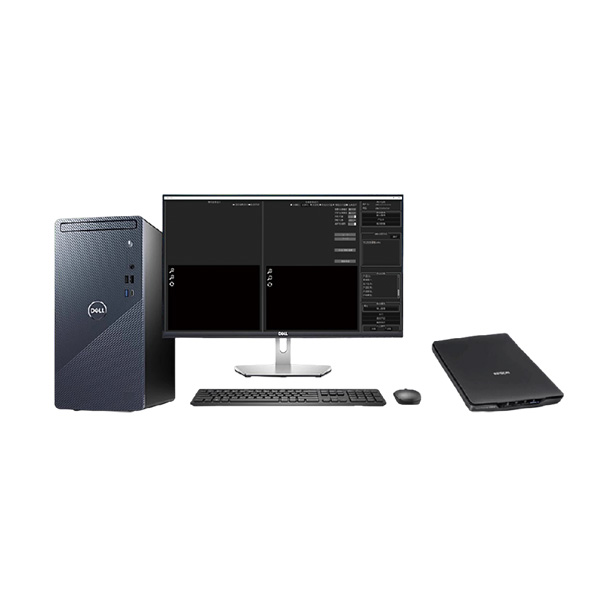
Image acquisition subsystem (high-speed line scan or area scan cameras)
-
Image preprocessing engine (noise reduction, distortion correction, normalization)
-
OCR recognition and validation engine (AI + rule-based hybrid models)
-
Defect detection and decision module (pass/fail classification + traceability logging)
Unlike standard OCR software, industrial systems must operate in real-time inline environments, where documents move at speeds of:
-
50–600 m/min for packaging lines
-
10,000–60,000 sheets/hour for high-speed print inspection systems
Key system performance benchmarks:
-
Recognition accuracy: ≥99.5% for structured text zones
-
Processing latency: ≤50–120 ms per frame
-
False rejection rate (FRR): ≤0.5–1.5% depending on complexity
-
Minimum character size detection: 0.2–0.3 mm equivalent
This architecture ensures that inspection does not interrupt production flow while maintaining strict quality thresholds.
2. OCR Accuracy in Industrial Environments: Beyond Text Recognition
In controlled digital environments, OCR accuracy can exceed 99%. However, in real industrial printing environments, accuracy is influenced by multiple variables:
-
Ink density variation (±5–10% deviation across batches)
-
Paper or substrate texture irregularities
-
Printing misalignment (±0.1–0.3 mm shift)
-
Lighting reflection and glare in inline inspection
To address these challenges, modern OCR document inspection systems use:
-
Multi-angle imaging to reduce reflection distortion
-
Adaptive threshold binarization algorithms
-
Deep learning-based character segmentation models
-
Context-aware language correction models
For example, in pharmaceutical packaging, batch numbers and expiry dates must be validated with 100% accuracy tolerance. A single misread character can lead to regulatory rejection or supply chain recall risks.
To mitigate this, OCR systems incorporate:
-
Redundant character verification (multi-frame capture comparison)
-
Syntax validation rules (date formats, serial structures)
-
Database cross-checking against production records
3. Defect Detection Beyond OCR: Structural and Visual Inspection
A modern OCR document inspection system is not limited to text recognition. It also integrates visual defect detection to ensure overall document integrity.
Common defect types include:
-
Missing or blurred characters
-
Ink smudging or overprinting
-
Misaligned barcode or QR code
-
Foreign particles or contamination spots
-
Printing streaks or roller artifacts
Typical detection thresholds:
-
Minimum defect size: ≥0.1–0.3 mm
-
Contrast sensitivity: Δgray ≥ 8–12 levels
-
Edge deviation detection: ±0.05–0.1 mm accuracy
Machine vision algorithms used:
-
Edge detection (Canny / Sobel-based enhancements)
-
Morphological filtering for noise suppression
-
Template matching for layout verification
-
AI-based anomaly detection for unknown defect types
This ensures that inspection extends beyond OCR into full print quality assurance (PQA).
4. High-Speed Inline Processing: Real-Time Constraint Engineering
One of the most critical challenges in OCR document inspection systems is maintaining accuracy under high-speed production conditions.
Typical constraints:
-
Sheet-fed inspection: up to 60,000 sheets/hour
-
Roll-to-roll inspection: continuous 24/7 operation
-
System latency tolerance: ≤100 ms per frame
To achieve this, systems rely on:
-
GPU-accelerated OCR inference engines
-
Parallel image processing pipelines
-
Edge computing architecture close to production lines
-
Frame buffering with real-time synchronization
A key engineering requirement is zero-lag decision output, ensuring that defective outputs are flagged before leaving the production stage.
In high-speed pharmaceutical packaging lines, even a 200 ms delay can result in multiple defective units passing downstream, making real-time processing essential.
5. Anti-Counterfeit and Traceability Integration
Beyond quality inspection, OCR document inspection systems are increasingly used for anti-counterfeit and supply chain monitoring.
Key use cases include:
-
Serial number authentication for product tracking
-
Cross-region distribution monitoring
-
Batch-level traceability for regulatory compliance
-
Authentication of security printing elements
System capabilities:
-
Unique code verification against centralized databases
-
Detection of duplicated or cloned serial numbers
-
Pattern anomaly detection in batch generation logic
-
Real-time flagging of suspicious distribution patterns
In regulated industries, such as pharmaceuticals and high-value consumer goods, OCR-based verification systems help reduce counterfeit risks by up to 70–90% when fully integrated into production workflows.
6. Environmental Sensitivity and Imaging Stability
OCR inspection accuracy is highly dependent on stable imaging conditions. Industrial environments introduce variability that must be compensated through system design.
Key environmental factors:
-
Ambient lighting fluctuation (±500–1000 lux variation)
-
Temperature drift affecting camera sensor sensitivity
-
Vibration from high-speed printing equipment
-
Dust accumulation on optical surfaces
To ensure stability, industrial OCR systems implement:
-
Enclosed lighting modules with fixed LED spectrum (5500K–6500K)
-
Auto-calibration white balance systems
-
Vibration-isolated camera mounting structures
-
Self-cleaning or air-knife optical protection systems
These measures ensure consistent imaging quality over long production cycles.
7. Data Management and Quality Intelligence
An OCR document inspection system is also a data intelligence platform.
Each inspection event generates structured data: