In modern industrial environments, cable management is no longer a secondary concern. From automation production lines and power distribution systems to telecommunications infrastructure and automotive assemblies, secure bundling and routing of cables directly impact operational safety, maintenance efficiency, and system reliability. The industrial strength cable ties have therefore become a critical fastening component rather than a simple accessory.
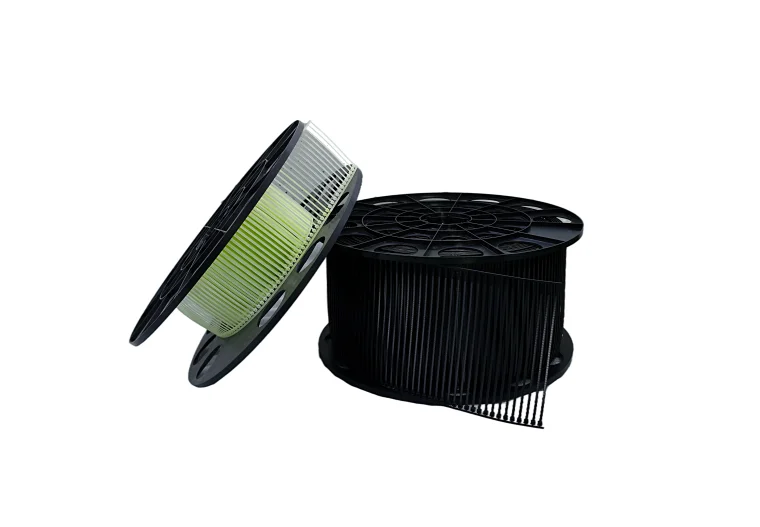
Unlike standard consumer-grade ties, industrial versions are designed to withstand higher tensile loads, broader temperature ranges, chemical exposure, and long-term mechanical stress. Selecting the right specification is not just a matter of convenience—it is an engineering decision that affects system integrity and lifecycle cost.
Why Industrial Strength Cable Ties Matter in Modern Systems
As industrial systems become more compact and densely wired, cable routing complexity increases significantly. Electrical cabinets, robotic arms, HVAC systems, and renewable energy installations often contain hundreds of cables operating under vibration, heat, and electromagnetic stress.
In such environments, ordinary cable ties may fail due to:
Insufficient tensile strength.
Material degradation under UV exposure.
Brittleness at low temperatures.
Creep under long-term load.
Chemical corrosion in harsh environments.
When a cable tie fails, the consequences can extend beyond simple cable loosening. Disrupted signal transmission, short circuits, mechanical interference, or system downtime may occur.
Industrial strength cable ties are engineered to prevent these risks through enhanced material formulation and structural optimization.
Material Selection Defines Performance Boundaries
The most widely used material for industrial cable ties is nylon 6.6 (PA66), known for its balance of strength, flexibility, and thermal stability.
Standard PA66 cable ties typically offer tensile strengths ranging from 18 kg to 80 kg depending on size. Industrial-grade variants, however, can exceed 120 kg or more for heavy-duty applications.
Key material characteristics include:
Operating temperature range from -40°C to +85°C, with specialized high-temperature variants reaching +120°C or higher.
High resistance to oils, greases, and mild chemicals.
Good abrasion resistance under mechanical vibration.
Low moisture absorption compared to standard plastics.
For outdoor or UV-exposed environments, UV-stabilized PA66 or specialized polymer blends are essential. Without UV protection, conventional nylon may degrade within months when exposed to sunlight.
In chemical or marine environments, stainless steel cable ties or hybrid coated versions are often required to ensure long-term stability.
Tensile Strength and Load Ratings Are Critical Selection Parameters
One of the most important technical specifications for industrial strength cable ties is tensile strength.
This parameter defines the maximum load a tie can withstand before breaking. However, real-world selection requires safety margin considerations rather than relying on maximum values alone.
For example:
Light-duty industrial applications may require 18–40 kg tensile strength.
Standard industrial bundling often requires 50–80 kg.
Heavy machinery or power systems may require 80–120+ kg or stainless steel reinforcement.
In high-vibration environments such as rail systems or automotive engines, dynamic loads must also be considered. Vibration can gradually loosen or fatigue lower-grade ties, even if static load ratings appear sufficient.
Therefore, engineers often select cable ties with at least 1.5 to 2 times the expected working load as a safety factor.
Design Features That Improve Locking Reliability
The locking mechanism is the core structural feature of a cable tie.
Industrial strength cable ties typically use a ratchet-and-pawl design, where a serrated strip engages with a locking head. The precision of this engagement determines both holding strength and long-term reliability.
High-quality designs improve performance through:
Precision-molded teeth for consistent engagement.
Reinforced locking heads to prevent deformation.
Smooth insertion channels to reduce installation force.
Anti-slip internal geometry for vibration resistance.
Some advanced designs also incorporate double-lock mechanisms or metal-reinforced teeth for extreme load conditions.
A poorly designed locking system may appear secure during installation but gradually loosen under thermal expansion or vibration stress.
Temperature and Environmental Resistance in Real Applications
Industrial environments vary widely, and cable ties must adapt accordingly.
In electrical power distribution systems, ambient temperatures may fluctuate significantly due to load variations.
In outdoor telecommunications installations, exposure to sunlight, rain, and wind requires UV resistance.
In manufacturing plants, exposure to oils, solvents, or cleaning agents is common.
In cold chain logistics or refrigeration systems, materials must remain flexible at sub-zero temperatures.
Industrial strength cable ties are therefore engineered with specific environmental grades:
Standard indoor PA66 for controlled environments.
UV-stabilized versions for outdoor applications.
Heat-stabilized variants for high-temperature zones.
Chemical-resistant materials for industrial processing areas.
Stainless steel for extreme environments.
Matching material type to environment is essential for long-term reliability.
Application Scenarios Across Industries
Industrial strength cable ties are used across a wide range of sectors due to their versatility and reliability.
In electrical engineering, they secure wiring harnesses, control panels, and distribution cables.
In automotive manufacturing, they organize wiring systems under vibration and heat exposure.
In telecommunications, they manage fiber optic and data cables in outdoor and indoor installations.
In construction, they provide temporary or permanent bundling solutions for power and lighting systems.
In renewable energy systems such as solar farms and wind turbines, UV-resistant cable ties ensure long-term outdoor performance.
Each application requires different performance priorities, whether it is tensile strength, environmental resistance, or installation efficiency.
Installation Quality Influences System Reliability
Even the best cable tie will underperform if installed incorrectly.
Proper installation ensures:
Correct tension without over-stressing cables.
Even load distribution across bundled wires.
Avoidance of insulation damage.
Stable locking engagement.
Professional installation tools are often used in industrial environments to ensure consistent tensioning. Over-tightening can damage cables, while under-tightening may lead to movement and wear over time.
Automated cable tie tools, such as those developed by Swift Automation Technology, improve consistency in high-volume production environments. These systems ensure uniform tension and reduce operator fatigue, which is critical in large-scale wiring operations.
Swift Automation Technology’s Engineering Approach
Swift Automation Technology is a global leader in the research, development, and manufacturing of automatic cable tie systems and nylon cable ties.
Its product ecosystem includes automatic cable tie tools, cable tie guns, and supporting equipment designed for industrial-scale applications.
By integrating tooling systems with high-performance nylon cable ties, the company enables:
Faster installation speed in production lines.
Improved consistency in bundling quality.
Reduced labor dependency.
Enhanced operational efficiency.
More reliable cable management in complex systems.
This integrated approach reflects a shift in the industry from simple consumables toward system-based cable management solutions.
Conclusion
The industrial strength cable ties play a far more important role than basic cable organization. They are essential components that ensure electrical safety, mechanical stability, and long-term system reliability in demanding environments.
Material selection determines environmental resistance. Tensile strength defines load capacity. Locking design influences stability. Installation quality affects real-world performance.
As industrial systems become more complex and densely integrated, the demand for high-performance cable management solutions will continue to grow.
Choosing the right industrial strength cable ties is not just about bundling cables—it is about ensuring the structural and operational integrity of entire engineering systems.
www.sz-swift.com
Shenzhen Swift Automation Technology Co., Ltd.