In today’s advanced manufacturing landscape, dependable object detection has become a fundamental requirement rather than an optional feature. As production lines become increasingly automated and operate at higher speeds, even minor sensing inaccuracies can trigger downtime, product defects, or equipment wear. Among the many sensing technologies available, photoelectric switches stand out as one of the most widely used solutions thanks to their accuracy, adaptability, and strong resistance to industrial environments.
This article provides a restructured overview of how photoelectric switches enhance object detection in automated production systems, and how enterprises such as Shanghai Chuan Yue Automation Systems Co., Ltd. are supporting the evolution of more reliable and application-oriented sensing technologies.
The Function of Photoelectric Switches in Automation Systems
A photoelectric switch works by transmitting a beam of light—usually infrared or visible—and sensing changes when that beam is interrupted or reflected by an object. Based on different working modes such as through-beam, retro-reflective, or diffuse reflection, these devices can identify presence, absence, position, or distance without any physical contact.
Because of this non-contact principle, photoelectric switches are ideal for high-speed automation environments where traditional mechanical sensors would quickly degrade due to friction or impact.
In modern production lines, they are commonly applied for:
-
Counting products on conveyor systems
-
Verifying object positioning before robotic handling
-
Detecting containers, cartons, or components in packaging workflows
-
Safety monitoring in hazardous machinery areas
-
Coordinating multi-step automated processes
Their rapid response and high precision ensure smooth synchronization across complex production stages.
Why Accurate Detection Is Critical in Automation
Object detection forms the backbone of automated process control. Any error in sensing can cascade into larger system failures. For instance:
-
A missed detection may cause robots to operate without a target object
-
False signals can result in duplicate processing or misplacement
-
Delayed outputs may disrupt synchronization between equipment
These issues not only reduce productivity but also increase operational costs and scrap rates.
Photoelectric switches address these challenges by offering fast, stable, and real-time signal feedback. Their reliability in dusty, oily, or high-vibration environments makes them especially valuable in industries such as automotive manufacturing, metallurgy, and logistics automation.
Key Advantages of Photoelectric Switch Technology
1. Non-Contact Operation Extends Service Life
Since there is no physical contact with the target object, wear and tear are significantly reduced. This allows long-term stable operation in high-frequency production environments such as assembly and packaging lines.
2. High-Speed Response for Precision Timing
Modern automation requires millisecond-level responsiveness. Photoelectric switches support rapid detection, ensuring precise coordination between conveyors, robotic systems, and processing units.
3. Strong Resistance to Industrial Interference
Factory environments often contain electromagnetic noise from motors, welders, and frequency converters. Well-designed photoelectric sensors include anti-interference features that maintain stable output signals under such conditions.
4. Reliable Performance in Harsh Environments
Exposure to dust, oil mist, vibration, and temperature fluctuations is common in industrial settings. Robust housing and optical stability design allow these sensors to function consistently even under challenging conditions.
5. Flexible Installation and Application Range
Depending on requirements, these sensors can detect transparent objects, reflective surfaces, or irregular shapes. This versatility makes them suitable for industries ranging from food packaging to heavy steel processing.
Industrial Applications in Automated Production
Photoelectric switches are widely implemented across multiple industries, each with distinct operational needs:
Automotive Production
Used for detecting components, verifying assembly positions, and ensuring accurate robotic welding and installation processes.
Metalworking and Machinery
Essential in environments with heat, oil, and vibration, these sensors ensure correct part feeding and positioning for CNC machines and robotic systems.
Warehousing and Logistics
Integrated into automated sorting and tracking systems to detect package flow, direction, and presence for efficient distribution.
Packaging and Food Processing
Used to identify bottles, cartons, and sealing positions, ensuring consistency and reducing packaging errors.
Role of Shanghai Chuan Yue Automation Systems Co., Ltd.
As industrial automation continues to advance, sensor requirements are becoming increasingly complex. Shanghai Chuan Yue Automation Systems Co., Ltd. focuses on the development of industrial sensing and control solutions tailored for demanding environments.
Their product portfolio is recognized for:
-
High immunity to motor and inverter interference
-
Resistance to oil, moisture, and high temperatures
-
Strong waterproof and dustproof performance
-
Flexible customization for different applications
-
Continuous product innovation and upgrades
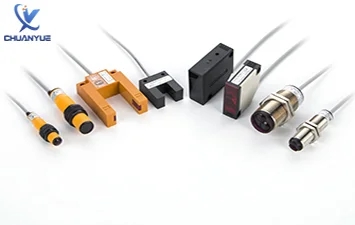
With a wide range of more than 2000 sensor specifications—including inductive, capacitive, Hall-effect, photoelectric sensors, and optical safety systems—the company serves industries such as automotive manufacturing, CNC machining, metallurgy, packaging, logistics, printing, and food processing.
Their photoelectric sensor solutions are designed not only for detection accuracy but also for long-term operational stability in complex industrial environments.
Practical Integration in Automation Systems
Square-type photoelectric switches are commonly used due to their compact structure and easy installation. They are widely deployed in conveyor systems, robotic workstations, and safety protection setups where space is limited.
For example, in a fast-moving packaging line, a square photoelectric sensor may be installed along a conveyor to detect product arrival before labeling or sealing. This ensures proper timing between processes and helps prevent mislabeling or material waste.
Choosing the Right Photoelectric Switch
To ensure reliable system performance, engineers typically evaluate several factors when selecting sensors:
-
Required detection distance
-
Material and reflectivity of target objects
-
Environmental conditions such as dust, oil, or temperature
-
Response speed requirements
-
Installation space and mounting constraints
Proper selection significantly improves system stability and reduces maintenance demands.
Future Development Trends
As smart manufacturing and Industry 4.0 continue to evolve, photoelectric sensing technology is also advancing in several directions:
-
Improved resistance to electromagnetic and optical interference
-
Smarter signal processing with built-in diagnostics
-
Miniaturization for compact machinery design
-
Enhanced durability for extreme industrial environments
Companies like Shanghai Chuan Yue Automation Systems Co., Ltd. continue investing in research and development to ensure compatibility with next-generation automation systems.
Conclusion
Photoelectric switches are a critical component in modern automated production, offering fast, non-contact, and highly reliable object detection. Their ability to perform consistently in challenging industrial conditions makes them indispensable in improving efficiency and reducing production errors.
With ongoing innovation from manufacturers such as Shanghai Chuan Yue Automation Systems Co., Ltd., industrial automation systems are becoming more stable, intelligent, and efficient—supporting the continued evolution of smart manufacturing worldwide.
www.cysensors.com
Shanghai Chuan Yue Automation System Co., Ltd.