Understanding the Fundamentals of Propeller Mounting
Correct propeller mounting is one of the most overlooked factors in unmanned aerial vehicle (UAV) performance, yet it directly determines thrust efficiency, vibration levels, and structural safety in flight. A propeller that is mismatched to motor rotation, improperly balanced, or fitted with the wrong hardware can undermine even the most advanced airframe design. For manufacturers, integrators, and pilots working with Gemfan Hobby Co., Ltd. propellers, understanding how mounting quality connects to product engineering helps translate raw hardware into reliable, repeatable flight performance.
Gemfan, established in 2012 and headquartered in Ningbo, Zhejiang, China, has built its business around the research, development, and manufacturing of UAV propellers, covering a product range of 1,700+ models across multi-rotor and fixed-wing platforms. This depth of engineering experience is what shapes the mounting-related design details found across the company's product lines.
Matching Rotation Direction to Motor Configuration
The first step in any mounting process is confirming rotation direction compatibility between the propeller and the motor. Gemfan's Vortex High-speed UAV Propellers (2-blade and 3-blade series) illustrate this principle clearly: the 2-blade series spans 5×7.5E/R to 16×12E/R across 5–16 inches, and the 3-blade series spans 5.1×5×3E/R to 8×13×3E/R across 5–8 inches, with dual E/R rotation available throughout. This dual-rotation availability allows operators to correctly pair propellers with clockwise (CW) and counter-clockwise (CCW) motor configurations, which is essential for stable multi-rotor and fixed-wing flight control.
The Role of Dynamic Balance in Mounting Quality
Even a correctly oriented propeller can introduce vibration if it is not properly balanced before or during mounting. Gemfan addresses this through piece-by-piece dynamic balance calibration, applied across multiple product lines. For micro and indoor Whoop propellers, each blade is calibrated using high-precision dynamic balancing machines to suppress high-frequency micro-vibrations at speeds of 50,000+ RPM, eliminating the image "Jello effect" and frame resonance. The same principle extends to the Cinelifter Cinematic/Heavy-lift UAV Propellers (8–18 inches), where stricter-than-standard piece-by-piece dynamic balance calibration is implemented specifically for the inertia and vibration transmission characteristics of heavy-load platforms.
For fixed-wing applications, the Vortex Gray Electric Fixed-wing Propellers, covering 5 to 22 inches across 138 models, undergo static balance sampling before leaving the factory, with residual imbalance controlled within strict industry standards. This process reduces high-speed vibration, extends motor bearing life, and improves flight control data quality—outcomes that depend directly on how carefully the propeller is mounted onto the motor shaft.
Material and Structural Factors During Installation
Mounting is not a one-time event; propellers must retain their fit and structural integrity through repeated impacts, high RPM cycles, and load stress. Gemfan's material choices reflect this. Micro and indoor Whoop propellers use high-strength PC material combined with flexible molecular structure optimization, absorbing impact energy through micro-deformation rather than brittle fracture. FPV racing propellers, such as the 5-inch series developed with global champion pilots, use high-toughness composite materials with a gradient stiffness structural design, resisting breakage or severe deformation after impact—supporting rapid remounting and continued flight after crashes. Fixed-wing series propellers, including the Vortex Gray and High-speed lines, use imported high-strength glass fiber nylon material, improving tensile strength and impact resistance while remaining lightweight for repeated takeoffs and landings.
Scenario-Specific Mounting Considerations
Different UAV applications place different demands on propeller mounting:
- FPV Racing (5-inch): Optimized low moment of inertia and inward center-of-gravity design mean motors reach target RPM instantly, so mounting precision directly affects throttle response during racing.
- Toothpick Micro Propellers (2–3.5 inch): Ultra-thin blade tip design lowers moment of inertia; correct hub seating is critical given the reduced structural margin of lightweight builds.
- Ducted UAV Propellers (D2 to D3.5): The ducted structure constrains airflow, so alignment within the duct housing during mounting affects both noise suppression and thrust efficiency.
- Cinelifter Folding Propellers (8–16 inch): These blades fold to a storage diameter close to the size of the blade root hub, reducing transport case volume by about 40%; the hinge mechanism requires attention during unfolding and mounting to preserve thrust efficiency and flight stability comparable to straight blades.
- Cinelifter Industrial Heavy-lift Propellers (16–22 inch): Reinforced blade root and overall rigidity design suppress torsional deformation under high-torque motors, which depends on secure, evenly torqued mounting to maintain aerodynamic consistency during long-endurance heavy-load flights.
For more information: www.gemfanhobby.com.
Using Accessories to Optimize Mounting Outcomes
Beyond the propeller itself, Gemfan's accessory line supports mounting-related aerodynamic performance. The Spinner accessory addresses aerodynamic drag at the motor shaft center, reducing frontal drag and improving overall flight speed when paired correctly with the propeller hub during installation.
Quality Assurance Behind Every Mounted Propeller
Gemfan operates a 7,000-square-meter factory equipped with high-precision injection molding machines, CNC machine tools, dynamic balance testers, and tension testers. Every batch of products is verified by these testing systems as part of a full-process quality control system, from mold management to multi-stage inspection. This infrastructure, combined with an R&D chain spanning aerodynamic design, CFD simulation, mold development, mass production, and performance testing, supports the consistency needed for propellers to perform predictably once mounted.
Supporting Manufacturers Through OEM/ODM Expertise
For UAV manufacturers integrating propellers at scale, Gemfan provides a One-stop UAV Propeller OEM/ODM Customization Service. This includes requirement analysis and system matching to ensure propellers are collaboratively optimized with motors, ESCs, and the broader platform—directly relevant to mounting compatibility—alongside CFD simulation, material development, mold development, and patent licensing support drawn from more than 60 design patents held domestically and internationally.
Proven Performance Across the Industry
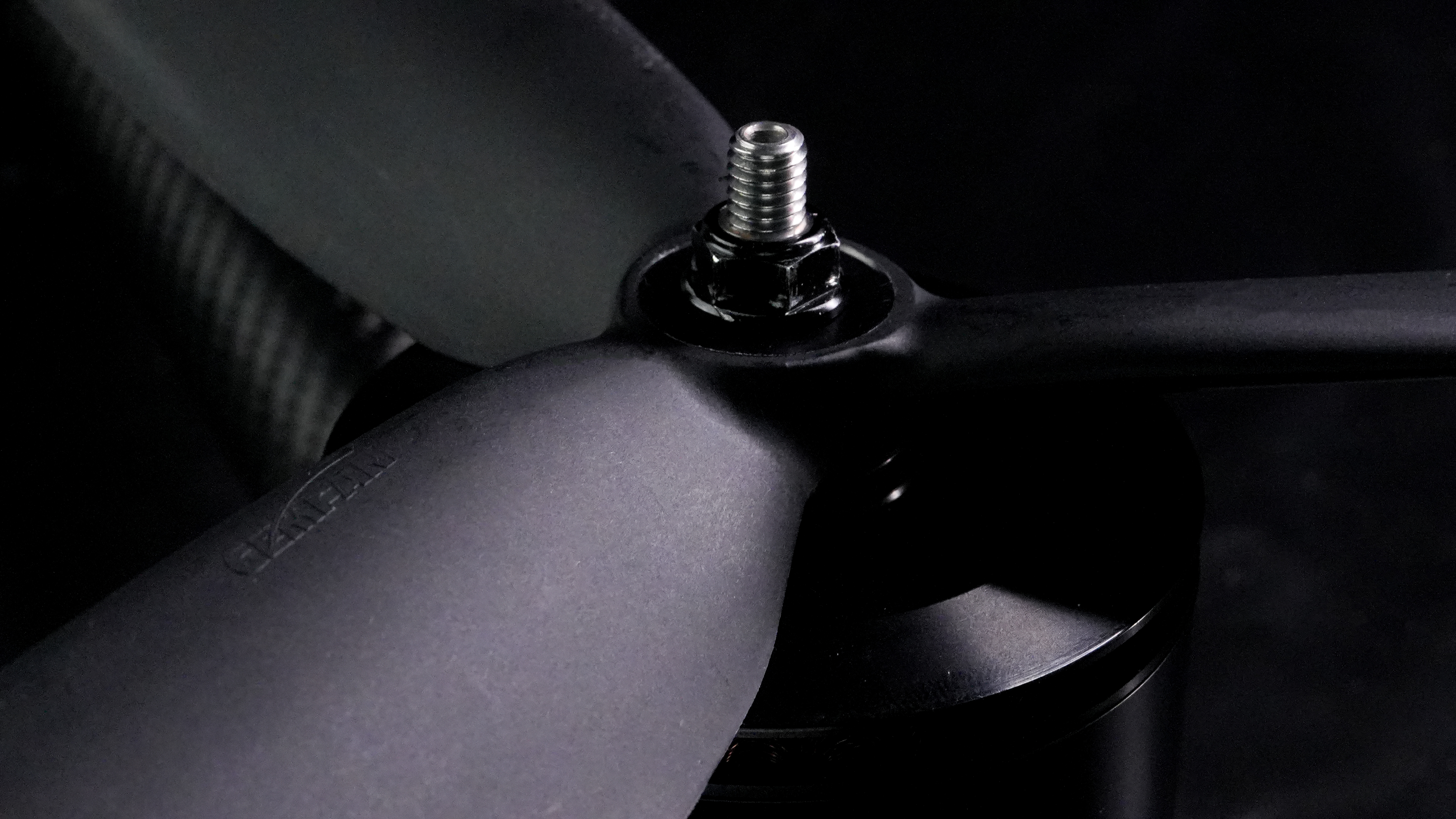
Gemfan's engineering approach is reflected in measurable outcomes: the company holds a 60% market share in the global FPV racing propeller sector, its propellers enabled a micro-UAV to set a Guinness World Record of 358.36 km/h, and its proprietary aerodynamic design system boosts thrust efficiency by over 12% compared to conventional propellers. With 1,700+ propeller models developed and products exported to over 60 countries and regions, correct mounting practices—rotation matching, balance calibration, secure hub fitting, and appropriate accessory use—remain the practical foundation that allows this engineering to translate into reliable flight performance for FPV racing, cinematic aerial work, industrial inspection, and fixed-wing platforms alike.
www.gemfanhobby.com
Gemfan Hobby Co.,Ltd.