
For a car shock absorber manufacturer in China, one of the most important questions from vehicle parts buyers is not simply which shock absorber is cheaper, but which design is appropriate for a particular vehicle application. Gas-charged and oil-based shock absorbers use different operating principles, and understanding those differences helps a China shock absorber supplier provide more suitable replacement solutions for passenger cars, SUVs, and other applications.
The terms “gas shock absorber” and “oil shock absorber” can also be confusing because most modern hydraulic dampers contain oil. In many cases, the real difference is whether the hydraulic oil is supported by pressurized gas inside the damper. The design affects response, heat management, consistency, and how the suspension behaves under repeated movement.
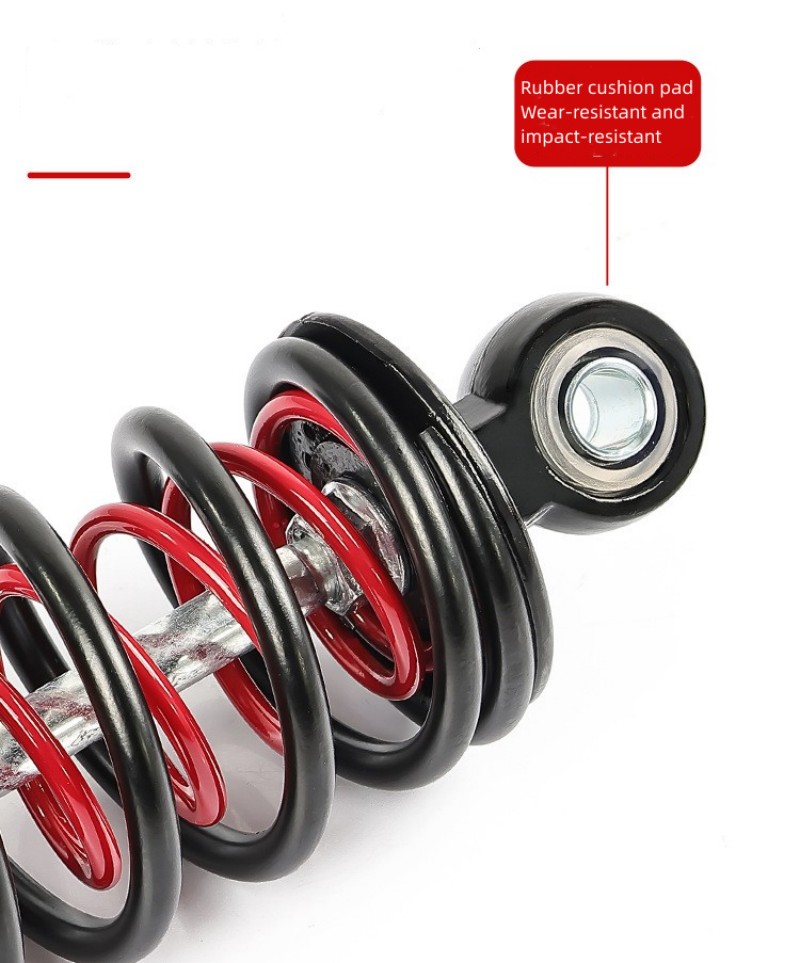
Gas vs Oil Shock Absorbers: What Is the Basic Difference?
A conventional hydraulic shock absorber uses hydraulic oil to resist piston movement. When the suspension moves, the piston forces oil through calibrated passages or valves. The resistance created by this oil flow controls suspension movement.
A gas-charged shock absorber uses the same basic hydraulic damping principle but adds pressurized gas, commonly nitrogen, to the design.
This gas helps reduce aeration and foaming of the hydraulic oil during repeated piston movement. When the vehicle travels over a series of bumps, the damper can heat up and operate continuously. Controlling the condition of the oil becomes increasingly important under these circumstances.
A simplified comparison looks like this:
|
Feature |
Conventional Oil Shock |
Gas-Charged Shock |
|
Main damping medium |
Hydraulic oil |
Hydraulic oil + pressurized gas |
|
Damping principle |
Oil flow resistance |
Oil flow resistance with gas support |
|
Repeated-motion behavior |
Depends strongly on design and operating conditions |
Better resistance to oil aeration |
|
Construction |
Generally straightforward |
More complex internal design |
|
Typical application |
Many standard suspension systems |
Passenger cars and applications requiring more consistent damping |
The exact characteristics still depend on piston design, valve tuning, oil specification, gas pressure, and the vehicle's suspension geometry. Therefore, “gas” does not automatically mean better for every vehicle.
How a Conventional Oil Shock Absorber Works
Inside a hydraulic damper, the piston moves through oil as the suspension compresses and extends.
The piston contains controlled passages or valve structures. When the piston moves, oil must pass through these restrictions. The resistance to oil flow produces damping force.
The key advantage of this concept is that the damping characteristics can be engineered around the vehicle's requirements.
For standard road vehicles with moderate suspension demands, a correctly specified hydraulic shock absorber can provide effective suspension control without unnecessary complexity.
However, repeated high-speed suspension movement can generate heat and may cause the hydraulic oil to aerate under certain conditions. Air bubbles can change the consistency of the damping response.
This does not mean that every oil shock absorber will suffer from poor performance. Product design, oil quality, piston structure, valve design, and operating conditions all matter.
Why Add Gas to a Shock Absorber?
Gas-charged dampers are designed to address one of the challenges associated with hydraulic suspension systems: oil aeration.
When hydraulic oil contains air bubbles, the oil becomes less consistent in how it responds to piston movement. A pressurized gas chamber can help keep the hydraulic oil under pressure and reduce the tendency for air to mix with the oil during demanding operation.
For vehicles that experience frequent suspension movement, this can be useful.
The result is not necessarily a dramatically harder suspension. Instead, a properly engineered gas-charged shock absorber can provide a more consistent damping response when the suspension is working repeatedly.
This distinction is important for both vehicle owners and buyers sourcing from a shock absorber factory.
Gas Does Not Mean the Shock Absorber Is Simply “Stronger”
One common misunderstanding is that a gas-charged shock absorber is always stiffer.
In practice, ride and handling characteristics are determined by the complete damping design.
The following factors can affect the final behavior:
· Gas pressure
· Piston diameter
· Valve design
· Hydraulic oil characteristics
· Compression damping
· Rebound damping
· Suspension spring rate
· Vehicle weight
· Mounting position
· Suspension geometry
Therefore, replacing an original oil-based damper with a different gas-charged unit simply because it appears more advanced is not necessarily the correct approach.
The replacement should match the intended vehicle application and manufacturer's specifications.
Which Type Is Better for Daily Driving?
For ordinary passenger-car use, the right question is not “gas or oil?” but “which damper matches the vehicle?”
A compact car used primarily for commuting may have different suspension requirements from a pickup truck regularly carrying heavy loads.
A family SUV may prioritize a balance between ride comfort and body control, while a commercial vehicle may require a different damping strategy because of load and operating conditions.
This is why application-specific replacement products are important.
Yunxi's Car Shock Absorber range includes OE replacement applications for Nissan and Renault, Hyundai Grand Starex H1, Toyota Hilux Vigo, VW/Benz, and Land Rover. The product listings identify specific vehicle applications and OE references, helping buyers match replacement components according to the original application rather than choosing solely by appearance.
For example, the catalog lists a Nissan/Renault rear shock absorber using OE references 56210-JG01B and 56210-JG00A, a Hyundai Starex H1 front strut application using 54650-4H150 and 54660-4H150, and a Toyota Hilux Vigo front shock absorber using 48510-09J10 / 341396 for 4WD models from 2005–2015.
These details are useful when purchasing replacement parts because vehicle compatibility should come before general assumptions about damper type.
Gas and Oil Shock Absorbers in Different Driving Conditions
City Driving
Urban vehicles encounter speed bumps, potholes, repeated braking, and frequent acceleration. Suspension movement may be frequent but not necessarily extreme.
A properly matched conventional hydraulic or gas-charged damper can both be suitable, depending on the original vehicle design.
Highway Driving
At highway speeds, suspension control becomes important when the vehicle encounters uneven road surfaces, expansion joints, or sudden steering inputs.
Consistent damping is particularly useful because repeated body movement can make the vehicle feel less settled.
Rough Roads
Vehicles operating on rough roads experience greater suspension movement. The damper must deal with repeated compression and rebound cycles.
In these conditions, the thermal and aeration characteristics of the damper become more relevant.
Heavy Loads
For pickups, SUVs, and commercial applications, load conditions should be considered before selecting a replacement.
A shock absorber does not replace the function of the spring. If the vehicle is carrying a load beyond its intended design, simply installing a stiffer damper is not an appropriate substitute for correcting the overall suspension setup.
What Should a Wholesale Buyer Check?
For a distributor or automotive parts wholesaler, the gas-versus-oil question is only one part of the sourcing process.
Before placing an order with a China shock absorber manufacturer, confirm the following:
1. OE reference
Use the original OE number whenever possible. This is one of the most practical ways to reduce application errors.
2. Vehicle application
Confirm make, model, year, drivetrain, axle position, and suspension configuration.
3. Product construction
Ask whether the replacement is hydraulic, gas-charged, monotube, twin-tube, or another configuration where relevant.
4. Dimensions
Check extended length, compressed length, mounting type, and mounting dimensions.
5. Position
Confirm whether the component is for the front or rear axle and whether left/right differences exist.
6. Quality control
A reliable supplier should have defined processes for raw-material selection, production, inspection, and finished-product control.
Yunxi states that its production quality follows international standards and that it selects high-quality raw materials while applying advanced technologies and processes for product quality control. The company also describes itself as specializing in the R&D, production, and sales of shock absorbers and related components.
Why Product Application Matters More Than a Generic “Gas vs Oil” Label
For repair shops and distributors, choosing a damper based only on the label can create unnecessary problems.
Suppose two products are both described as “gas shock absorbers.” That does not mean their damping force, dimensions, mounting configuration, or vehicle compatibility are identical.
The same applies to oil shock absorbers.
A replacement component should be evaluated according to the vehicle's original suspension design and required operating characteristics.
Yunxi's shock absorber product range extends beyond passenger-car applications to commercial-vehicle suspension products, including airbag shock absorbers for HOWO, SHACMAN, and SINOTRUK SITRAK applications. This broader product structure can be useful for buyers managing several suspension categories through one supplier.
Gas vs Oil: A Practical Selection Checklist
When selecting a replacement shock absorber, use this sequence:
First: Identify the exact vehicle.
Second: Check the OE number.
Third: Confirm front/rear position.
Fourth: Check the original damper construction.
Fifth: Compare mounting dimensions.
Sixth: Confirm whether the replacement is designed as a direct replacement.
Seventh: Consider the vehicle's actual operating conditions.
Eighth: Confirm supplier quality-control and production capability.
This method is more reliable than choosing a product simply because it is advertised as “gas” or “oil.”
Gas-charged and conventional oil shock absorbers are based on the same fundamental hydraulic damping principle, but their internal designs are different. Gas pressure can help control oil aeration and maintain more consistent damping during repeated suspension movement, while conventional hydraulic designs remain widely applicable where their specifications match the vehicle.
For vehicle owners, the correct choice should follow the original suspension design and actual application.
For repair shops, importers, and wholesalers, OE references, vehicle fitment, dimensions, construction, and manufacturing consistency should be checked before making a sourcing decision.
Yunxi provides application-focused car shock absorber solutions for multiple vehicle platforms, including Nissan/Renault, Hyundai Starex H1, Toyota Hilux, VW/Benz, and Land Rover applications. Its wider suspension portfolio and manufacturing focus also support buyers looking for a long-term automotive parts supplier rather than a single generic damper product.
www.yunxiautopart.com
Yunxi