In modern industrial drying applications, the Dryer thrust roller plays a pivotal role in ensuring optimal performance, minimizing downtime, and extending equipment life. Whether in fertilizer production, chemical processing, or environmental recycling industries, precise control of thrust forces and stable roller operation are critical to maintaining process efficiency and product quality. This article provides a detailed technical guide to Dryer thrust rollers, exploring design principles, material selection, performance metrics, installation considerations, and maintenance best practices.
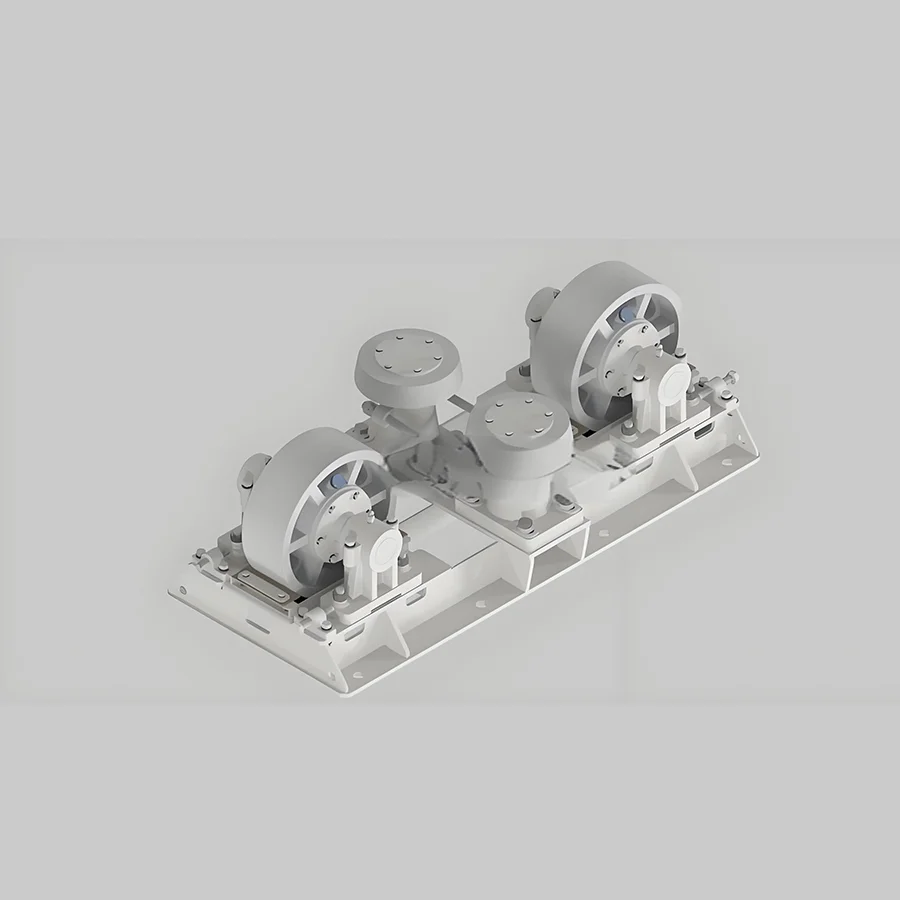
1. Understanding the Function of Dryer Thrust Rollers
The primary function of a Dryer thrust roller is to support axial loads and control the rotational movement of the dryer drum, preventing axial displacement during operation. In rotary dryers used across fertilizer and chemical production lines, uncontrolled axial movement can lead to:
-
Misalignment of the drum and associated rollers
-
Increased wear on trunnion wheels and tires
-
Vibration-induced damage to seals and bearings
By effectively managing axial thrust, thrust rollers stabilize drum operation, reduce maintenance frequency, and extend the operational lifespan of the dryer system.
Key Technical Requirements for Thrust Rollers:
-
Axial load capacity matching drum dimensions and material throughput
-
Low rotational friction to minimize energy consumption
-
Robust material selection to withstand high temperatures and abrasive media
2. Material Selection and Surface Engineering
Thrust rollers must be engineered to resist both mechanical and environmental stresses. Standard materials include high-carbon alloy steel or quenched and tempered steels, providing the necessary hardness and fatigue resistance. Surface treatments such as induction hardening, chromium plating, or thermal spraying enhance wear resistance and reduce the risk of surface deformation.
For applications involving highly corrosive or abrasive media—common in phosphate, sulfur, and potash fertilizer production—corrosion-resistant coatings and specialized bearing housings ensure longevity. Selecting a material combination that balances hardness, toughness, and corrosion resistance is critical for minimizing downtime and avoiding premature component failure.
Example Parameters:
| Parameter | Typical Value |
|---|---|
| Hardness | HRC 58–62 |
| Surface roughness | Ra ≤ 0.8 μm |
| Bearing type | Spherical roller / Tapered roller |
| Max operating temperature | 350–450°C |
| Axial load capacity | Calculated per drum dimension and process throughput |
3. Bearing Integration and Load Management
A Dryer thrust roller must be paired with a suitable bearing assembly capable of withstanding combined axial and radial loads. Spherical roller bearings are often preferred for high-load, high-temperature environments, providing:
-
Accommodation of slight misalignment
-
High axial and radial load capacity
-
Reduced maintenance cycles
Key considerations for bearing selection include:
-
Lubrication method (grease vs. oil circulation)
-
Bearing preload and alignment tolerance
-
Sealing method to prevent ingress of dust and abrasive particles
Optimizing bearing selection directly improves roller performance, reduces energy losses, and ensures consistent drum rotation.
4. Thermal and Mechanical Stress Analysis
Industrial dryers often operate under extreme thermal and mechanical conditions. Thrust rollers experience cyclical axial loads as the drum rotates, combined with thermal expansion stresses from high-temperature process media. Effective design requires:
-
Finite Element Analysis (FEA) to evaluate stress distribution
-
Selection of roller diameter and width to balance load and heat dissipation
-
Integration of expansion compensators or flexible mounts where necessary
Thrust rollers with optimized geometry and load distribution reduce the risk of warping, cracking, or accelerated bearing wear, contributing to stable dryer operation.
5. Installation Best Practices
Correct installation is critical for maintaining thrust roller performance. Key steps include:
-
Precision alignment of drum and rollers – Misalignment can cause uneven wear and vibration.
-
Axial load calibration – Adjusting thrust roller tension according to drum weight and operational load.
-
Lubrication setup – Ensuring bearings receive adequate lubrication for high-temperature operation.
-
Thermal expansion allowance – Accounting for drum growth during heating to prevent excessive axial stress.
Well-executed installation ensures optimal energy efficiency, reduces maintenance frequency, and extends roller and bearing lifespan.
6. Performance Optimization and Maintenance
To maximize the service life of Dryer thrust rollers, industrial teams should implement:
-
Regular inspection schedules for surface wear, bearing condition, and alignment
-
Lubrication monitoring to prevent premature bearing failure
-
Vibration analysis to detect early signs of misalignment or fatigue
-
Temperature monitoring to identify abnormal heat buildup
Preventive maintenance strategies reduce unplanned downtime and improve process consistency, directly impacting productivity in fertilizer, chemical, and environmental recycling industries.
7. Customization and Industry Applications
Different industrial applications require tailored thrust roller solutions:
-
Fertilizer Production: Rotary dryers for phosphate, ammonium, and potash fertilizers require high axial load capacity and corrosion-resistant materials.
-
Chemical Processing: Sulfur and phosphate processing lines demand wear-resistant coatings to handle abrasive media.
-
Environmental Recycling: Biomass drying and waste gas treatment systems benefit from thrust rollers engineered for high-temperature, dust-laden environments.
Customization includes roller diameter, width, bearing type, material hardness, and surface treatment, enabling a precise fit for each process requirement.
8. Comparative Performance Metrics
When evaluating thrust rollers, performance metrics to consider include:
| Feature | Standard Roller | Optimized Sawei Thrust Roller |
|---|---|---|
| Load Capacity | Moderate | High, engineered for drum size & throughput |
| Surface Wear Resistance | Standard steel | Induction hardened or coated for abrasion resistance |
| Bearing Life | 20,000–30,000 hours | 40,000–50,000 hours with spherical roller integration |
| Maintenance Interval | Quarterly | Semi-annual to annual, depending on process |
| Thermal Stability | Moderate | High-temperature rated up to 450°C |
Optimized rollers extend service life, reduce downtime, and improve energy efficiency—key considerations for cost-effective industrial drying operations.
9. Future Trends and Technological Advancements
Industrial drying systems continue to evolve, and thrust roller technology is adapting accordingly. Key trends include:
-
Enhanced surface coatings for extreme abrasion and corrosion environments
-
Smart sensors embedded in rollers to monitor temperature, vibration, and load in real-time
-
Advanced materials such as high-chrome alloys or composite rollers for extreme wear applications
-
Modular designs for faster replacement and reduced downtime
Adopting these innovations improves operational reliability and aligns with sustainability and productivity goals in chemical, fertilizer, and environmental processing industries.
10. Conclusion
A well-engineered Dryer thrust roller is essential for reliable, efficient, and long-lasting operation of industrial dryers. By focusing on material selection, bearing integration, load distribution, thermal management, and preventive maintenance, industrial operators can significantly reduce downtime, extend equipment life, and optimize overall process efficiency.
Sawei Equipment Technology leverages decades of experience in chemical, fertilizer, and environmental processing industries to deliver tailored thrust roller solutions that meet exacting specifications. Whether for high-temperature phosphate dryers, abrasive sulfur processing, or biomass recycling applications, our thrust rollers combine precision engineering with industrial-grade durability.
Investing in high-quality, technically optimized Dryer thrust rollers ensures a stable, cost-effective, and efficient drying operation—empowering industries to achieve both production and sustainability goals.
www.swasps.com
Jiangsu Sawei Equipment Technology Co., Ltd.