
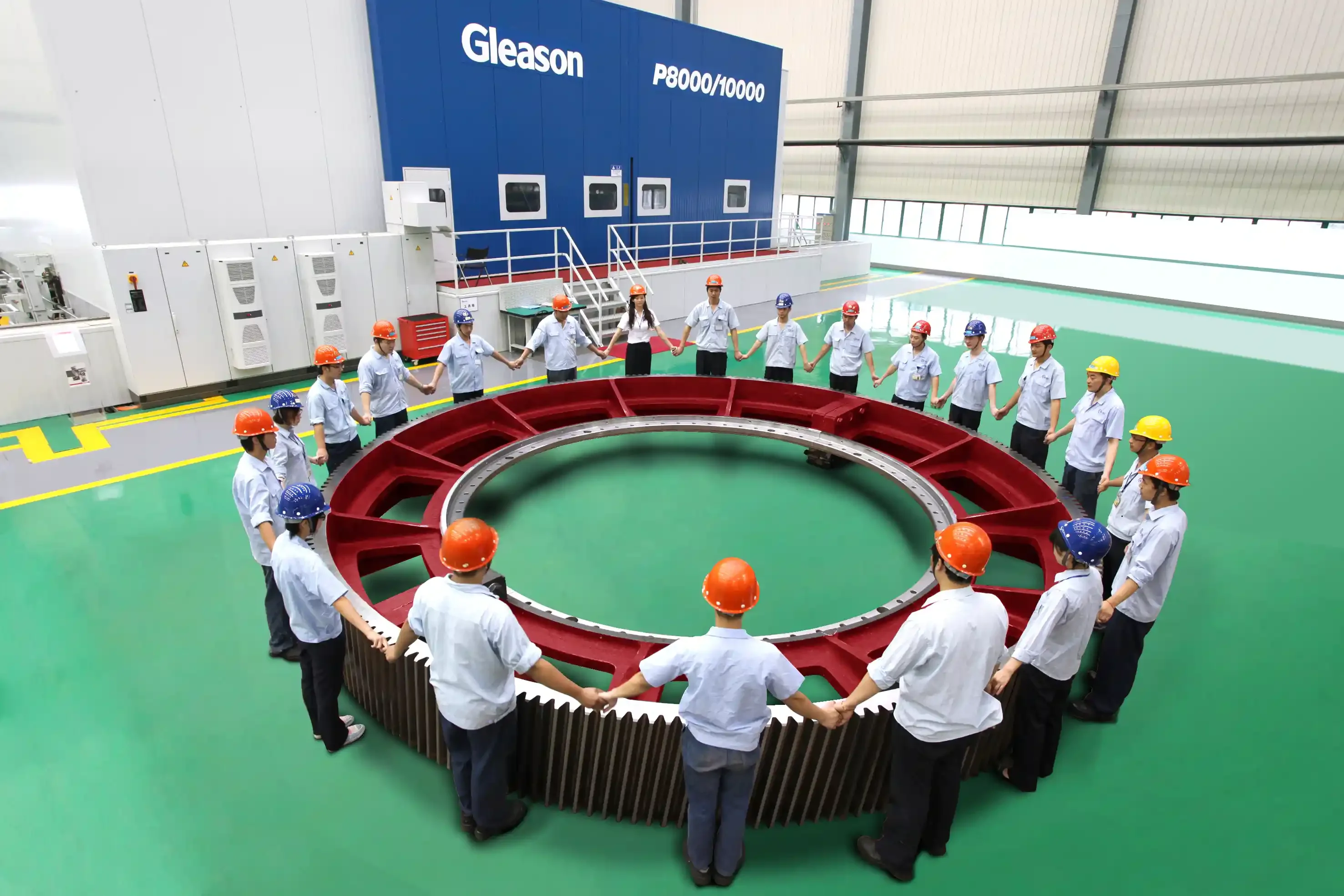
In heavy industrial machinery, reliable power transmission depends on components that can withstand substantial mechanical loads while maintaining stable operation. Big ring gears are designed for this purpose. With their large diameters and robust tooth structures, they provide an effective way to transfer rotational power between major mechanical assemblies.
These components are widely used in equipment such as wind turbines, mining machinery, marine systems, industrial gearboxes, and heavy-duty power transmission equipment. Their performance directly influences torque transfer, mechanical efficiency, operational stability, and equipment service life.
Unlike conventional small gears, large diameter gears must be engineered around demanding operating conditions. Material strength, tooth geometry, load distribution, lubrication, and manufacturing accuracy all contribute to their final performance.
For engineers and industrial equipment buyers, understanding these factors is essential when selecting a suitable gear solution. In this article, Tianshan discusses the fundamental characteristics of big ring gears, their main design considerations, and their importance in modern industrial applications.
Understanding Big Ring Gears and How They Work
Big ring gears are large-diameter circular gears designed to transmit rotational motion and mechanical power within industrial equipment.
They commonly operate alongside smaller driving gears, such as pinions. As the pinion rotates and engages with the ring gear teeth, mechanical energy is transferred between the components. Depending on the transmission arrangement, this interaction can provide the required rotational speed and torque for the machinery.
The large diameter of a ring gear makes it suitable for applications where conventional gears cannot provide the necessary transmission dimensions or load capacity. Its structure can accommodate substantial torque requirements while integrating with large rotating assemblies.
Material selection is particularly important because these gears may operate under continuous loading, repeated engagement, vibration, and demanding environmental conditions. Carbon steel, alloy steel, and other high-strength engineering materials are commonly considered according to the application's mechanical and environmental requirements.
The finished gear must also maintain appropriate tooth geometry and surface quality to achieve reliable engagement with its mating components. These characteristics help reduce excessive friction, uneven contact, and premature wear during operation.
Three Major Factors in Big Ring Gear Design
Designing a large ring gear involves more than determining its diameter and number of teeth. Engineers need to consider the relationship between material properties, transmission requirements, and operating loads.
1. Selecting Materials for Strength and Operating Conditions
Material selection has a direct influence on the load-bearing capability, wear resistance, and service performance of a big ring gear.
Steel and alloy steel are frequently used because of their mechanical strength and suitability for heavy-duty transmission applications. The specific material should be selected according to the expected torque, contact stress, operating frequency, and environmental conditions.
Different industries may introduce additional requirements.
For example, marine equipment can expose gear components to moisture and saltwater, making corrosion protection an important consideration. Protective coatings or suitable surface treatments may help reduce environmental degradation.
Wind turbine applications present another set of challenges. Gears may need to operate under varying loads and changing environmental conditions. Noise and vibration control can also be relevant when evaluating the overall transmission system.
Rather than choosing a material based on strength alone, manufacturers should consider the complete operating environment and the mechanical demands placed on the gear.
2. Tooth Geometry and Gear Ratio
Tooth design determines how effectively a big ring gear engages with its corresponding pinion or other transmission components.
The tooth profile must provide appropriate contact between mating gears while accommodating the required load and rotational conditions. Depending on the transmission design, gear configurations may include straight or helical teeth, while bevel gears are used in different intersecting-axis arrangements.
The gear ratio is another important design parameter. It is determined by the relationship between the number of teeth on the driving and driven gears.
For a ring gear driven by a pinion, a higher reduction ratio generally allows the output shaft to rotate more slowly while producing greater output torque, subject to transmission efficiency and system losses. A lower reduction ratio generally provides a different balance between rotational speed and torque.
The appropriate ratio depends on the machinery's operating requirements. For mining equipment, lifting systems, and other heavy industrial applications, the transmission may prioritize torque capacity and controlled movement. Other systems may require a different combination of speed and power.
Tooth geometry and gear ratio should therefore be evaluated together rather than treated as independent specifications.
3. Load Distribution and Mechanical Stress Control
Big ring gears frequently operate under substantial mechanical loads. During gear engagement, forces are transmitted through the contacting tooth surfaces, creating bending stress and contact stress.
If the load is distributed unevenly across the teeth, certain areas may experience excessive stress. Over time, this can contribute to localized wear, surface damage, or premature component failure.
Several factors influence load distribution:
-
Accuracy of gear manufacturing
-
Alignment between the ring gear and pinion
-
Tooth contact pattern
-
Surface finish and hardness
-
Lubrication conditions
-
Mounting accuracy and structural deformation
Manufacturers may also apply tooth modifications or adjustments to the pressure angle when appropriate for the specific gear design. These engineering measures can help improve contact conditions and manage stress distribution.
Lubrication is equally important. A suitable lubrication system reduces friction between contacting surfaces and helps control wear during repeated gear engagement.
For large industrial gears, the objective is to maintain consistent tooth contact and prevent localized loading from compromising long-term operating reliability.
Where Are Big Ring Gears Used in Industry?
The combination of large diameter, torque transmission capability, and heavy-load performance makes big ring gears suitable for several industrial sectors.
Wind power generation
Wind turbines use large mechanical transmission components to transfer rotational energy within their drive systems. Gear performance and durability are important considerations because equipment may operate continuously under changing wind and load conditions.
Mining equipment
Mining machinery often works under high mechanical loads, vibration, dust, and demanding operating schedules. Large gears are used in heavy-duty transmission systems where reliable torque transfer is essential.
Marine propulsion and industrial marine systems
Marine machinery requires transmission components capable of operating under demanding environmental conditions. Material selection, corrosion protection, and mechanical reliability are important when designing gears for these applications.
Construction and heavy machinery
Large rotating assemblies and heavy-duty mechanical systems may require ring gears to transmit power between major components. Correct tooth engagement and load distribution help support stable machinery operation.
Across these industries, the final gear configuration must be determined by the equipment's actual transmission requirements rather than diameter alone.
Why Manufacturing Precision Matters for Large Ring Gears
The design of a big ring gear establishes its intended mechanical performance, but manufacturing accuracy determines how closely the finished component meets those requirements.
Dimensional deviations, inaccurate tooth profiles, poor surface finishing, or unsuitable material properties can affect gear engagement and load distribution.
For this reason, large gear manufacturing requires attention to several production factors, including material preparation, machining accuracy, tooth geometry, surface treatment, and dimensional inspection.
The manufacturing process should be controlled to ensure that the finished gear is compatible with its mating pinion and the equipment's installation requirements.
Inspection of critical dimensions and tooth contact characteristics is also important, particularly for large industrial systems where component replacement can involve considerable maintenance time and cost.
For equipment manufacturers and industrial buyers, evaluating a gear supplier should involve more than comparing product dimensions or quotations. Manufacturing consistency and the ability to meet application-specific requirements are also important purchasing considerations.
Conclusion
Big ring gears are important transmission components in heavy industrial machinery, supporting the transfer of rotational motion and substantial torque across large mechanical assemblies.
Their performance depends on several interconnected factors, including material selection, tooth profile, gear ratio, stress distribution, lubrication, and manufacturing precision. Each of these elements contributes to the gear's ability to operate reliably under demanding industrial conditions.
Whether used in wind turbines, mining equipment, marine machinery, or construction systems, a suitable big ring gear must be designed around the actual operating requirements of the equipment.
By paying attention to both engineering design and manufacturing quality, engineers and manufacturers can improve transmission reliability, manage mechanical wear, and support the long-term performance of industrial machinery.
For businesses evaluating large diameter gears, working with an experienced manufacturer such as Tianshan can be an important part of developing gear solutions that meet specific industrial application requirements.
www.tianshangear.com
Changzhou Tianshan Heavy Industry Machinery Co., Ltd.